
The Nocturnists
Season
1
Episode
0
|
The Body as Teacher with Giulia Enders, MD
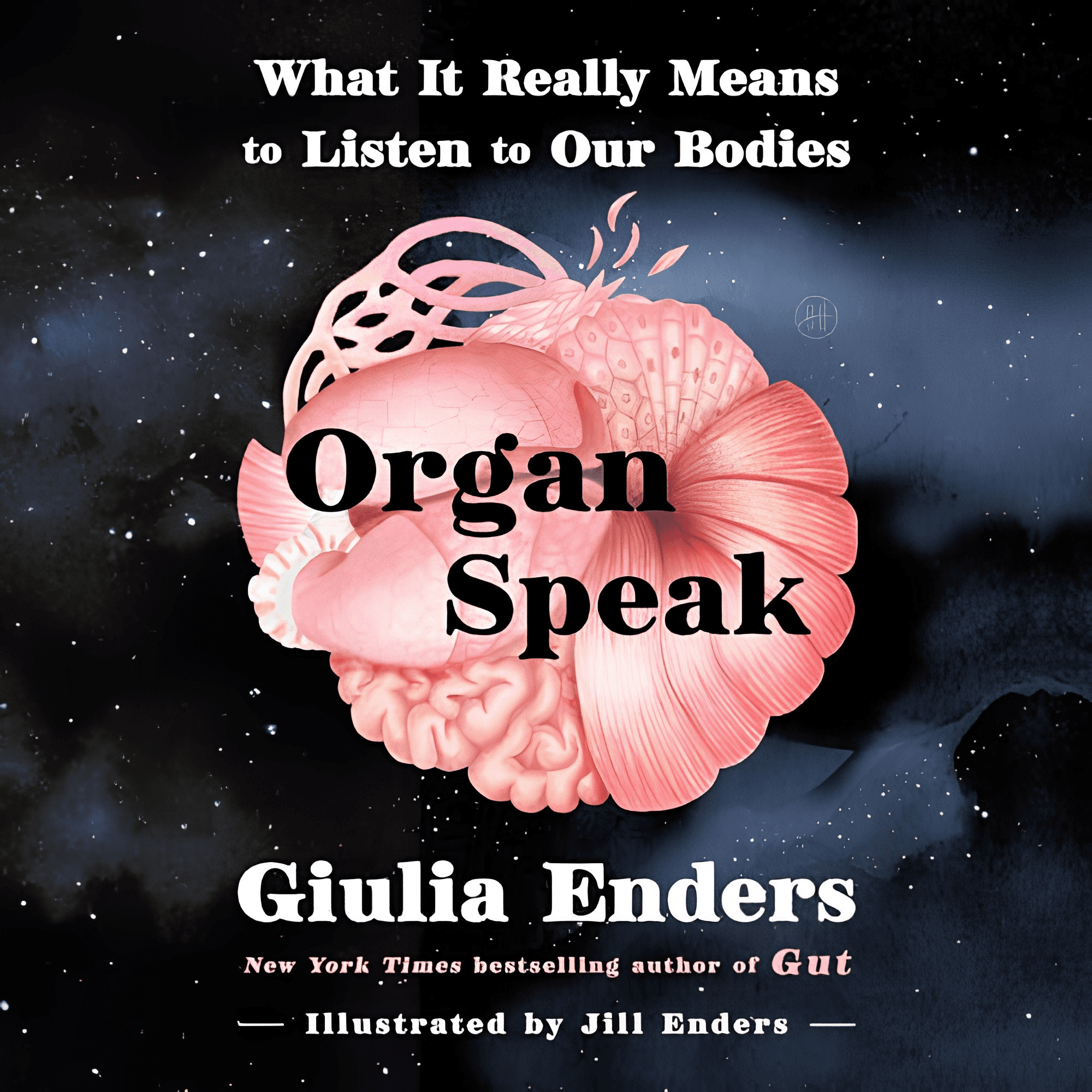
Dr. Giulia Enders—physician, gastroenterologist, and bestselling author of Gut—joins us to discuss her new book, Organ Speak. She invites us to see the body not as a machine in need of repair, but as a living source of intelligence, metaphor, and meaning. Reflecting on her early fascination with the gut and her years treating patients with complex gastrointestinal conditions, Giulia explores how language shapes our experience of illness. The conversation ranges across the skin, grief, immunity, and sleep, revealing how a sense of wonder can emerge when we stop viewing the body solely as a problem to be solved.
0:00/1:34
The Nocturnists
Season
1
Episode
0
|
The Body as Teacher with Giulia Enders, MD
Dr. Giulia Enders—physician, gastroenterologist, and bestselling author of Gut—joins us to discuss her new book, Organ Speak. She invites us to see the body not as a machine in need of repair, but as a living source of intelligence, metaphor, and meaning. Reflecting on her early fascination with the gut and her years treating patients with complex gastrointestinal conditions, Giulia explores how language shapes our experience of illness. The conversation ranges across the skin, grief, immunity, and sleep, revealing how a sense of wonder can emerge when we stop viewing the body solely as a problem to be solved.
0:00/1:34
About Our Guest
Giulia Enders is a German doctor, author, and science communicator best known for her international bestseller Gut: The Inside Story of Our Body’s Most Underrated Organ. She has conducted research in microbiology, took part in creating an exhibition and a Netflix Documentary and worked as a physician. Enders is known for explaining complex topics about the human body in a clear and engaging way.
About The Show
The Nocturnists is an award-winning medical storytelling podcast, hosted by physician Emily Silverman. We feature personal stories from frontline clinicians, conversations with healthcare-related authors, and art-makers. Our mission is to humanize healthcare and foster joy, wonder, and curiosity among clinicians and patients alike.
resources
Credits
About Our Guest
Giulia Enders is a German doctor, author, and science communicator best known for her international bestseller Gut: The Inside Story of Our Body’s Most Underrated Organ. She has conducted research in microbiology, took part in creating an exhibition and a Netflix Documentary and worked as a physician. Enders is known for explaining complex topics about the human body in a clear and engaging way.
About The Show
The Nocturnists is an award-winning medical storytelling podcast, hosted by physician Emily Silverman. We feature personal stories from frontline clinicians, conversations with healthcare-related authors, and art-makers. Our mission is to humanize healthcare and foster joy, wonder, and curiosity among clinicians and patients alike.
resources
Credits
Transcript
Note: The Nocturnists is an audio-first experience with emotion and sound design that can be difficult to fully capture in text. Transcripts are provided to support accessibility and reference, but may contain minor inaccuracies. If quoting in print, please consult the audio when possible.
Emily Silverman: This is The Nocturnists. I'm Emily Silverman. Today's episode features Dr. Giulia Enders, a physician, gastroenterologist, and best-selling author of Gut, whose fascination with the body began not in medical school, but as a teenager trying to understand a mysterious skin disease. That experience led her down a path of studying the gut, writing a best-selling book before she had even graduated from medical school, and eventually caring for patients with complex gastrointestinal illnesses.
Over the years, it was something beyond physiology that captured her attention. She began noticing the language her patients used to describe themselves: I'm broken. I need to function. My body failed me, and she wondered what might change if we stopped thinking about the body as a machine to repair and started seeing it as something wiser. In my conversation with Giulia, we talk about her new book, Organ Speak, and how our organs can become unexpected teachers. Not just about health, but about grief, relationships, immunity, boundaries, sleep, and what it means to live well.
We also explore the power of metaphor and how the stories we tell about our bodies can shape the way we experience illness itself. Take a listen to Giulia reading from her new book, Organ Speak.
Giulia Enders: How our body solves problems is fascinating. Time and again, I was able to come up with tips for my own life, and I felt as if I were in an ice cream parlor full of answers. Understanding the body isn't just useful for preventing illness. Our organs also have a substantial say in what it means to be ourselves. They're involved in key questions such as what do we really need, how do we deal with threats, how do we want to treat each other, or even what can we achieve, and how do we do this?
If we could better understand the answers from our body, we could lead a more harmonious life. Beyond illnesses and pandemics, however, the body rarely leads the way in public debate, and even when it does, some of the things we think we understand about it are rather out of date.
[music]
Emily Silverman: I am sitting here with Dr. Giulia Enders. Giulia, thank you so much for coming on the show.
Giulia Enders: Thank you for having me.
Emily Silverman: Giulia, you are a physician.
Giulia Enders: Yes.
Emily Silverman: I read in the first chapter of your book, Organ Speak, you were reflecting a bit about your journey to medicine and your journey to writing. I thought it was really interesting where you wrote-- I think you said you got really interested in the gut at a pretty young age, like in your 20s, and you knew you wanted to go into gastroenterology medicine. Before we talk about this new book, I was wondering if you could just tell us a bit about becoming a physician and this early fascination that you had with the body, and then in particular with the gut, which, as we know, led to your bestseller book, Gut.
Giulia Enders: This was already in my teenage years, even, and I had suddenly gotten this skin disease when I was 17. It just developed quickly and spread all over, and had these open wounds. I was really confused to what this was. Going to the doctor, got some steroid creams. I would put it on. It would go away. If I then stopped, it would come back right away. I just sat there this one day because I had to wear leggings in order for it not to look wet through my pants, all these open wounds. I sat there, and I thought, "Isn't it so weird that I'll be living with this body for probably like 60 or 70 more years, and I know so little about it? I can't help myself, and I have no idea what's going on."
I felt this was odd, and it really got me started reading about the body. Then soon I realized I find everything very interesting, and I can read even when I'm really tired or feel a bit sick or something. I just read and read and read, and it doesn't even stop. While doing so, I then discovered my topic, which was the gut, because it just surprised me the most. I was fascinated constantly and in awe to how an organ that I thought was just about digesting some food, going to the toilet, farting, that's it, suddenly, wow, it was all these things.
It was sensitive. The movements were so impressively complex. Then it had this microbiome going on. All these immune cells being trained there in the wars. The connection with the brain and over 20 hormones of its own. I was blown away. When I experimented with it, and I did so in a very unscientific way, really doing all kinds of things at the same time, I saw my skin getting better and better and better. I felt like this really is a very interesting form of power. Just knowing more about the body and then using this, and what else is there? This is really what tipped everything off.
Emily Silverman: Wow. Do you have any idea what change that helped your skin get better with altering-- I don't know if it was what you were eating or anything else with your gut?
Giulia Enders: When I look back, I would say that I had had a course of antibiotics right before this happened, and maybe it was a funny glitch or a funny side effect of that. Doing all kinds of probiotics, really resetting my diet, starting very slowly to introduce dairy or just a little bit of gluten, and really eating more diverse, having all this fiber. In my case, I can say nutrition and the gut played a part, and maybe probably the dominant one here. Sometimes it's also time. Sometimes it's by accident or chance. I'm very aware of that, but with my experience, it just really felt spot on that my gut was influencing this very much.
To this day, I feel like I have a pretty good grip on my skin, but sometimes there will be little points coming back. Then I watch my diet, I watch my stress, and have it all under control, which is lucky for me. I know that this is not the case for other people dealing with eczema and things like this.
Emily Silverman: You get really interested in the gut. Is that what inspired you to go to medical school?
Giulia Enders: Absolutely, that's what tipped it all off. I would also say when I was in med school, I would really only wake up when the gut was mentioned somewhere. I would, of course, listen to the other things, but I thought, "It's good we have eyes. All right, can we move on already?" Then when there was something about the gut, I was there. I think that was a pretty good indicator. Good for me because I'm horrible in making decisions; I hate it usually, but here it was so easy. It was right in front of me, and I didn't want to do anything else.
Emily Silverman: Then you decide to specialize in gastroenterology. Is that correct?
Giulia Enders: Exactly, yes. I started in a hospital in Hamburg, Germany, which is specialized on IBS and motility disorders. I really wanted only the gut patients, and that all day. That's why I went for that.
Emily Silverman: That's so amazing. Sometimes you hear about people who they just have a calling from early in life, and it's very clear. You had that, and that's amazing. How many years were you practicing and taking care of this patient population before you decided, "I need to write a book about this"?
Giulia Enders: I was writing the book on the gut while I was still in med school.
Emily Silverman: No kidding.
Giulia Enders: I was completely-- This was all I was doing. I was just reading stuff about the gut, and I didn't plan to write a book. I didn't think of myself like an author, being so young. What I did was I went to an evening event with other med students and students from other fields as well, where everyone can talk a little bit about their favorite research topic. I would just go on about the gut, so fascinated and playful and young, not thinking about anything. Then afterwards, I got the message because a video went viral from that evening in Germany, and then a literature agent asked me if I could think of maybe writing a book about this topic.
I said, "I'm 22. I don't think so. Maybe 40 pages." This was my original reply to her, and she just said, "That's okay. Just start, and then we'll see if maybe it's more than 40 pages." She saw me talking. I couldn't stop. I was so excited, and she was absolutely right. That's when I wrote my first book, and it became this huge surprise world bestseller. I was totally taken aback by that. I had no idea that this could even happen when writing a book. This is really where everything started.
I then finished my med school studies and then started working in a hospital for a few years. Only then was when I realized, "Ah, shit, now I have to write again because there's this new topic--" Oh, I just realized I cursed. Should I say the sentence without the shit again? That's why we [unintelligible 00:09:58].
Emily Silverman: You can say shit. That's okay. It's on topic.
Giulia Enders: [chuckles] I didn't know. It is on topic. It is.
Emily Silverman: You wrote the book before you even finished medical school.
Giulia Enders: To my own surprise, yes, I did.
Emily Silverman: Wow. This book, what year was it published?
Giulia Enders: In Germany, it was published in 2014. I think it was published a year later in most of the other countries.
Emily Silverman: I'm sure the book was incredible and well written, but it seemed like it was also right place, right time, because it was right around the time people were starting to really think and talk about the microbiome and about the mind-gut connection. Can you tell us a little bit about when did you realize, "Oh my God, I've written a best-selling pop medicine book"?
Giulia Enders: I think the scariest moment of this whole journey was when this video of me just talking about my research topic that I like in Germany on this tiny student event went viral. It suddenly had like 20,000 clicks in Germany, now it's much more than that. Those 20,000 scared me so much. I went into my bedroom and locked my door, and went onto my pillow, and I was like, "Oh my God, what have I done? All these people looking at me." Now it's super funny to talk about because it was only 20,000 people, but back then, it was really scary to me. I think that was the biggest shock.
Everything that came after, I was already alright with because I was at the lab back then doing work for my doctorate degree, and somehow I used this as a thing to cling on to and hold on to. I thought to myself, "I'm really scared now because people are watching this clip of mine talking about the gut, but what would I do in the lab if this was an experiment?" Then I realized I always have to write down why, what's the purpose of it first. For an experiment, I would do that.
I said, "Here the purpose is that I want people to know more about the gut. I want it to be more well known, so people treat it better, so that they can actually access all this cool stuff and powerful experiments that really help you in your day-to-day life. I'm doing just that, so it does have a purpose. That is okay, and I can check it off the list." Then I went on from there. This is how I structured myself around this bit of weird journey.
A few years, like one year later, I was sitting on all these TV shows in Germany that I had known from watching TV with my mom on Friday night. Suddenly, I was sitting there, and it was all a bit absurd, but I could treat it like this experiment that I had in the lab. In that way, I really made it comfortable and okay.
Emily Silverman: You become a physician, you start seeing patients. You've already written this hit book about the gut. How many years have you been seeing patients?
Giulia Enders: I was in the hospital from 2017 until 2021, after COVID. I already started during the first year of the pandemic, but I didn't want to quit then because I didn't want to let my colleagues down. After a year, it all seemed quite stable, and then I thought, "Now I realize I really have to write full time, otherwise I'm not getting anywhere." That was the time frame where I was in practice.
Emily Silverman: What was that period of time like from '17 to '21 taking care of patients? What were some of your biggest takeaways from that experience, talking to people about their symptoms, and--
Giulia Enders: I really wanted to go into clinic, although many people offered me, "Oh, wouldn't you want to do a TV show? Wouldn't you want to write another book?" There were so many offers on the table, but I felt weird taking them. It was just like grabbing opportunities, and not really again, as I said, something where I could write the direct purpose next to. I feel like I have all this knowledge, and I'm nose-deep in. This is my obsession. I should put this knowledge to use and really go and treat patients, and also really get face-to-face with the reality of it, and not only the books and the papers.
That's what I decided to do then, and I appreciated everything after because also I had wonderful colleagues. I really loved all the doctors I was working with that I could learn from. It was rough, but I knew it would be rough. We had 24-hour shifts, and sometimes there was someone, an emergency coming in, and then I had to reanimate. Then there was a heavy bleeding. I need sleep. I'm a person that really is not so good on little sleep, so sometimes I would have to lay down on the hallway, put my legs up, and then get up and keep going.
I knew it would be like this. Sometimes I was whiny, but most of the time I was really grateful for just reality, because that's what you meet in a hospital. You meet reality. Suddenly you can, I think, differentiate when you look at people talking on television or giving nice social media interviews or whatever. You realize, "I'm not sure if they've ever really met reality." Although it is tough, and I'm not romanticizing it, I know it was tough, and at times I didn't want to be there, but I always knew it is reality, and I'm actually very grateful that I do this.
Emily Silverman: I'm sure, as part of your training, you had to do, like you said, the emergencies, the bleeding, things like that, but it sounds like you were also taking care of patients with IBS and some of these more poorly understood GI conditions. What was it like taking care of that patient population?
Giulia Enders: That was usually the day work, and then you had the night shift, and there was more of the other stuff coming in. The day work, I really thoroughly enjoyed.
Also, because I feel like I was one of the few doctors, maybe, who really, really likes the ABS patients. Not everyone else does, but I really did. Also, my chronic inflammatory bowel disease patients. I don't know if you can assort a type of person to that, but-- I don't know. I always really liked them. It was interesting because we were also so specialized. There were some really great researchers that educated us well on very tiny topics of medicine.
We had patients coming in that had been for years just diagnosed with IBS, and then they got worse and worse, and then they were so desperate they would travel sometimes a long way to just come to our hospital. Then we could find a rare cause or something that had been overlooked. Of course, this is really fun in medicine if you're able to do that. That wasn't so much on my part as it was on the specialist educating us and having great diagnostics, and then us having the honor to deliver the news that now we found something and we can treat it differently. I think that was really cool, but of course, we had patients where we couldn't do it so smoothly like that, and then we had to try this and try that.
The cool part about this hospital was also that it had a lot of financial power. If we wanted to test for some fancy vitamin or some fancy, maybe rare condition, we just could. If there was a grandma who didn't feel comfortable going home on Friday, we would leave her in the hospital until Monday. I do realize, and especially when I talked to my friends who worked in other hospitals, more public hospitals, it's really nice to do medicine this way, and I wish more people could.
Emily Silverman: Are there any memorable-- obviously de-identified-- patient cases or patient stories from your time in practice that stay with you?
Giulia Enders: Two pop up because also they-- Well, one of them really was one that tipped it off for me to write a second book. This was a young woman, and she had lost her baby in the ninth month of pregnancy. She came to us with unclear bellyaches, where you're like, "Not completely unclear, but let's do the things we can do." After a while, and also while seeing her or talking to her, the language she used and the things that she was so focused on, it was quite hard for me to get my head around, but I also realized I do the same, and other people do the same, maybe in a bit milder form.
She would keep saying, "I have to function again for my family, to function for my other child, to function for my work. My colleagues are now taking over my shifts. This is not good. I can't be broken." Also, she wanted the snap-back body, is what she said. She heard from this about social media. Before giving birth, she had looked at all these videos already how to get back in shape after giving birth, and now she was completely obsessed with this. While she was talking about it, I realized that there was no room left to just grieve and have this horrible, sad experience and sit with it.
There was this unclear pain. She had been through all the gynecologic diagnostics already, so was coming to us because of could it be something from the gut? We did what we could, and we got a good result in the end, but to get there, it was a bit hard to also have this aspect of your body that has-- Something has happened to your body, and you're a human, and you're allowed to just have room for that also. This was one aspect that I tried to communicate a little bit on the side while doing all these other things, and I realized it is not something that I can hastily do while I do usual diagnostics.
I see it more and more in my patients, the way they talk about their body and their system when something's broken. I see it in myself as well. I had private experiences where I would think, "Oh." Looked at myself like a broken machine there, not like a human. I would feel like, for medicine, it could be really helpful if a little bit more of an understanding of being a living being and how your body works and what your body is and all these things, if it could be communicated, and then maybe sometimes we would have less patients coming to hospitals for diagnostics, et cetera, when it's not necessary because they're just having a communication problem with their body,.
I really always loved explaining, but those were parts that were too much for the regular day-to-day. I felt if I had the time and could sit down and write and really give people an updated, more accurate, also counterweight to all this noise from outside feeling about their body, that could really help. It started a lot of the things off. That was only one, but I could tell you more other patients, too.
Emily Silverman: Let's hear one more, and then I want to move into the new book, Organ Speak. I love stories. We're a medical storytelling podcast, so let's hear one more story.
Giulia Enders: I think another one, and that was one where I was just so touched, and my patient was also touched, and I felt like the way we explain the body and diseases really does matter. Of course, sometimes time is spare. I'm aware of that, but just choosing the right sentence, even I think, is very important, especially when you deliver diagnostic.
The second one was a patient that had come to our hospital a few years before, and she had had a severe EHEC infection, a toxic strain of E. coli, causing this bleedy, horrible, very dangerous diarrhea and other problems. Now she had come back, and we had diagnosed her with a chronic inflammatory bowel disease. Of course, she was very upset, and I didn't have enough time in the morning to talk it through with her. We just told her the results, but I said," I'll come back in the afternoon," and I did.
She was very sad. "I just feel like I have this bad luck. I had this horrible infection a few years ago, and now I'm diagnosed with this chronic disease." She just felt really bad, understandably so. I sat down with her, and I said, "Your immune system really experienced something horrible and very dangerous, and maybe close to extremely dangerous. It had this infection that it was almost a little bit too late for getting it in check, and it now, maybe understandably, is a bit overcautious and attacks things like normal gut bacteria when it really doesn't have to. It's being like an overprotective parent, going one step too far."
Yes, it is a mistake. It is not good that this is happening, but it's not like how oftentimes doctors would explain autoimmune disease, saying your immune cells are attacking your own body, because that seems like just unnecessary, dumb, and aggressive way to go about things. Our body is usually not unnecessary, dumb, and just for no reason aggressive. It does make mistakes, but in this case, and usually with autoimmunity, it's just being unnecessarily overprotective. For her, it even had good reason to become that.
We see that after serious or severe gastrointestinal infections, there is a higher risk of developing chronic inflammatory bowel disease. There is a connection, and it was not just bad luck or these things. She was moved. She had teary eyes when they told her. I would think this is a good thing to start because you can see your body different, and I do think it makes a difference when she's taking the medication because she will not have in mind that she's now punching back to the stupid immune system that's aggressively attacking her. No, she's swallowing something to say, "I'm all right. You can turn it down a little bit."
Also, when there's all these additional therapies that our patients now are being bombarded with over social media, do this and do aromatherapy and relaxation and change your diet. Some of them have good evidence, some of them don't. I could then, of course, also explain to her, you cannot put this all in one drawer because it's just signaling your body and your immune system through your body that you're doing well. Relaxing is signaling that you're doing well. Having a good diet is signaling that you're doing well. It's maybe even good on some cells, and the immune system realizes and then tones it down a notch, maybe.
You can find which one of these actually really has an effect for you, then go with this, but don't try to do everything because people say so. It's really just signaling your immune system that you're right, and with that, sometimes it tones down its overprotectiveness. Sort it out for her in that way, and I think that was a very good experience for me. From then on, I would explain it differently also, and really watch my words because I could just see on her face and her attitude and everything that this was really the thing she needed on that day.
[music]
Emily Silverman: It's so interesting how narratives can be therapeutic when you reframe an autoimmune condition from a stupid military attack that's attacking the wrong target to a rightly overconcerned parent who's just trying to protect you, and the medicine is actually a form of relaxing a signal. Even as you said those words, relaxing a signal, my body got more calm. I just think it's so interesting how narrative framing and language really influence the way that we experience our bodies and experience disease.
I think now would be a great moment for you to bring us into the new book, Organ Speak. Your first book was about the gut. This next book, it has different chapters about different organ systems. You have a section on the lungs, a section on the immune system, the skin, muscle, and brain. It's poetic, and we'll get into it, but tell us how you got the idea for this book and where it came from.
Giulia Enders: I would say it really was while working in the hospital. It was listening to my patients, realizing this functional, mechanic, or economically influenced language that we oftentimes use when it comes to the body. It also made me wonder why it is always this way around: that economy or social media and so on influence the way we talk about our bodies, but not so often the other way around. Can't our body also sometimes be an inspiration? How we solve problems, how we have relationships, how we define security. I just developed this hobby.
It was also a personal experience, which was my grandma dying. She was one of the most important people in my life. I dreaded her death since I was a little girl, and then it suddenly happened, and I just was numb. I didn't feel anything. I had all these scenarios which would happen if this ever would occur: her dying, I would probably have to take two weeks off of work, or even travel somewhere, or go to a psychiatrist. I had all these things in my mind, like emergency plans, and none of them suddenly applied because I was just numb.
I went to work. I went back. I slept. I went to work. I had dinner. I slept. Every day was just like that, and I didn't cry like a black dressed widow. I thought, "What's wrong with me?" Like this typical, " Am I broken?" sort of thing. Then, a few weeks into this experience, I had to read about wound healing because a patient of mine, I had a wound that wasn't healing up properly, and I read a little bit more on it. Suddenly, I'm sitting on my desk, and the tears just come down my face. It was almost an odd experience, and I had to recheck and be like, "Oh, okay, what I'm reading is really giving me orientation to what is actually going on with me."
I feel like I have a wound, and I feel like the skin really knows a thing or two about what's happening. There's these parallels that I find fascinating, which is that when there's tissue being ripped out of your skin, you build this crust that's numb. Oftentimes, I would think earlier in my life when I had a little wound, I would look at the crust and be like, "Oh, it's still there. It doesn't look like nothing-- Nothing changed. Is anything happening? Is this healing up?" This was the way I felt in that moment of my life too. I was just numb on the outside, and seemed like nothing really was going on.
I will always remember this illustration next to the text, where you would see what happened underneath the crust. There were all these processes: broken cells being repaired or being broken down, and then you would see the cells luring in via immune signal cells that could then help heal everything up. Processes where I thought, "I think this is also happening within me, and I might be numb on the surface, but I have to reorganize so many things. With this person missing, nothing is the same anymore, and I will have a scar. It will never look the same. This part of my soul is always going to be this scar tissue, which is less flexible and not as soft and naive anymore because it has witnessed this now.
"I will probably, in a way, have some normality again, and not a crust, and there will be this scar." It made me think why-- Scars actually are a reminder that life is worth healing up, at least to a degree or an extent where we can just have a day-to-day life again. All of this was very helpful for me. Maybe it was just a story that I could hold on to, but it had quite some parallels, and also, when you look into scarring, there's different ways of doing that. You can be hypertrophic, hypotrophic, you can have a keloid scar.
Similar to that, we have experiences after being hurt. You can overdo it. You can have five locks on your door when you've been burgled, or you can always attack yourself after something horrible happened, similar to a hypertrophic scar tissue, where you will always say, "Oh, what could I have done different? Why didn't I do this and that?" The immune cells will attack the tissue that's healing up and always create some new tension there, and then, by that having your scar be a little bit sunken in under the level of your skin.
These things help me get through this because the body is a bit more complex sometimes, and human emotions and how we react to situations and how we feel sometimes also is a bit more complex than the Hollywood movie. The body, for that, I thought was a really good poster-like model to fix my gaze on while going through this experience. I thought from that experience, maybe I can apply this to a few more things, and maybe in life I can take a few more experiences and really look closer to the body, not ignore it so much, and ask, how is this happening?
When it comes to the reward system, what does make me happy? When it comes to relationships, how does the skin deal with outside and inside, and how does it organize this? All these topics, and I just went from there. This is how it all started.
Emily Silverman: I love this idea of moving through the world, and everything is so chaotic. There's love and family and joy, and there's also danger and confusion, and how do we navigate this? Actually, looking to the body as a source of intelligence, or as a way of organizing yourself that was designed by nature for good reason. I'm wondering if there are any particular anecdotes from the book. I'm just looking here at my notes. In the chapter on lungs, you have a lot about balance and equilibrium. It's very philosophical.
In the chapter on the immune system, you have a lot about identifying who is friend and who is foe and how to create security. The skin, you talk a lot about relationships, but also boundaries. Muscle, you talk about strength and adaptability. Knowing that sometimes you have to relax before you contract. There's just so much metaphor in there, and then of course at the end you have a lot about the brain and sleep.
Giulia Enders: Oh, yes. I really went off on sleep, didn't I? I got a bit obsessed there, I think. To be honest, some of these topics were really influenced, and you could almost say co-authored by the gut, which is always my first love and will remain so, but I had just to realize in the hospital that so much was connected. I had this group of IBS patients where I would again and again realize that they really didn't sleep very well. They had a lack of sleep, and I would say, say-it was especially the ones with more pain.
Now there's studies on lack of REM sleep, for example, influencing your pain threshold and pain tolerance. This could play a role. I had to read about sleep in the brain. Then a colleague of mine actually noticed that when the air quality was low, when air pollution was high in the city we worked in, more people would come in with belly aches and even appendicitis. He thought that this was a real cool new discovery, but later on, we found that there was already papers on that, and this was already described.
I had to look up air pollution, and by that, read more about the lungs. There were all these topics that now I present in connection with these organs, but it is initially because I realized I have to, because everything's connected.
Emily Silverman: Were there any suprising insights that you had as you were looking to the body and looking at these systems? Like, "Oh, I just learned this new fact about the immune system, and it really changes the way that I think about safety." Or, "Oh, I just learned this new fact about the skin, and it's really teaching me how to set boundaries in my relationships." I'm wondering if you had any moments where what you were writing or reading was directly extrapolating to your life or your worldview or your psychology.
Giulia Enders: Absolutely. I would say again and again, and this is then what I put in my writing because I thought, oh, everyone maybe can benefit from that. For example, with the
immune system, it really was redefining safety, and I think it's quite imminent in the times we're living in to do that. Not only on a societal level, but also, of course, personal. When you look at the immune system, it is not only about attacking the foe or really finding the weird suspects and going for them. That is one important part.
We have had research since the '90s that really look at it in a broader way. Sometimes I was even a bit surprised during the pandemic that this was hardly mentioned anywhere. It was still all focused on attacking, understandably so. It was about a pathogen, but just in one or two sentences along the lines, understanding that the immune system really is based upon curiosity. It is in each second, every day, an hour, that it's checking out all of ourselves. It smartly does so because it will then be able to differentiate.
If we have a virus in an optical nerve that's not so bad, we will just leave it there, but if we had it in the throat or somewhere else, it's being taken care of right away. The immune system really can differentiate what it does and where it does what, and then it also has to cooperate with good microbes in order to keep us safe. It has to tolerate microbes that just aren't worth the inflammation or okay to just be there. It really has to weigh these things, and then it can decide whether an inflammation is a good way to go, but it's really not the only thing.
When we talk about keeping our country safe, or when we talk about keeping ourselves safe, I think I started to more and more think, am I knowing enough about myself in this situation? Am I cooperating with good things here, and also being tolerant enough? Only then will I go for the notion of keeping everything potentially bad away from me. In that way, I felt like it's maybe a bit philosophical in the beginning, but it really makes you sometimes change your view a little bit on life. This might just be a small thing or a small perception or perspective, but suddenly it influences your day-to-day and the way you go about things.
I realize also the way we think about our bodies, I think, leaps unconsciously into other areas of our life. If we change some views there, we might do so elsewhere as well.
Emily Silverman: I love that. I love just this invitation in the book to be more in touch with our bodies, but also I think sometimes when people say let's be in touch with our body, they're talking more about paying attention to your hunger signals and responding to your needs and not pushing through and things like that. This is really a different way of being in touch with the body. It's more about learning about and understanding and respecting and drawing upon the wisdom of how the body is designed and how it functions. It's our vessel. It's where we are located and-
Giulia Enders: In a way, it can give you something back that I think is sometimes easy to lose while you're in clinic and practice. I enjoyed having that time to get it back at times, which is awe, which is just being in awe and really looking up to and just also seeing the body as something that is wise, although it does make mistakes, horrible ones at times. I feel like sometimes people who work in healthcare, they do so much for other people.
They see so many horrible mistakes the body makes or horrible things going wrong that this is really a luxury they sometimes give up on. On just this gentleness, this awe, this being inspired, or really even just learning from the body, because we're bombarded with many things going wrong, but still, even with a patient that has a chronic disease, there's 90% of all these cell processes still going wonderfully, perfectly smooth.
Of course, as providers of healthcare, we need to focus on the stuff that's going wrong, but sometimes this takes a little bit something away that I enjoyed getting back at times. I don't know how you experience this. What do you do to keep this in your perception of the body and not completely let go of it? This aspiration, admiration, and just also gratitude sometimes for it.
Emily Silverman: It's funny. I feel like I had a lot more awe and gratitude when I was in college in medical school. I remember taking courses in cell biology and learning about the intricacies of the centriole and how the cell would organize itself, and the genetic material would gather in the middle, and then it would pull, and then it would divide. It was just so amazing. I remember every day I would just go to class, and I'd be like, "Oh my God, this is amazing."
Then in medical school, just picking up on the immune system, I remember in the immunology block, just really being bowled over by the dynamism and flexibility of the immune system. The other systems felt a little bit more mechanical, like the heart, obviously, is a pump. The lungs are bellows. You speak about the lungs much more poetically in your book, but for me, they-- It was amazing to learn about the physiology, but the immune system just felt more alive, in a way.
Like you said, it has an intelligence. It's curious. It's constantly sampling the environment and making decisions about if, when, and how to respond to what it's encountering, and rearranging itself and rearranging its genetics all the time, and how to produce this lymphocyte or that lymphocyte. I just remember having a lot more awe in medical school. Then you get to residency, you get to--
Giulia Enders: That's a good pragmatic, right?
Emily Silverman: Yes, you get more pragmatic. I think this book was a really great way of pulling me back into that more youthful mindset of-
Giulia Enders: Maybe also like in a long-term relationship when you just get more pragmatic with it, who picks up the kids, who gets the groceries, but then at times you just want to look at this other part, person or body, and be like, "Oh, actually, you're quite wonderful."
Emily Silverman: I love that. It's sort of a love letter to the body. I loved it, and thank you for writing it, and thank you for being here and for coming on the show. What is next for you? You're so talented. You're such a great writer. Are you thinking about a new topic, or what are you up to these days?
Giulia Enders: Initially, I planned on only writing for one year, and then it ended up becoming four. That was a bit of a not always so comfortable surprise, but I just had to take the time to really understand and do it in a way that I wanted it to do. Now I feel like I'm always in this triangle of clinical work, then also science and medical communication. Then also, I started out doing research. Now I'm thinking maybe now it's the time for research again, or what I would be interested is that there's a really cool research group in the city I live in, just looking at the connection of depression and the microbiome. I find that highly interesting.
Clinically, I'm now a bit more interested in proctology because I feel like, especially for women after birth, there's quite some stuff to do still. In Germany, at least, we could do, I think, more. There should be an obligatory exam after birth to really make sure that women are not carrying these wounds or defects after birth for years and years just because they feel like they can't take the time to really take care of themselves because they have to now take care of everyone else instead of them.
I've seen in clinic then women coming in after 20 years after giving birth, suddenly saying, "Ah, maybe I don't want to live with this forever." You're like, "No, you really shouldn't, and we can fix it." Those are two aspects I'm interested in. I don't know which one to go first.
Emily Silverman: I think that all sounds interesting. As you were talking about pelvic health, it just reminded me of this moment in residency I'll never forget. We had a patient who was having some issue with her pelvic floor, and the attending just turned to me, and he said, "The pelvic floor is a black box."
Giulia Enders: Isn't it?
Emily Silverman: You really don't understand it.
Giulia Enders: It really feel like we could know more. It is also, in a way, very organically complex. It's not like something's connected to a bone in a right angle. It's like all these things going here and then, influencing each other, and when you pull on one, then this happens. I understand this sentence with the black box. Luckily, we do know a little bit more now, and we have cool new tools. I think there's some things to discover there.
Emily Silverman: Wink, wink. Maybe that can be the next topic. All right. Dr. Giulia Enders, this has been a delightful conversation. Really love speaking with you, and hope that the audience checks out your work.
Giulia Enders: Thank you. Thank you for having me.
[music]
Emily Silverman: This episode of The Nocturnists was produced by me and producer and head of story development Molly Rose-Williams. Our executive producer is Ali Block, and Ashley Pettit is our program director. Original theme music was composed by Yosef Munro, with additional music from Blue Dot Sessions. The Nocturnists is made possible by listeners like you. If you enjoy what you hear and you want to support our work, consider subscribing to The Nocturnists+.
You'll get access to The Nocturnists After Hours, our monthly bonus series featuring original conversations from our team, along with merch discounts and a full archive of episodes, all in one place. Subscriptions start at just $10 a month. Learn more at thenocturnists.org/plus, or through the link in the description. Thank you for listening and being part of this community. Until next time, I'm your host, Emily Silverman.
Transcript
Note: The Nocturnists is an audio-first experience with emotion and sound design that can be difficult to fully capture in text. Transcripts are provided to support accessibility and reference, but may contain minor inaccuracies. If quoting in print, please consult the audio when possible.
Emily Silverman: This is The Nocturnists. I'm Emily Silverman. Today's episode features Dr. Giulia Enders, a physician, gastroenterologist, and best-selling author of Gut, whose fascination with the body began not in medical school, but as a teenager trying to understand a mysterious skin disease. That experience led her down a path of studying the gut, writing a best-selling book before she had even graduated from medical school, and eventually caring for patients with complex gastrointestinal illnesses.
Over the years, it was something beyond physiology that captured her attention. She began noticing the language her patients used to describe themselves: I'm broken. I need to function. My body failed me, and she wondered what might change if we stopped thinking about the body as a machine to repair and started seeing it as something wiser. In my conversation with Giulia, we talk about her new book, Organ Speak, and how our organs can become unexpected teachers. Not just about health, but about grief, relationships, immunity, boundaries, sleep, and what it means to live well.
We also explore the power of metaphor and how the stories we tell about our bodies can shape the way we experience illness itself. Take a listen to Giulia reading from her new book, Organ Speak.
Giulia Enders: How our body solves problems is fascinating. Time and again, I was able to come up with tips for my own life, and I felt as if I were in an ice cream parlor full of answers. Understanding the body isn't just useful for preventing illness. Our organs also have a substantial say in what it means to be ourselves. They're involved in key questions such as what do we really need, how do we deal with threats, how do we want to treat each other, or even what can we achieve, and how do we do this?
If we could better understand the answers from our body, we could lead a more harmonious life. Beyond illnesses and pandemics, however, the body rarely leads the way in public debate, and even when it does, some of the things we think we understand about it are rather out of date.
[music]
Emily Silverman: I am sitting here with Dr. Giulia Enders. Giulia, thank you so much for coming on the show.
Giulia Enders: Thank you for having me.
Emily Silverman: Giulia, you are a physician.
Giulia Enders: Yes.
Emily Silverman: I read in the first chapter of your book, Organ Speak, you were reflecting a bit about your journey to medicine and your journey to writing. I thought it was really interesting where you wrote-- I think you said you got really interested in the gut at a pretty young age, like in your 20s, and you knew you wanted to go into gastroenterology medicine. Before we talk about this new book, I was wondering if you could just tell us a bit about becoming a physician and this early fascination that you had with the body, and then in particular with the gut, which, as we know, led to your bestseller book, Gut.
Giulia Enders: This was already in my teenage years, even, and I had suddenly gotten this skin disease when I was 17. It just developed quickly and spread all over, and had these open wounds. I was really confused to what this was. Going to the doctor, got some steroid creams. I would put it on. It would go away. If I then stopped, it would come back right away. I just sat there this one day because I had to wear leggings in order for it not to look wet through my pants, all these open wounds. I sat there, and I thought, "Isn't it so weird that I'll be living with this body for probably like 60 or 70 more years, and I know so little about it? I can't help myself, and I have no idea what's going on."
I felt this was odd, and it really got me started reading about the body. Then soon I realized I find everything very interesting, and I can read even when I'm really tired or feel a bit sick or something. I just read and read and read, and it doesn't even stop. While doing so, I then discovered my topic, which was the gut, because it just surprised me the most. I was fascinated constantly and in awe to how an organ that I thought was just about digesting some food, going to the toilet, farting, that's it, suddenly, wow, it was all these things.
It was sensitive. The movements were so impressively complex. Then it had this microbiome going on. All these immune cells being trained there in the wars. The connection with the brain and over 20 hormones of its own. I was blown away. When I experimented with it, and I did so in a very unscientific way, really doing all kinds of things at the same time, I saw my skin getting better and better and better. I felt like this really is a very interesting form of power. Just knowing more about the body and then using this, and what else is there? This is really what tipped everything off.
Emily Silverman: Wow. Do you have any idea what change that helped your skin get better with altering-- I don't know if it was what you were eating or anything else with your gut?
Giulia Enders: When I look back, I would say that I had had a course of antibiotics right before this happened, and maybe it was a funny glitch or a funny side effect of that. Doing all kinds of probiotics, really resetting my diet, starting very slowly to introduce dairy or just a little bit of gluten, and really eating more diverse, having all this fiber. In my case, I can say nutrition and the gut played a part, and maybe probably the dominant one here. Sometimes it's also time. Sometimes it's by accident or chance. I'm very aware of that, but with my experience, it just really felt spot on that my gut was influencing this very much.
To this day, I feel like I have a pretty good grip on my skin, but sometimes there will be little points coming back. Then I watch my diet, I watch my stress, and have it all under control, which is lucky for me. I know that this is not the case for other people dealing with eczema and things like this.
Emily Silverman: You get really interested in the gut. Is that what inspired you to go to medical school?
Giulia Enders: Absolutely, that's what tipped it all off. I would also say when I was in med school, I would really only wake up when the gut was mentioned somewhere. I would, of course, listen to the other things, but I thought, "It's good we have eyes. All right, can we move on already?" Then when there was something about the gut, I was there. I think that was a pretty good indicator. Good for me because I'm horrible in making decisions; I hate it usually, but here it was so easy. It was right in front of me, and I didn't want to do anything else.
Emily Silverman: Then you decide to specialize in gastroenterology. Is that correct?
Giulia Enders: Exactly, yes. I started in a hospital in Hamburg, Germany, which is specialized on IBS and motility disorders. I really wanted only the gut patients, and that all day. That's why I went for that.
Emily Silverman: That's so amazing. Sometimes you hear about people who they just have a calling from early in life, and it's very clear. You had that, and that's amazing. How many years were you practicing and taking care of this patient population before you decided, "I need to write a book about this"?
Giulia Enders: I was writing the book on the gut while I was still in med school.
Emily Silverman: No kidding.
Giulia Enders: I was completely-- This was all I was doing. I was just reading stuff about the gut, and I didn't plan to write a book. I didn't think of myself like an author, being so young. What I did was I went to an evening event with other med students and students from other fields as well, where everyone can talk a little bit about their favorite research topic. I would just go on about the gut, so fascinated and playful and young, not thinking about anything. Then afterwards, I got the message because a video went viral from that evening in Germany, and then a literature agent asked me if I could think of maybe writing a book about this topic.
I said, "I'm 22. I don't think so. Maybe 40 pages." This was my original reply to her, and she just said, "That's okay. Just start, and then we'll see if maybe it's more than 40 pages." She saw me talking. I couldn't stop. I was so excited, and she was absolutely right. That's when I wrote my first book, and it became this huge surprise world bestseller. I was totally taken aback by that. I had no idea that this could even happen when writing a book. This is really where everything started.
I then finished my med school studies and then started working in a hospital for a few years. Only then was when I realized, "Ah, shit, now I have to write again because there's this new topic--" Oh, I just realized I cursed. Should I say the sentence without the shit again? That's why we [unintelligible 00:09:58].
Emily Silverman: You can say shit. That's okay. It's on topic.
Giulia Enders: [chuckles] I didn't know. It is on topic. It is.
Emily Silverman: You wrote the book before you even finished medical school.
Giulia Enders: To my own surprise, yes, I did.
Emily Silverman: Wow. This book, what year was it published?
Giulia Enders: In Germany, it was published in 2014. I think it was published a year later in most of the other countries.
Emily Silverman: I'm sure the book was incredible and well written, but it seemed like it was also right place, right time, because it was right around the time people were starting to really think and talk about the microbiome and about the mind-gut connection. Can you tell us a little bit about when did you realize, "Oh my God, I've written a best-selling pop medicine book"?
Giulia Enders: I think the scariest moment of this whole journey was when this video of me just talking about my research topic that I like in Germany on this tiny student event went viral. It suddenly had like 20,000 clicks in Germany, now it's much more than that. Those 20,000 scared me so much. I went into my bedroom and locked my door, and went onto my pillow, and I was like, "Oh my God, what have I done? All these people looking at me." Now it's super funny to talk about because it was only 20,000 people, but back then, it was really scary to me. I think that was the biggest shock.
Everything that came after, I was already alright with because I was at the lab back then doing work for my doctorate degree, and somehow I used this as a thing to cling on to and hold on to. I thought to myself, "I'm really scared now because people are watching this clip of mine talking about the gut, but what would I do in the lab if this was an experiment?" Then I realized I always have to write down why, what's the purpose of it first. For an experiment, I would do that.
I said, "Here the purpose is that I want people to know more about the gut. I want it to be more well known, so people treat it better, so that they can actually access all this cool stuff and powerful experiments that really help you in your day-to-day life. I'm doing just that, so it does have a purpose. That is okay, and I can check it off the list." Then I went on from there. This is how I structured myself around this bit of weird journey.
A few years, like one year later, I was sitting on all these TV shows in Germany that I had known from watching TV with my mom on Friday night. Suddenly, I was sitting there, and it was all a bit absurd, but I could treat it like this experiment that I had in the lab. In that way, I really made it comfortable and okay.
Emily Silverman: You become a physician, you start seeing patients. You've already written this hit book about the gut. How many years have you been seeing patients?
Giulia Enders: I was in the hospital from 2017 until 2021, after COVID. I already started during the first year of the pandemic, but I didn't want to quit then because I didn't want to let my colleagues down. After a year, it all seemed quite stable, and then I thought, "Now I realize I really have to write full time, otherwise I'm not getting anywhere." That was the time frame where I was in practice.
Emily Silverman: What was that period of time like from '17 to '21 taking care of patients? What were some of your biggest takeaways from that experience, talking to people about their symptoms, and--
Giulia Enders: I really wanted to go into clinic, although many people offered me, "Oh, wouldn't you want to do a TV show? Wouldn't you want to write another book?" There were so many offers on the table, but I felt weird taking them. It was just like grabbing opportunities, and not really again, as I said, something where I could write the direct purpose next to. I feel like I have all this knowledge, and I'm nose-deep in. This is my obsession. I should put this knowledge to use and really go and treat patients, and also really get face-to-face with the reality of it, and not only the books and the papers.
That's what I decided to do then, and I appreciated everything after because also I had wonderful colleagues. I really loved all the doctors I was working with that I could learn from. It was rough, but I knew it would be rough. We had 24-hour shifts, and sometimes there was someone, an emergency coming in, and then I had to reanimate. Then there was a heavy bleeding. I need sleep. I'm a person that really is not so good on little sleep, so sometimes I would have to lay down on the hallway, put my legs up, and then get up and keep going.
I knew it would be like this. Sometimes I was whiny, but most of the time I was really grateful for just reality, because that's what you meet in a hospital. You meet reality. Suddenly you can, I think, differentiate when you look at people talking on television or giving nice social media interviews or whatever. You realize, "I'm not sure if they've ever really met reality." Although it is tough, and I'm not romanticizing it, I know it was tough, and at times I didn't want to be there, but I always knew it is reality, and I'm actually very grateful that I do this.
Emily Silverman: I'm sure, as part of your training, you had to do, like you said, the emergencies, the bleeding, things like that, but it sounds like you were also taking care of patients with IBS and some of these more poorly understood GI conditions. What was it like taking care of that patient population?
Giulia Enders: That was usually the day work, and then you had the night shift, and there was more of the other stuff coming in. The day work, I really thoroughly enjoyed.
Also, because I feel like I was one of the few doctors, maybe, who really, really likes the ABS patients. Not everyone else does, but I really did. Also, my chronic inflammatory bowel disease patients. I don't know if you can assort a type of person to that, but-- I don't know. I always really liked them. It was interesting because we were also so specialized. There were some really great researchers that educated us well on very tiny topics of medicine.
We had patients coming in that had been for years just diagnosed with IBS, and then they got worse and worse, and then they were so desperate they would travel sometimes a long way to just come to our hospital. Then we could find a rare cause or something that had been overlooked. Of course, this is really fun in medicine if you're able to do that. That wasn't so much on my part as it was on the specialist educating us and having great diagnostics, and then us having the honor to deliver the news that now we found something and we can treat it differently. I think that was really cool, but of course, we had patients where we couldn't do it so smoothly like that, and then we had to try this and try that.
The cool part about this hospital was also that it had a lot of financial power. If we wanted to test for some fancy vitamin or some fancy, maybe rare condition, we just could. If there was a grandma who didn't feel comfortable going home on Friday, we would leave her in the hospital until Monday. I do realize, and especially when I talked to my friends who worked in other hospitals, more public hospitals, it's really nice to do medicine this way, and I wish more people could.
Emily Silverman: Are there any memorable-- obviously de-identified-- patient cases or patient stories from your time in practice that stay with you?
Giulia Enders: Two pop up because also they-- Well, one of them really was one that tipped it off for me to write a second book. This was a young woman, and she had lost her baby in the ninth month of pregnancy. She came to us with unclear bellyaches, where you're like, "Not completely unclear, but let's do the things we can do." After a while, and also while seeing her or talking to her, the language she used and the things that she was so focused on, it was quite hard for me to get my head around, but I also realized I do the same, and other people do the same, maybe in a bit milder form.
She would keep saying, "I have to function again for my family, to function for my other child, to function for my work. My colleagues are now taking over my shifts. This is not good. I can't be broken." Also, she wanted the snap-back body, is what she said. She heard from this about social media. Before giving birth, she had looked at all these videos already how to get back in shape after giving birth, and now she was completely obsessed with this. While she was talking about it, I realized that there was no room left to just grieve and have this horrible, sad experience and sit with it.
There was this unclear pain. She had been through all the gynecologic diagnostics already, so was coming to us because of could it be something from the gut? We did what we could, and we got a good result in the end, but to get there, it was a bit hard to also have this aspect of your body that has-- Something has happened to your body, and you're a human, and you're allowed to just have room for that also. This was one aspect that I tried to communicate a little bit on the side while doing all these other things, and I realized it is not something that I can hastily do while I do usual diagnostics.
I see it more and more in my patients, the way they talk about their body and their system when something's broken. I see it in myself as well. I had private experiences where I would think, "Oh." Looked at myself like a broken machine there, not like a human. I would feel like, for medicine, it could be really helpful if a little bit more of an understanding of being a living being and how your body works and what your body is and all these things, if it could be communicated, and then maybe sometimes we would have less patients coming to hospitals for diagnostics, et cetera, when it's not necessary because they're just having a communication problem with their body,.
I really always loved explaining, but those were parts that were too much for the regular day-to-day. I felt if I had the time and could sit down and write and really give people an updated, more accurate, also counterweight to all this noise from outside feeling about their body, that could really help. It started a lot of the things off. That was only one, but I could tell you more other patients, too.
Emily Silverman: Let's hear one more, and then I want to move into the new book, Organ Speak. I love stories. We're a medical storytelling podcast, so let's hear one more story.
Giulia Enders: I think another one, and that was one where I was just so touched, and my patient was also touched, and I felt like the way we explain the body and diseases really does matter. Of course, sometimes time is spare. I'm aware of that, but just choosing the right sentence, even I think, is very important, especially when you deliver diagnostic.
The second one was a patient that had come to our hospital a few years before, and she had had a severe EHEC infection, a toxic strain of E. coli, causing this bleedy, horrible, very dangerous diarrhea and other problems. Now she had come back, and we had diagnosed her with a chronic inflammatory bowel disease. Of course, she was very upset, and I didn't have enough time in the morning to talk it through with her. We just told her the results, but I said," I'll come back in the afternoon," and I did.
She was very sad. "I just feel like I have this bad luck. I had this horrible infection a few years ago, and now I'm diagnosed with this chronic disease." She just felt really bad, understandably so. I sat down with her, and I said, "Your immune system really experienced something horrible and very dangerous, and maybe close to extremely dangerous. It had this infection that it was almost a little bit too late for getting it in check, and it now, maybe understandably, is a bit overcautious and attacks things like normal gut bacteria when it really doesn't have to. It's being like an overprotective parent, going one step too far."
Yes, it is a mistake. It is not good that this is happening, but it's not like how oftentimes doctors would explain autoimmune disease, saying your immune cells are attacking your own body, because that seems like just unnecessary, dumb, and aggressive way to go about things. Our body is usually not unnecessary, dumb, and just for no reason aggressive. It does make mistakes, but in this case, and usually with autoimmunity, it's just being unnecessarily overprotective. For her, it even had good reason to become that.
We see that after serious or severe gastrointestinal infections, there is a higher risk of developing chronic inflammatory bowel disease. There is a connection, and it was not just bad luck or these things. She was moved. She had teary eyes when they told her. I would think this is a good thing to start because you can see your body different, and I do think it makes a difference when she's taking the medication because she will not have in mind that she's now punching back to the stupid immune system that's aggressively attacking her. No, she's swallowing something to say, "I'm all right. You can turn it down a little bit."
Also, when there's all these additional therapies that our patients now are being bombarded with over social media, do this and do aromatherapy and relaxation and change your diet. Some of them have good evidence, some of them don't. I could then, of course, also explain to her, you cannot put this all in one drawer because it's just signaling your body and your immune system through your body that you're doing well. Relaxing is signaling that you're doing well. Having a good diet is signaling that you're doing well. It's maybe even good on some cells, and the immune system realizes and then tones it down a notch, maybe.
You can find which one of these actually really has an effect for you, then go with this, but don't try to do everything because people say so. It's really just signaling your immune system that you're right, and with that, sometimes it tones down its overprotectiveness. Sort it out for her in that way, and I think that was a very good experience for me. From then on, I would explain it differently also, and really watch my words because I could just see on her face and her attitude and everything that this was really the thing she needed on that day.
[music]
Emily Silverman: It's so interesting how narratives can be therapeutic when you reframe an autoimmune condition from a stupid military attack that's attacking the wrong target to a rightly overconcerned parent who's just trying to protect you, and the medicine is actually a form of relaxing a signal. Even as you said those words, relaxing a signal, my body got more calm. I just think it's so interesting how narrative framing and language really influence the way that we experience our bodies and experience disease.
I think now would be a great moment for you to bring us into the new book, Organ Speak. Your first book was about the gut. This next book, it has different chapters about different organ systems. You have a section on the lungs, a section on the immune system, the skin, muscle, and brain. It's poetic, and we'll get into it, but tell us how you got the idea for this book and where it came from.
Giulia Enders: I would say it really was while working in the hospital. It was listening to my patients, realizing this functional, mechanic, or economically influenced language that we oftentimes use when it comes to the body. It also made me wonder why it is always this way around: that economy or social media and so on influence the way we talk about our bodies, but not so often the other way around. Can't our body also sometimes be an inspiration? How we solve problems, how we have relationships, how we define security. I just developed this hobby.
It was also a personal experience, which was my grandma dying. She was one of the most important people in my life. I dreaded her death since I was a little girl, and then it suddenly happened, and I just was numb. I didn't feel anything. I had all these scenarios which would happen if this ever would occur: her dying, I would probably have to take two weeks off of work, or even travel somewhere, or go to a psychiatrist. I had all these things in my mind, like emergency plans, and none of them suddenly applied because I was just numb.
I went to work. I went back. I slept. I went to work. I had dinner. I slept. Every day was just like that, and I didn't cry like a black dressed widow. I thought, "What's wrong with me?" Like this typical, " Am I broken?" sort of thing. Then, a few weeks into this experience, I had to read about wound healing because a patient of mine, I had a wound that wasn't healing up properly, and I read a little bit more on it. Suddenly, I'm sitting on my desk, and the tears just come down my face. It was almost an odd experience, and I had to recheck and be like, "Oh, okay, what I'm reading is really giving me orientation to what is actually going on with me."
I feel like I have a wound, and I feel like the skin really knows a thing or two about what's happening. There's these parallels that I find fascinating, which is that when there's tissue being ripped out of your skin, you build this crust that's numb. Oftentimes, I would think earlier in my life when I had a little wound, I would look at the crust and be like, "Oh, it's still there. It doesn't look like nothing-- Nothing changed. Is anything happening? Is this healing up?" This was the way I felt in that moment of my life too. I was just numb on the outside, and seemed like nothing really was going on.
I will always remember this illustration next to the text, where you would see what happened underneath the crust. There were all these processes: broken cells being repaired or being broken down, and then you would see the cells luring in via immune signal cells that could then help heal everything up. Processes where I thought, "I think this is also happening within me, and I might be numb on the surface, but I have to reorganize so many things. With this person missing, nothing is the same anymore, and I will have a scar. It will never look the same. This part of my soul is always going to be this scar tissue, which is less flexible and not as soft and naive anymore because it has witnessed this now.
"I will probably, in a way, have some normality again, and not a crust, and there will be this scar." It made me think why-- Scars actually are a reminder that life is worth healing up, at least to a degree or an extent where we can just have a day-to-day life again. All of this was very helpful for me. Maybe it was just a story that I could hold on to, but it had quite some parallels, and also, when you look into scarring, there's different ways of doing that. You can be hypertrophic, hypotrophic, you can have a keloid scar.
Similar to that, we have experiences after being hurt. You can overdo it. You can have five locks on your door when you've been burgled, or you can always attack yourself after something horrible happened, similar to a hypertrophic scar tissue, where you will always say, "Oh, what could I have done different? Why didn't I do this and that?" The immune cells will attack the tissue that's healing up and always create some new tension there, and then, by that having your scar be a little bit sunken in under the level of your skin.
These things help me get through this because the body is a bit more complex sometimes, and human emotions and how we react to situations and how we feel sometimes also is a bit more complex than the Hollywood movie. The body, for that, I thought was a really good poster-like model to fix my gaze on while going through this experience. I thought from that experience, maybe I can apply this to a few more things, and maybe in life I can take a few more experiences and really look closer to the body, not ignore it so much, and ask, how is this happening?
When it comes to the reward system, what does make me happy? When it comes to relationships, how does the skin deal with outside and inside, and how does it organize this? All these topics, and I just went from there. This is how it all started.
Emily Silverman: I love this idea of moving through the world, and everything is so chaotic. There's love and family and joy, and there's also danger and confusion, and how do we navigate this? Actually, looking to the body as a source of intelligence, or as a way of organizing yourself that was designed by nature for good reason. I'm wondering if there are any particular anecdotes from the book. I'm just looking here at my notes. In the chapter on lungs, you have a lot about balance and equilibrium. It's very philosophical.
In the chapter on the immune system, you have a lot about identifying who is friend and who is foe and how to create security. The skin, you talk a lot about relationships, but also boundaries. Muscle, you talk about strength and adaptability. Knowing that sometimes you have to relax before you contract. There's just so much metaphor in there, and then of course at the end you have a lot about the brain and sleep.
Giulia Enders: Oh, yes. I really went off on sleep, didn't I? I got a bit obsessed there, I think. To be honest, some of these topics were really influenced, and you could almost say co-authored by the gut, which is always my first love and will remain so, but I had just to realize in the hospital that so much was connected. I had this group of IBS patients where I would again and again realize that they really didn't sleep very well. They had a lack of sleep, and I would say, say-it was especially the ones with more pain.
Now there's studies on lack of REM sleep, for example, influencing your pain threshold and pain tolerance. This could play a role. I had to read about sleep in the brain. Then a colleague of mine actually noticed that when the air quality was low, when air pollution was high in the city we worked in, more people would come in with belly aches and even appendicitis. He thought that this was a real cool new discovery, but later on, we found that there was already papers on that, and this was already described.
I had to look up air pollution, and by that, read more about the lungs. There were all these topics that now I present in connection with these organs, but it is initially because I realized I have to, because everything's connected.
Emily Silverman: Were there any suprising insights that you had as you were looking to the body and looking at these systems? Like, "Oh, I just learned this new fact about the immune system, and it really changes the way that I think about safety." Or, "Oh, I just learned this new fact about the skin, and it's really teaching me how to set boundaries in my relationships." I'm wondering if you had any moments where what you were writing or reading was directly extrapolating to your life or your worldview or your psychology.
Giulia Enders: Absolutely. I would say again and again, and this is then what I put in my writing because I thought, oh, everyone maybe can benefit from that. For example, with the
immune system, it really was redefining safety, and I think it's quite imminent in the times we're living in to do that. Not only on a societal level, but also, of course, personal. When you look at the immune system, it is not only about attacking the foe or really finding the weird suspects and going for them. That is one important part.
We have had research since the '90s that really look at it in a broader way. Sometimes I was even a bit surprised during the pandemic that this was hardly mentioned anywhere. It was still all focused on attacking, understandably so. It was about a pathogen, but just in one or two sentences along the lines, understanding that the immune system really is based upon curiosity. It is in each second, every day, an hour, that it's checking out all of ourselves. It smartly does so because it will then be able to differentiate.
If we have a virus in an optical nerve that's not so bad, we will just leave it there, but if we had it in the throat or somewhere else, it's being taken care of right away. The immune system really can differentiate what it does and where it does what, and then it also has to cooperate with good microbes in order to keep us safe. It has to tolerate microbes that just aren't worth the inflammation or okay to just be there. It really has to weigh these things, and then it can decide whether an inflammation is a good way to go, but it's really not the only thing.
When we talk about keeping our country safe, or when we talk about keeping ourselves safe, I think I started to more and more think, am I knowing enough about myself in this situation? Am I cooperating with good things here, and also being tolerant enough? Only then will I go for the notion of keeping everything potentially bad away from me. In that way, I felt like it's maybe a bit philosophical in the beginning, but it really makes you sometimes change your view a little bit on life. This might just be a small thing or a small perception or perspective, but suddenly it influences your day-to-day and the way you go about things.
I realize also the way we think about our bodies, I think, leaps unconsciously into other areas of our life. If we change some views there, we might do so elsewhere as well.
Emily Silverman: I love that. I love just this invitation in the book to be more in touch with our bodies, but also I think sometimes when people say let's be in touch with our body, they're talking more about paying attention to your hunger signals and responding to your needs and not pushing through and things like that. This is really a different way of being in touch with the body. It's more about learning about and understanding and respecting and drawing upon the wisdom of how the body is designed and how it functions. It's our vessel. It's where we are located and-
Giulia Enders: In a way, it can give you something back that I think is sometimes easy to lose while you're in clinic and practice. I enjoyed having that time to get it back at times, which is awe, which is just being in awe and really looking up to and just also seeing the body as something that is wise, although it does make mistakes, horrible ones at times. I feel like sometimes people who work in healthcare, they do so much for other people.
They see so many horrible mistakes the body makes or horrible things going wrong that this is really a luxury they sometimes give up on. On just this gentleness, this awe, this being inspired, or really even just learning from the body, because we're bombarded with many things going wrong, but still, even with a patient that has a chronic disease, there's 90% of all these cell processes still going wonderfully, perfectly smooth.
Of course, as providers of healthcare, we need to focus on the stuff that's going wrong, but sometimes this takes a little bit something away that I enjoyed getting back at times. I don't know how you experience this. What do you do to keep this in your perception of the body and not completely let go of it? This aspiration, admiration, and just also gratitude sometimes for it.
Emily Silverman: It's funny. I feel like I had a lot more awe and gratitude when I was in college in medical school. I remember taking courses in cell biology and learning about the intricacies of the centriole and how the cell would organize itself, and the genetic material would gather in the middle, and then it would pull, and then it would divide. It was just so amazing. I remember every day I would just go to class, and I'd be like, "Oh my God, this is amazing."
Then in medical school, just picking up on the immune system, I remember in the immunology block, just really being bowled over by the dynamism and flexibility of the immune system. The other systems felt a little bit more mechanical, like the heart, obviously, is a pump. The lungs are bellows. You speak about the lungs much more poetically in your book, but for me, they-- It was amazing to learn about the physiology, but the immune system just felt more alive, in a way.
Like you said, it has an intelligence. It's curious. It's constantly sampling the environment and making decisions about if, when, and how to respond to what it's encountering, and rearranging itself and rearranging its genetics all the time, and how to produce this lymphocyte or that lymphocyte. I just remember having a lot more awe in medical school. Then you get to residency, you get to--
Giulia Enders: That's a good pragmatic, right?
Emily Silverman: Yes, you get more pragmatic. I think this book was a really great way of pulling me back into that more youthful mindset of-
Giulia Enders: Maybe also like in a long-term relationship when you just get more pragmatic with it, who picks up the kids, who gets the groceries, but then at times you just want to look at this other part, person or body, and be like, "Oh, actually, you're quite wonderful."
Emily Silverman: I love that. It's sort of a love letter to the body. I loved it, and thank you for writing it, and thank you for being here and for coming on the show. What is next for you? You're so talented. You're such a great writer. Are you thinking about a new topic, or what are you up to these days?
Giulia Enders: Initially, I planned on only writing for one year, and then it ended up becoming four. That was a bit of a not always so comfortable surprise, but I just had to take the time to really understand and do it in a way that I wanted it to do. Now I feel like I'm always in this triangle of clinical work, then also science and medical communication. Then also, I started out doing research. Now I'm thinking maybe now it's the time for research again, or what I would be interested is that there's a really cool research group in the city I live in, just looking at the connection of depression and the microbiome. I find that highly interesting.
Clinically, I'm now a bit more interested in proctology because I feel like, especially for women after birth, there's quite some stuff to do still. In Germany, at least, we could do, I think, more. There should be an obligatory exam after birth to really make sure that women are not carrying these wounds or defects after birth for years and years just because they feel like they can't take the time to really take care of themselves because they have to now take care of everyone else instead of them.
I've seen in clinic then women coming in after 20 years after giving birth, suddenly saying, "Ah, maybe I don't want to live with this forever." You're like, "No, you really shouldn't, and we can fix it." Those are two aspects I'm interested in. I don't know which one to go first.
Emily Silverman: I think that all sounds interesting. As you were talking about pelvic health, it just reminded me of this moment in residency I'll never forget. We had a patient who was having some issue with her pelvic floor, and the attending just turned to me, and he said, "The pelvic floor is a black box."
Giulia Enders: Isn't it?
Emily Silverman: You really don't understand it.
Giulia Enders: It really feel like we could know more. It is also, in a way, very organically complex. It's not like something's connected to a bone in a right angle. It's like all these things going here and then, influencing each other, and when you pull on one, then this happens. I understand this sentence with the black box. Luckily, we do know a little bit more now, and we have cool new tools. I think there's some things to discover there.
Emily Silverman: Wink, wink. Maybe that can be the next topic. All right. Dr. Giulia Enders, this has been a delightful conversation. Really love speaking with you, and hope that the audience checks out your work.
Giulia Enders: Thank you. Thank you for having me.
[music]
Emily Silverman: This episode of The Nocturnists was produced by me and producer and head of story development Molly Rose-Williams. Our executive producer is Ali Block, and Ashley Pettit is our program director. Original theme music was composed by Yosef Munro, with additional music from Blue Dot Sessions. The Nocturnists is made possible by listeners like you. If you enjoy what you hear and you want to support our work, consider subscribing to The Nocturnists+.
You'll get access to The Nocturnists After Hours, our monthly bonus series featuring original conversations from our team, along with merch discounts and a full archive of episodes, all in one place. Subscriptions start at just $10 a month. Learn more at thenocturnists.org/plus, or through the link in the description. Thank you for listening and being part of this community. Until next time, I'm your host, Emily Silverman.
0:00/1:34

Humanizing healthcare through storytelling.
podcast
Humanizing healthcare through storytelling.
podcast