
The Nocturnists
Season
8
Episode
4
|
Stories that Save Us with Sharon Fennix
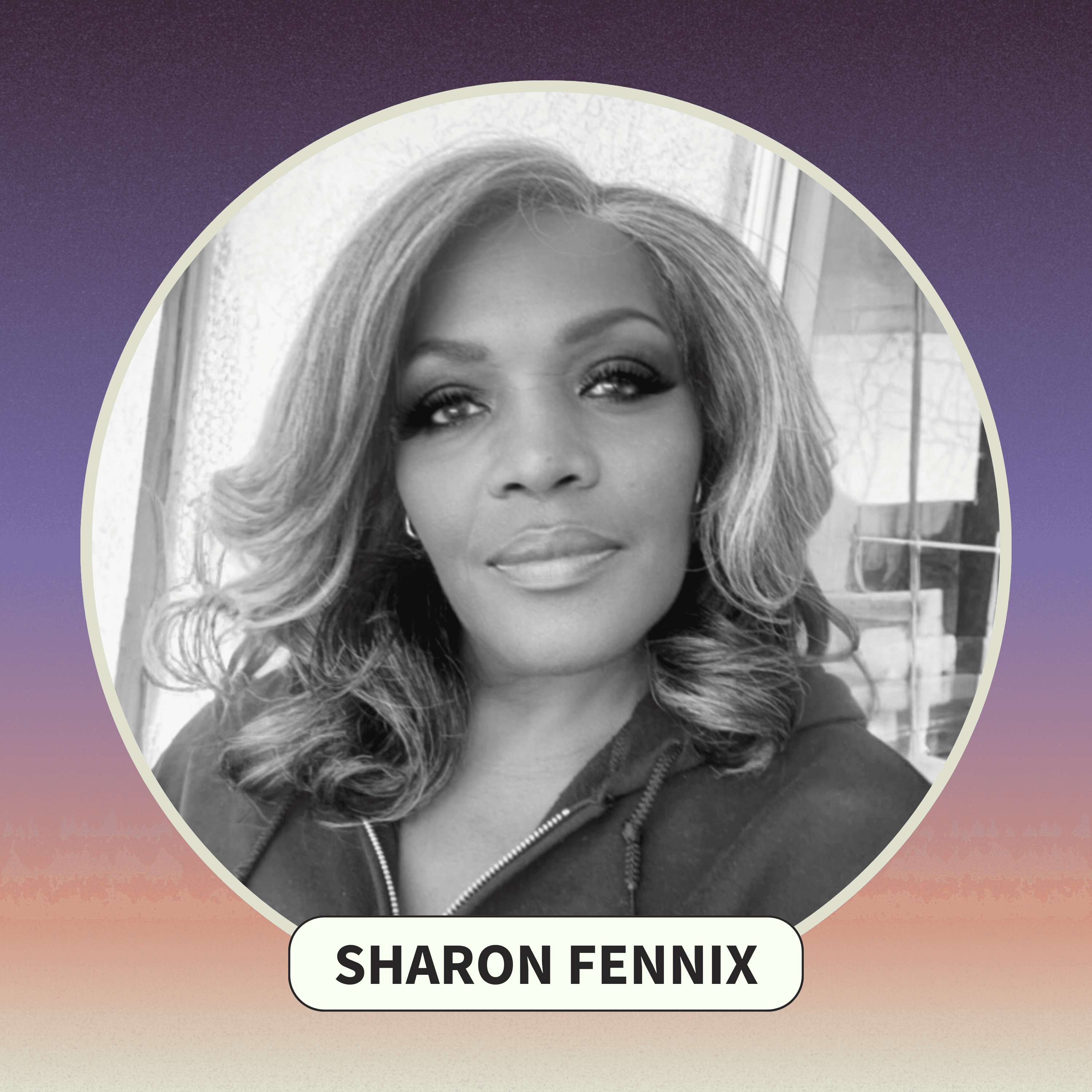
Sharon Fennix spent 38 years incarcerated before becoming the hotline coordinator for the Transitions Clinic Network (TCN), where she now supports people returning to the community with empathy, compassion, and lived experience. In this episode, she talks with Emily about reentry, the power of peer support, and the creative life she built inside prison—evolving from seamstress to playwright, director, and storyteller whose productions bridged divides and transformed her own sense of self.
0:00/1:34
The Nocturnists
Season
8
Episode
4
|
Stories that Save Us with Sharon Fennix
Sharon Fennix spent 38 years incarcerated before becoming the hotline coordinator for the Transitions Clinic Network (TCN), where she now supports people returning to the community with empathy, compassion, and lived experience. In this episode, she talks with Emily about reentry, the power of peer support, and the creative life she built inside prison—evolving from seamstress to playwright, director, and storyteller whose productions bridged divides and transformed her own sense of self.
0:00/1:34
About Our Guest
Sharon Fennix is a dedicated advocate and leader from New Orleans, LA currently serving as the Hotline Coordinator for the Transition Clinic Network (TCN). In this role, she supports individuals returning to the community after incarceration by providing critical resources, guidance, and compassionate support. Before joining TCN Sharon served as the Program Director at Billie Holiday Rehabilitation Center, where she was instrumental in developing and overseeing services designed to support recovery, and transition. Sharon holds an Associate of Arts in Behavioral Science from Feather River College (2010) and is also a Certified Dental Technician and Certified Optician showcasing her versatility and dedication to personal growth.
About The Show
The Nocturnists is an award-winning medical storytelling podcast, hosted by physician Emily Silverman. We feature personal stories from frontline clinicians, conversations with healthcare-related authors, and art-makers. Our mission is to humanize healthcare and foster joy, wonder, and curiosity among clinicians and patients alike.
resources
Credits
About Our Guest
Sharon Fennix is a dedicated advocate and leader from New Orleans, LA currently serving as the Hotline Coordinator for the Transition Clinic Network (TCN). In this role, she supports individuals returning to the community after incarceration by providing critical resources, guidance, and compassionate support. Before joining TCN Sharon served as the Program Director at Billie Holiday Rehabilitation Center, where she was instrumental in developing and overseeing services designed to support recovery, and transition. Sharon holds an Associate of Arts in Behavioral Science from Feather River College (2010) and is also a Certified Dental Technician and Certified Optician showcasing her versatility and dedication to personal growth.
About The Show
The Nocturnists is an award-winning medical storytelling podcast, hosted by physician Emily Silverman. We feature personal stories from frontline clinicians, conversations with healthcare-related authors, and art-makers. Our mission is to humanize healthcare and foster joy, wonder, and curiosity among clinicians and patients alike.
resources
Credits
The Nocturnists is made possible by the California Medical Association, and donations from people like you!
This episode is sponsored by The Physicians Foundation as well as Unleashed: Redesigning Health Care, a podcast that features clinician-innovators who have changed care on the front lines. Their stories, their voices, their ingenuity.
Transcript
Note: The Nocturnists is an audio-first experience with emotion and sound design that can be difficult to fully capture in text. Transcripts are provided to support accessibility and reference, but may contain minor inaccuracies. If quoting in print, please consult the audio when possible.
Emily: This is The Nocturnists. I'm Emily Silverman. Today, I'm joined by Sharon Fennix, a hotline coordinator for the Transitions Clinic Network, and a remarkable storyteller who spent 38 years incarcerated before returning home. In today's episode, Sharon speaks with us about how creativity became her lifeline on the inside, where she evolved from seamstress to playwright, director, and community leader.
We also talk about what it was like to re-enter society after decades away, how peer support from someone with lived experience helped her rebuild her life, and how she now
offers that same support to others through the TCN hotline and her experience co-producing a Nocturnists Satellites event. The event was called Journeys of Healing: Stories of Resilience and Transformation, and it was a live show held by the Transitions Clinic Network in Los Angeles in 2025, made possible by a generous grant from the California Healthcare Foundation in support of our Satellites Program. Sharon is an incredible talent and has a very inspiring story, but before we dive into the conversation, here's a taste of the Satellites storytelling event that Sharon co-produced.
Sharon Fennix: In this room, every one of us have a story, and every story has somehow impacted our lives and impacted people that we support.
Clyde: I spent one horrible night on a bench in a school, and I vowed to myself, I'll never be without a roof over my head. I did whatever it took at 12 to survive. I lived in a $7-a-night hotel for about 6 years. At the age of 18, I was arrested for my life crime.
Alicia: There was three different interviews, three different jobs. They all hired me until my background check came back, and then all of a sudden, they weren't interested anymore.
Speaker 1: I was so excited thinking I was going to change the world and change these women. They wouldn't have to make the same mistakes. I was going to be their hero. Somewhere, somehow, no one ever taught me about those folks that I would lose during the process. No one taught me how to grieve the folks that I couldn't help.
Speaker 2: He really tapped into me. Actually, we tapped into each other. I would call him, or he'll call me and be like, "Yo, what are you doing? What'd you eat today?" We worked together a lot to the point where he became my little brother.
Speaker 3: I got to tell you about this one time that he came up to the building specifically to show me the new dentures that he got. "Yes, yes." I'm telling you, his smile was priceless. Priceless.
[applause]
[cheering]
[music]
Emily: I am sitting here with the wonderful Sharon Fennix. Sharon, thank you so much for coming on to The Nocturnists.
Sharon: Thank you for having me.
Emily: Maybe we could begin by just having you tell us about who you are and what you do. What is your role at TCN, and maybe a day in the life of your work?
Sharon: My role at TCN is, I am the hotline coordinator. We deal with men and women who are re-entering society. I like to call them our returning community members. A day in the life on the hotline is we answer calls from people who are inside and people who have just returned into the community, looking for Medical, looking for a clinic, primary care doctor, mental health, someone that can help them navigate that system.
Because as a lifer and a former lifer, that can be very hard, the challenges of returning back into the community, something as simple as knowing how to answer a phone call on iPhone, knowing how to get on the bus, those are some of the challenges that I myself went through in 2017. I kept hanging up on people trying to answer them, because I didn't understand the red and the green dots, or how to slide my phone.
I got on a bus. I was going for an interview. I was an hour late because I went the wrong direction and ended up on the other side of the town when I needed to be at a certain place at a certain time. Those are some of the things that, as peer specialists, we are the experts at knowing what the other individual is going through. We answer phone calls from all the prisons in the state of California, and we connect them to a CHW, which is a community healthcare worker.
That person is a person with lived experience. The model for TCN is that they hire individuals who have done time. Us on the hotline, I like to go a little further than saying that I just help them with Medical. They call me on that hotline, and they talk to me about a host of things that's going on in their lives, including the prison system. As a peer, I'm able to use my empathy and compassion to help them move along and give them some advice. I like to always let them know that "It's going to be your choice, but these are the things that helped me out."
Emily: I know the model for TCN is that all of the hotline operators have personal experience from the inside, so I'm wondering what was it like for you to connect with the hotline yourself when you were transitioning out and back into the community, and how did your experience, being on the receiving end of that interaction, inform the way that you now show up for clients as the hotline operator yourself?
Sharon: This is what helped me. When I was on the inside, and I got out, I typically went to Southeast Medical. There was a CHW there. His name was Joe Calderon, and I kind of had some of the same thought processes about Medical that I had leaving the system, that they were no good, and they weren't going to do anything for me, so "Why am I wasting my time?"
I was met with Joe Calderon when I walked into the clinic, and first I thought he was just an average dude that was working for them, and was getting ready to tell me the same spiel, but he pulled me to the side and said, "Hey, check this out. I did this many years. I know you are probably going to feel a certain way about Medical because I can see from your resistance, but you get to decide out here. They don't get to decide for you. If you don't like something, you can say no to it, and you don't have to be coerced to say yes. Most of these doctors will listen to you, so give them a chance to listen to you."
When he said that, I was like, "Oh, okay. Well, are you sure?" He was like, "Yes." I talked to the doctor. She was very sweet, and she was more concerned about what I wanted for myself than what she was going to tell me to do. She gave me what was going on with me, and gave me the right to make the decision. I think that's the part that sold me on TCN at that point, and also that I had a person that was formerly incarcerated telling me these things, because, like I said, when we're in the inside, we depend on each other, and each other's word is the book in the Bible, not the CO's.
To hear another comrade tell me that I can make choices for myself, that eased the fears. It also allowed me to open up to the provider, and it allowed me to create a dialog with her, and we was laughing, and that's something I never did with my doctors. I felt humanized right then, and that's something that I try to make sure that the callers get from me is to make them feel humanized, to make sure that they're leaving that phone with a smile or a moment that they can go back and talk about.
Emily: It makes complete sense to me that you would have trust and that there would be more credibility speaking to somebody who has a similar life experience to you. I'm wondering, when people call, do they know that they're talking with someone who has been incarcerated? Do you disclose? Do you tell people your story?
Sharon: When I get a call, the first thing I do is I greet them with "How are you doing. How's things going?" Then I tell them, "The thing that makes it easier for the two of us to communicate is that I did 38 years in prison. I am you. You are my brother. You're my sister." That's how I talk to them, and "I'm here to help you." I give them the model. "TCN hires individuals who have lived experience, and I'm one of those ones that have lived experience." I express to them that I'm there to help them in whatever way I can.
Emily: I want to pull back a bit and talk about your creative life, because you are such a creative person and such an artistic person. Growing up, did you identify as an artsy person, a creative person? Tell us about maybe childhood and growing up, and the extent to which creativity was a part of your world.
Sharon: Yes, I think about that. [chuckles] Growing up, I was seriously a track star. I was the fastest girl in my whole city and and becoming the fastest in the state, I ran against boys, even for training. I laugh about it. I think that Jackie Joyner look was one of the looks that I probably would have invented for myself. I used to do things with my uniform that they would pull me over and say I couldn't do, but I wanted my own original, unique look.
I've always been a person that loved artsy things, putting things together. I buy off-the-wall art pieces that people would say, "It's way too much." I make different pieces, but I like to sew. My grandmother taught me how to sew because that's what she used to do, is sit down and sew a lot. I would watch her, and she would say, "My eyes is going bad, gal. Get here and put this needle in here for me," and I'd put the needle in the thread, and I'd watch her mend stuff. I'd watch her cut patterns without a pattern.
I was like, "Why do you need that piece of paper?" She said, "Well, I'mma cut this piece of paper, and I'mma put the material on, and you just watch what I do with it." I watched it, and at the end of the day, that's how I learned how to cut things without a pattern. It's just looking at you, I can cut the collar. Looking at you, I can cut the arm. Put the material up to you. I can cut your waist.
I can look at you and say what size you wear, and then try to put that outfit together. That's what I did a lot of inside. I would make costumes for each one of our plays. I wrote the plays myself and got the individuals to perform. I would choose my cast members, and at the end of the day, we put on awesome plays inside of there. I felt really, really good because most of the art materials, all the costumes I had done.
One thing about the prison is, they enjoyed my plays. They enjoyed my talent shows, so they would allow for me to get what I needed and to do what I needed to get it done. I find out now that my networking that I would do inside has helped me learn the networking system on the outside, because I'd go to industry and ask them for old pieces of material. I'd go to the industry and try to get as much material as I could. I would go to the clothing room and ask for sheets that they weren't going to use anymore, old sheets. I'd take them old sheets and make dresses.
Emily: You and I spoke offline several months ago, and you told me a story that I really loved. You talked about how when you were in prison, it started with fashion. You were a seamstress. You loved to sew, and you would make costumes, and you would do fashion shows, and then you started adding dialog to the shows, and then that's kind of when they went from being just fashion shows to being more like plays with costumes.
Specifically, you talked about this one day that there was an argument that happened between two girls in a kitchen, and that gave birth to one of your first plays, which was a play about Helen Keller. I was wondering if maybe you could back up a bit. Maybe talk to us about the fashion shows first, and then talk about that argument in the kitchen, and how that changed the fashion shows into plays.
Sharon: Well, I've always been someone that loved to dress. My father was a really good dresser, so it started there, and then I became someone that liked to make, like I said, my own clothing and change clothing. I want to take the arm off the jacket, and I want to leave one on. I want to put pins on the jacket, and I want to put all kind of puffy things on it. That was just me, my own unique look, and then people would ask me, "Would you do that for me?" Like, "Okay, they like it."
Getting back to Helen Keller, I used to love watching movies about her. That one movie about her, I would watch it all the time. Like I told you, I think I added that my auntie was deaf, and so the way she spoke was the same way my auntie spoke. I never understood at that point that all of them that are deafs have that monotone, and that's how they speak with their hands and try and speak to you with their mouth.
However, in the kitchen, these individuals were arguing, and one couldn't understand the other. That day, I was really trying to get stuff together for a show, and when that was happening, it was irritating, to be honest, that I was experiencing the arguing and looking at them about to fight, and the whole nine. I think I just want to be trying to get them to understand that that wasn't what should happen. "We need to get this together for the show. Can you guys both come with me?"
Then I recognized that one couldn't understand the other, and watching that stopped me for a minute, and said, "Okay, I can use this," the way she gave it to her, and couldn't even talk, right? This is where the shows begin for me. I was like, "Okay, I'mma take this, what happened, turn it into a show, get the costumes in, and I need y'all to be members of the cast," and was able to get them to be members of the cast.
One of my best shows, one of my best shows, because I did that with the way they communicated, the arm throwing and everything else, and also was able to make the show that I wanted, which was communicating that we should be together and not the other way around. At that point, it was a lot of separation per color. If you was Black, you had to stay in a Black section. If you was white, you was going to stay in the white section. If your name was Mexican, you was in the Mexican separation.
The prison, I felt like, was not doing anything about that separation. My first show, I know it's going to seem a little strange, but I used a deaf Black person to communicate, sort of like in the slavery days, and brought it to modernized and had everybody in there. I had whites, Mexicans, everybody in there. That in itself changed my life tremendously, because when you're writing a script, the audience has to receive it.
You want a person to walk away from there knowing what that story was about, and when they walk away, they're telling that story. It passes on, and it passes on, and before you know it, it's almost like that telephone. I don't know if you remember going to school, and they had this game called the telephone. You would whisper to the person's ear, and by the time it gets to the end, it wasn't what you said, right?
To me, that's how the storytelling turns out. You tell it right, it'll pick up its own form. Like water, it ripples and ripples and ripples and ripples. Every fashion show, every play that I did, it was based on some individual inside the prison. It was based on something that they had been through. I want to say, when I did those plays, it wasn't just about telling their story; it was how I wanted people to receive it, but it was also for the person that's telling the story to see it themselves, because during rehearsals, they could see it, and that also helps with them learning how to change that system for themselves.
[music]
Emily: Can you tell me how you go about putting on a play or a production in prison? I imagine, before you arrived, these plays weren't happening. This was something that you started. Do you walk up--
Sharon: They were doing fashion shows before I arrived.
Emily: Oh, okay.
Sharon: Because I became one of their participants in a fashion show. A girl came up to me, and I was real tall and very thin. She said, "You're model material." She said, "We finna do a show. Would you get in there?" She said. "Girl, you walk good in heels." She said, "I'd seen you running across the yard in heels. Girl, how do you do that?" I was like, "I'm just a track star, so running, they don't bother me. I run on my tip, so it's okay. I'm not running on the back of the heel; I'm running on the front of the heel."
She said, "Well, yes, you can. I'm going to teach you a couple of moves, and I want you to be in the show." That was the beginning of that. When I branched off for my own productions, I went out and, daily, my way of doing it was looking around and listening. I would first get the theme, and I would get my story plot, and then I would go out and just walk the yard, sometimes for days, just looking at people.
I'd have a pen and a paper with me, always to have my little notebook. I'd write down something that was happening that day. Once I did the casting, my first initial meeting would be about telling them what the storyline was and what type of entertainment I wanted to give our audience, and what I wanted them to receive from the play. That would be the hardest part.
The hardest part of getting a cast together inside is keeping people-- how would I say this? Just keeping people drawn into the effect of that "This is finna be a performance, and so you have to be serious about it. Your girlfriend can't stop you from coming to rehearsal. You can't go out there fighting during rehearsal time." These are the type of things life would show up.
When it'd show up, I would tell them they'd have to have the commitment to this, because it's not just something that I want to do for myself; it's something I want to do for those women that are suffering in the inside. All of us are suffering together in this melting pot. We have a lot of people that we don't know what they're going through. This will draw people into our platform, what we're doing, and we want people to be involved, so let's do the best that we can with what we have."
I was a stickler for promptness. You must be on time, you must be ready, and you need to know your role. You need to know your script. I became one of those people that they looked up to and said, "She ain't to be played with." I had a monkner that I tell people not to call me now, and it was Money, and then it was passed around the whole prison. The COs called me Money, and they said, "Money is not to be played with. If you're going to get into one of her plays, she's not going to play, so you'd better be ready."
One of the things that I would do when they first walked through the door, and I just asked them to be themselves, "I'm going to give you a theme. I'm going to give you a storyline that I want you to, just off your head, play it out." I'd give them like, "You just got a phone call from your mother, and they can't find your daughter." I started to see emotion. "I need to see bewilderness. I need to see confusion. I need to see anger. I need to see all those because I never know which one you're going to play."
I'd give them her name, where she's missing it, and this is what it is, and give them a minute to go out and go over it and rehearse it really quick, and come on in and do it. That's how they got picked. A lot of times also I picked because you did something on the yard, and they'd say, "You asked me to come. I've never act before." I'd say, "Girl, you was acting like--" At that time, I was cursing. "Yes, you was doing it. You was real theatric, and I need you to be in the play."
Then it turned out that person got it because I'd seen them being a funny fool on the yard, and I needed that funny food at that time in the script. Yes, that's the way it formed, and they were always good.
Emily: It sounds like you were writer, costume designer, talent scout, and director all wrapped into one. Did you have a particular actor, or actors, who were like your muse, like people who you found and identified that were really talented, and then you got to direct them and work with them and mold them, like how directors and actors, they'll often pair up and work together a lot?
Sharon: Yes, I had two friends. They turned out to be my friends. They did a time longer than me. However, to me, they had their own type of shine. One was a choir director, and the other, she was a leader. She was a head of what we call WAC. That was the Women's Advisory Board. I would watch her go into an office. This was the most amazing thing for me to watch her do this, because, say, for instance, we would have a fight on the yard, and they locked the whole prison down, and they'd say we weren't going to come off that for 30 days because someone stole 100 to 500 syringes.
They'd say you're going to stay locked down for a month. That's not the time that she had to navigate; that was the time that I had to navigate, but I was just giving an example, right? Say, for instance, that she had to deal with that, and how she dealt with it would have been amazing to see, if you could have seen it on my end. She would go into the office with the wardens and captains and the lieutenants, and they would respect her as if she was leaving out the gate with them every day.
They smiled with her. They listened to her key elements that were missing for us. She was in the same system, but different and separated. She went to a room just like us, with another roommate, or maybe four roommates, and was able to keep her dignity, and people respected her decisions, and I wanted to be that person, and that's exactly what I turned out to be.
After Carlita left, I was considered her in being able to move things the way it should be, and being able to be a buffer, a liaison between the two. Having her in my show, I did a show called Black Diamond. It was both mixed with play and a fashion show, and people had never seen that before, that I was able to put dialog and keep them dressing. It was basically three parts of a black diamond: the challenges of getting the diamond, what it went through to be the diamond, and then, in the end, the diamond itself.
That's what we did. It was beautiful. To watch her be that person, go through the struggles to be a diamond, and basically, we considered her a diamond already, the way she mechanically did it was just the bomb for me. I was like, "Yes." I was I was like a director in tears. "Yes, you, girl." The whole audience was crying in the end. When I realized that I was good at it, staff would not miss not one of my shows.
People would even stay after work to see my shows. They start bringing their children to see my shows. That was great. I did a dress for the chaplain's daughter because I was a seamstress. I started feeling validated. I started feeling like-- How I need to say this is God started giving me, in small snippets, that I would be leaving that prison. He started revealing things that I needed to know, because at first I was listening to--
What they had said is that I would never leave that place, because of my attitude, because I was doing a lot of fighting, because I was a piece of crap. I really just thought I'd never go, but I did, and once I started seeing how my life was changing, the tables were turning. Those plays helped me mold myself into a better person. Storytelling is, like I said, something we do every single day, but we don't see it as that.
We see it as moving around mechanically and going through the things that we have to do in life, but if we sat back and looked at the things that people were actually going through, there is a story behind it. That's the most important thing.
Emily: I'm just really struck by your talent and leadership as a writer, storyteller, and director, and how that talent and developing that talent yourself in prison changed you and changed your life, and this moment where you said, "There was for the first part of my time in there, I thought I would never leave, and then I started getting these messages from God that I was going to leave," and that that had to do with your leadership role and how you personally were transforming. I had another question in mind, but I'm actually going to ask a different question. Do you remember the first moment you knew, "For sure, I'm going to get out"?
Sharon: I can't give you a first, first moment, because, like I said, He just kept sending signs. When you go through life, and everything is no, from everybody is no, you just feel like you want to end it, but I got to say I was a coward in that sense. "I can't take me out; you got to do it." I kept fighting people, hoping that one would one day, and that's the honest story. I kept saying, "You're going to have to kill me."
I would place myself in that situation because I hoped that I would be done with this, right? I didn't want to continue to sit behind that wall. However, when I started seeing that I was able to use what I was learning from my own work, from these plays, when you really, really sit there and you think about what another person is going through, you can see why they went through it, and you have a choice in the matter.
You have a choice to accept that that's what that person has been through, or you can be someone that judges it and ignore the message, and I chose not to ignore any of the messages. I stopped ignoring them because, in the beginning, I was ignoring every message that people were sending to me. They were trying to change my situation. There was a handful of staff.
"You're too young. You've never even been in a juvenile system. You've never been incarcerated a day in your life, and then you got life sentence. You can change it and get right on upon it here." I didn't want to change it. I was already feeling a certain way about being there, and I resigned to what people were saying that I wasn't going to go anywhere. I began to make my time harder for me, and as I was making it harder for me, I was receiving the messages that people were saying, "You're not good. Do you know?" I accepted it.
Emily: Then you did undergo a change.
Sharon: A miraculous one.
Emily: It sounds like there was no single moment where you knew you were going to get out, that it was more gradual.
Sharon: If I had to say when I knew I was going to get out, it would have to be after I got off that floor in the boardroom, because I heard them say, "You're found suitable," but it didn't register at first, because, "What?" I had to look at my lawyer and say, "What did they just say?" The next thing you know, I was on the floor crying, but when they said it, it was a delayed reaction for at least 10 minutes, because I was stunned.
I'm sitting there and I'm looking and I said, "Wait a minute. What did they say?" I had a lawyer. There was a male and a female, both of them touched my shoulder. I'll never forget that moment. They said, "Take a breath. You heard right. They said you were found suitable, so take a moment to take that in." Ah, it took more than a moment. I was on the ground.
I knew that I had to start peeling layers of myself off, and I knew, as I was peeling them off, that people were starting to receive them. People were starting to say. There were some that believed in the change, and then there was some that said I was just performing like on stage. "You'll see it. She's just performing right now." I had to shut down that portion of myself that would listen to people when they say that and accept it, take that as word that I am that.
I had to start changing that and start saying, "Okay, they have a right to have their opinion. Let them have it. I'mma keep moving forward." As I was moving forward, more people embraced me, and more people understood me. Then, when I went into that boardroom, I was able to speak to them in a way that I started accepting that they were just humans; they weren't gods.
They weren't presidents. These were everyday people with jobs that got put into a position to govern over people's lives, to say whether you will stay or go. I kind of started saying, "This is somebody's mother. This is somebody's daddy. I'mma relate to him that way." I went into that boardroom, and that's the way I related to them, because at first, I felt like I was in front of a jury and a judge every time I went in there.
Then I came to the conclusion. Like I said, after all, the stories and the plays we gave were for people to see how things can happen, how change can be a part of your life. "Here's some of the things that you go through, but this is what you can get in the end, even in here." After that was done, it started to make me see how to communicate with that boardroom. I went into the boardroom without a performance.
I just went in there and was able to reach each one. It's like my motto, I say, "Each One Teach One." I heard that inside. That's the motto that they use for every group we go in, "Each One Teach One. Go out and tell someone else what you learn and bring them back." Well, I started using that in that room. I started saying, "I got to teach them about me. They need to know who I am, and they need to know why I am the person that I am. They also need to know what I want from what I went through."
Storytelling taught me how to do that. It taught me how to look in the room and see who's listening to me, because when you're on that stage, you're going to see people talking to each other, people kissing on each other. You're going to see people doing everything, but you're going to see that 1 or 2 or 3 or 5 or 6 or 7 or 4, 20 that are in tune with you, that don't want the person next to them to move, and they're going to talk. "Look what she's doing."
You're going to see that, and you know that's where your strength is, right there. You're pouring that inside of that person, and that person is going to be able to tell that story. That is what I did in that boardroom. I kept looking because I kept going. I went there seven times, and after being told no for six times, that seventh was my time. When I went in there, it started from me going in there, saying, "F you," and walking out.
Four times I did that. Two times I said, "I ain't going to the board. Tell them to just do what they going to do." From the fifth, the sixth, to the seventh, that was when I was learning me, knew who I was, knew what I wanted, knew what my decision was going to be, knew what was wrong with my life, and fixed pieces of me that needed to be fixed, and I was able to tell them, "I'm here to tell you what my past was. I'm here to tell you who I am, and I'm here to tell you that you may make a decision based on what you feel, but I want you to make a decision on what I am today, on who I am today, and this, your system, helped make this person."
Because, see, I told them, "Your system could make or break a person, and you won't have anything to do with it, you yourself. It's just the system. I'm not blaming you as a board member for my life, and I'm not blaming anyone else for my life, because when I was old enough to make decisions, that's the time I was supposed to make them, but there has been prompts."
I told them, "There has been prompts in my life." Because of that, one time I went to the board, and I told them, I said, "Have you ever had a person that could basically take your mind and mold it into the person that they want you to be, and you follow suit, you believe, you trust, you love?" I had to describe my baby daddy to them so they can understand why I was where I was at in my life, and I did it.
It wasn't an easy task, but I did it and had that board member crying because she said, "That's Stockholm syndrome. You didn't know where you were going." She was able to start telling me about me. We both cried together. She said, "We need a recess." Even though I didn't get out that day, I knew that woman in that room was connected to me for that moment, and she was going to be connected to me for the rest of her life, because for her to have tears in her eyes and literally cry with me, not not for a second, but for some time she had to leave out and take a recess, I knew she understood a portion of me, and that is what storytelling gives you.
Someone in that room hears you. Someone in that room feels you. Someone in that room knows what you've been through. Someone in that room needed to be in this place right now to see that to help themself out of a situation. These stories that we tell are not always happy ones. The plays that we do are not always happy ones. Movies don't always end the right way.
You want that person to live, but that person dies. That person accidentally got hurt, or that person ended up going through something tragic. The worst part for me is when women get their body took when it's not a right. I went through that as a little girl more than once. Those are things that I did a lot of stories on. I did stories on portions of my life that I was ashamed to tell about, portions of my life that needed to come out of me, because that was killing me inside, and I didn't know how to talk about them. I was embarrassed to talk about them, and I was uncomfortable to talk about them, so I put them on paper, and I let someone else act my life out.
Emily: I know that I could talk to you for three hours, but I want to ask one more question before we end, because I know we're running out of time. You received this grant from The Nocturnists to do the Satellites storytelling show, so you're kind of back in the theater. Tell us about that experience.
Sharon: On that stage, there was a lot of tears, because you had individuals talking about their life and to a room that was listening, and so the audience makes the performance. We may not want to think that way, but they do, because if you go into a room and you are someone that is a comic and no one's laughing, what does that do to you?
Emily: [laughs] That's so true.
Sharon: Okay? Yes, if you are putting on a performance and people are walking out, what does that do to you? The bottom line is that storytelling that we did, we wanted them to, one, "Tell your story as if you never got a chance to do so. Tell it to the people that that you feel, that you're interconnected to you. There's an interpersonal relationship with us, because all of us have done time in a system that we understand that it has mocked, or it has helped at some point in our lives, but we there was times when we didn't want to tell our story. This is your chance to really, really let people know who you are, let people know about you."
Doing that, they got on that stage, and they talked, and they cried. They told stories about why they wanted to be community healthcare workers and experiences that they went through, to the point of one person telling a story about a patient that died, and how that affected her. I thought about that. I said to myself, when she was telling it, "There's so many of my friends that have died out here that spent 30 and 40 and 20-something years just to come out here and have maybe a year.
"Some of them have had only a couple of months. I still to this day got friends that are dying, that did life sentences. I got one in the hospital right now. They're saying we should go to say goodbye to her, but I can't make it down that way to where she is. I can't take the time off, so I'm emailing, and I'm texting, 'Tell her I love her.'" While they were telling their story, you were telling it to an audience that wanted to hear it. We're telling it to our audience that were paying attention. That's one of the things that made it feel like not a performance for them, but the biggest group that they ever had to talk to.
Emily: Do you have any dreams or aspirations of continuing your directing career or your writing career, any projects or anything like that coming up?
Sharon: Well, pretty soon, I'm going to be transitioning. Trump did his thing on us, and so soon our hotline is going to close. What I want to do is what you guys do as podcasters, because it's so much that I want to talk about, and I want to be able to share these things with individuals that have been through what I've been through, and we connect and begin to tell others and open a forum where everyone can talk about things that today people don't want to talk about, or today, if they talk about it, it's in such an ugly light.
I don't want to be one of those podcasters that get on and defame people; I want to be someone that sends the message and helps others give the message. I have already labeled it She Just Wants to Talk. I just want to get in there and do segments that that make sense and has no filter to it, because I don't think that everything needs to be filtered. I think that if your story is a certain way, we need to hear it that way, because inside, it was always how we should speak.
There was a monotone that we needed to make sure we used. We got to take the shackles off of people's feet in order to hear the story. You got to meet people where they are. It's a new sense. Today, I believe we don't do enough.
Emily: I'm really excited to hear that you're thinking about starting your own podcast, and would love to help in whatever way.
Sharon: Really great.
Emily: Just want to say that your story is so amazing and so inspiring, and it's a story about storytelling. It's really a story about storytelling and how storytelling can transform individuals and communities. You were saying that becoming a leader in storytelling helped you, helped you change your own life, but it sounds like it also helped change some of the dynamics in the prison.
Sharon: It sure did.
Emily: It sounds like it changed the way that you approach life outside. You did this Satellites event. Now you're going to do this podcast, and it sounds like the way that you talk to people on the hotline, even, is very grounded in story. I find that all just to be really powerful and wanted to say thank you so much for-
Sharon: Thank you.
Emily: -applying to our grant program, to putting on such an amazing Satellites event, and also for coming on today to share your story with me and with The Nocturnists audience. We're really grateful.
Sharon: Let's stay connected. I don't want this to be a distance. I want to be able to reach out to you if I'm getting ready to do a performance or if I'm getting ready to do a segment of a podcast. I'd like to talk to you, and you advise. We understand The Nocturnists' model and what it means, what you invented in this thing, right? It's a great thing. It's like, "We could go around the world doing this."
Yes, some people are not invested in telling stories and understanding what that looks like. They go to a performance, and after it's over, boom, it's over, but for us, it keeps reeling. "What can I do next?"
Emily: Well, Sharon Fennix, it's an honor. Thank you so much.
Sharon: Thank you.
Emily: We will stay in touch.
Sharon: All right.
[music]
Emily: This episode of The Nocturnists was produced by me and Producer and Head of Story Development Molly Rose-Williams. Our executive producer is Ali Block, and Ashley Pettit is our program director. Original theme music was composed by Yosef Munro, and additional music comes from Blue Dot Sessions. The Nocturnists is made possible by the California Medical Association, a physician-led organization that works to ensure the doctor-patient relationship remains at the center of medicine.
To learn more about the CMA, visit cmadocs.org. This episode of The Nocturnists: Conversations is sponsored by The Physicians Foundation, which supports physician well-being, practice sustainability, and leadership in delivering high-quality, cost-efficient care. The Nocturnists is also made possible by donations from listeners like you. In fact, we recently moved over to Substack, which makes it easier than ever to support our work directly. By joining us with a donation of $2, $5, or $10 a month, you'll become an essential part of our creative community. I'm your host, Emily Silverman. See you next week.
Transcript
Note: The Nocturnists is an audio-first experience with emotion and sound design that can be difficult to fully capture in text. Transcripts are provided to support accessibility and reference, but may contain minor inaccuracies. If quoting in print, please consult the audio when possible.
Emily: This is The Nocturnists. I'm Emily Silverman. Today, I'm joined by Sharon Fennix, a hotline coordinator for the Transitions Clinic Network, and a remarkable storyteller who spent 38 years incarcerated before returning home. In today's episode, Sharon speaks with us about how creativity became her lifeline on the inside, where she evolved from seamstress to playwright, director, and community leader.
We also talk about what it was like to re-enter society after decades away, how peer support from someone with lived experience helped her rebuild her life, and how she now
offers that same support to others through the TCN hotline and her experience co-producing a Nocturnists Satellites event. The event was called Journeys of Healing: Stories of Resilience and Transformation, and it was a live show held by the Transitions Clinic Network in Los Angeles in 2025, made possible by a generous grant from the California Healthcare Foundation in support of our Satellites Program. Sharon is an incredible talent and has a very inspiring story, but before we dive into the conversation, here's a taste of the Satellites storytelling event that Sharon co-produced.
Sharon Fennix: In this room, every one of us have a story, and every story has somehow impacted our lives and impacted people that we support.
Clyde: I spent one horrible night on a bench in a school, and I vowed to myself, I'll never be without a roof over my head. I did whatever it took at 12 to survive. I lived in a $7-a-night hotel for about 6 years. At the age of 18, I was arrested for my life crime.
Alicia: There was three different interviews, three different jobs. They all hired me until my background check came back, and then all of a sudden, they weren't interested anymore.
Speaker 1: I was so excited thinking I was going to change the world and change these women. They wouldn't have to make the same mistakes. I was going to be their hero. Somewhere, somehow, no one ever taught me about those folks that I would lose during the process. No one taught me how to grieve the folks that I couldn't help.
Speaker 2: He really tapped into me. Actually, we tapped into each other. I would call him, or he'll call me and be like, "Yo, what are you doing? What'd you eat today?" We worked together a lot to the point where he became my little brother.
Speaker 3: I got to tell you about this one time that he came up to the building specifically to show me the new dentures that he got. "Yes, yes." I'm telling you, his smile was priceless. Priceless.
[applause]
[cheering]
[music]
Emily: I am sitting here with the wonderful Sharon Fennix. Sharon, thank you so much for coming on to The Nocturnists.
Sharon: Thank you for having me.
Emily: Maybe we could begin by just having you tell us about who you are and what you do. What is your role at TCN, and maybe a day in the life of your work?
Sharon: My role at TCN is, I am the hotline coordinator. We deal with men and women who are re-entering society. I like to call them our returning community members. A day in the life on the hotline is we answer calls from people who are inside and people who have just returned into the community, looking for Medical, looking for a clinic, primary care doctor, mental health, someone that can help them navigate that system.
Because as a lifer and a former lifer, that can be very hard, the challenges of returning back into the community, something as simple as knowing how to answer a phone call on iPhone, knowing how to get on the bus, those are some of the challenges that I myself went through in 2017. I kept hanging up on people trying to answer them, because I didn't understand the red and the green dots, or how to slide my phone.
I got on a bus. I was going for an interview. I was an hour late because I went the wrong direction and ended up on the other side of the town when I needed to be at a certain place at a certain time. Those are some of the things that, as peer specialists, we are the experts at knowing what the other individual is going through. We answer phone calls from all the prisons in the state of California, and we connect them to a CHW, which is a community healthcare worker.
That person is a person with lived experience. The model for TCN is that they hire individuals who have done time. Us on the hotline, I like to go a little further than saying that I just help them with Medical. They call me on that hotline, and they talk to me about a host of things that's going on in their lives, including the prison system. As a peer, I'm able to use my empathy and compassion to help them move along and give them some advice. I like to always let them know that "It's going to be your choice, but these are the things that helped me out."
Emily: I know the model for TCN is that all of the hotline operators have personal experience from the inside, so I'm wondering what was it like for you to connect with the hotline yourself when you were transitioning out and back into the community, and how did your experience, being on the receiving end of that interaction, inform the way that you now show up for clients as the hotline operator yourself?
Sharon: This is what helped me. When I was on the inside, and I got out, I typically went to Southeast Medical. There was a CHW there. His name was Joe Calderon, and I kind of had some of the same thought processes about Medical that I had leaving the system, that they were no good, and they weren't going to do anything for me, so "Why am I wasting my time?"
I was met with Joe Calderon when I walked into the clinic, and first I thought he was just an average dude that was working for them, and was getting ready to tell me the same spiel, but he pulled me to the side and said, "Hey, check this out. I did this many years. I know you are probably going to feel a certain way about Medical because I can see from your resistance, but you get to decide out here. They don't get to decide for you. If you don't like something, you can say no to it, and you don't have to be coerced to say yes. Most of these doctors will listen to you, so give them a chance to listen to you."
When he said that, I was like, "Oh, okay. Well, are you sure?" He was like, "Yes." I talked to the doctor. She was very sweet, and she was more concerned about what I wanted for myself than what she was going to tell me to do. She gave me what was going on with me, and gave me the right to make the decision. I think that's the part that sold me on TCN at that point, and also that I had a person that was formerly incarcerated telling me these things, because, like I said, when we're in the inside, we depend on each other, and each other's word is the book in the Bible, not the CO's.
To hear another comrade tell me that I can make choices for myself, that eased the fears. It also allowed me to open up to the provider, and it allowed me to create a dialog with her, and we was laughing, and that's something I never did with my doctors. I felt humanized right then, and that's something that I try to make sure that the callers get from me is to make them feel humanized, to make sure that they're leaving that phone with a smile or a moment that they can go back and talk about.
Emily: It makes complete sense to me that you would have trust and that there would be more credibility speaking to somebody who has a similar life experience to you. I'm wondering, when people call, do they know that they're talking with someone who has been incarcerated? Do you disclose? Do you tell people your story?
Sharon: When I get a call, the first thing I do is I greet them with "How are you doing. How's things going?" Then I tell them, "The thing that makes it easier for the two of us to communicate is that I did 38 years in prison. I am you. You are my brother. You're my sister." That's how I talk to them, and "I'm here to help you." I give them the model. "TCN hires individuals who have lived experience, and I'm one of those ones that have lived experience." I express to them that I'm there to help them in whatever way I can.
Emily: I want to pull back a bit and talk about your creative life, because you are such a creative person and such an artistic person. Growing up, did you identify as an artsy person, a creative person? Tell us about maybe childhood and growing up, and the extent to which creativity was a part of your world.
Sharon: Yes, I think about that. [chuckles] Growing up, I was seriously a track star. I was the fastest girl in my whole city and and becoming the fastest in the state, I ran against boys, even for training. I laugh about it. I think that Jackie Joyner look was one of the looks that I probably would have invented for myself. I used to do things with my uniform that they would pull me over and say I couldn't do, but I wanted my own original, unique look.
I've always been a person that loved artsy things, putting things together. I buy off-the-wall art pieces that people would say, "It's way too much." I make different pieces, but I like to sew. My grandmother taught me how to sew because that's what she used to do, is sit down and sew a lot. I would watch her, and she would say, "My eyes is going bad, gal. Get here and put this needle in here for me," and I'd put the needle in the thread, and I'd watch her mend stuff. I'd watch her cut patterns without a pattern.
I was like, "Why do you need that piece of paper?" She said, "Well, I'mma cut this piece of paper, and I'mma put the material on, and you just watch what I do with it." I watched it, and at the end of the day, that's how I learned how to cut things without a pattern. It's just looking at you, I can cut the collar. Looking at you, I can cut the arm. Put the material up to you. I can cut your waist.
I can look at you and say what size you wear, and then try to put that outfit together. That's what I did a lot of inside. I would make costumes for each one of our plays. I wrote the plays myself and got the individuals to perform. I would choose my cast members, and at the end of the day, we put on awesome plays inside of there. I felt really, really good because most of the art materials, all the costumes I had done.
One thing about the prison is, they enjoyed my plays. They enjoyed my talent shows, so they would allow for me to get what I needed and to do what I needed to get it done. I find out now that my networking that I would do inside has helped me learn the networking system on the outside, because I'd go to industry and ask them for old pieces of material. I'd go to the industry and try to get as much material as I could. I would go to the clothing room and ask for sheets that they weren't going to use anymore, old sheets. I'd take them old sheets and make dresses.
Emily: You and I spoke offline several months ago, and you told me a story that I really loved. You talked about how when you were in prison, it started with fashion. You were a seamstress. You loved to sew, and you would make costumes, and you would do fashion shows, and then you started adding dialog to the shows, and then that's kind of when they went from being just fashion shows to being more like plays with costumes.
Specifically, you talked about this one day that there was an argument that happened between two girls in a kitchen, and that gave birth to one of your first plays, which was a play about Helen Keller. I was wondering if maybe you could back up a bit. Maybe talk to us about the fashion shows first, and then talk about that argument in the kitchen, and how that changed the fashion shows into plays.
Sharon: Well, I've always been someone that loved to dress. My father was a really good dresser, so it started there, and then I became someone that liked to make, like I said, my own clothing and change clothing. I want to take the arm off the jacket, and I want to leave one on. I want to put pins on the jacket, and I want to put all kind of puffy things on it. That was just me, my own unique look, and then people would ask me, "Would you do that for me?" Like, "Okay, they like it."
Getting back to Helen Keller, I used to love watching movies about her. That one movie about her, I would watch it all the time. Like I told you, I think I added that my auntie was deaf, and so the way she spoke was the same way my auntie spoke. I never understood at that point that all of them that are deafs have that monotone, and that's how they speak with their hands and try and speak to you with their mouth.
However, in the kitchen, these individuals were arguing, and one couldn't understand the other. That day, I was really trying to get stuff together for a show, and when that was happening, it was irritating, to be honest, that I was experiencing the arguing and looking at them about to fight, and the whole nine. I think I just want to be trying to get them to understand that that wasn't what should happen. "We need to get this together for the show. Can you guys both come with me?"
Then I recognized that one couldn't understand the other, and watching that stopped me for a minute, and said, "Okay, I can use this," the way she gave it to her, and couldn't even talk, right? This is where the shows begin for me. I was like, "Okay, I'mma take this, what happened, turn it into a show, get the costumes in, and I need y'all to be members of the cast," and was able to get them to be members of the cast.
One of my best shows, one of my best shows, because I did that with the way they communicated, the arm throwing and everything else, and also was able to make the show that I wanted, which was communicating that we should be together and not the other way around. At that point, it was a lot of separation per color. If you was Black, you had to stay in a Black section. If you was white, you was going to stay in the white section. If your name was Mexican, you was in the Mexican separation.
The prison, I felt like, was not doing anything about that separation. My first show, I know it's going to seem a little strange, but I used a deaf Black person to communicate, sort of like in the slavery days, and brought it to modernized and had everybody in there. I had whites, Mexicans, everybody in there. That in itself changed my life tremendously, because when you're writing a script, the audience has to receive it.
You want a person to walk away from there knowing what that story was about, and when they walk away, they're telling that story. It passes on, and it passes on, and before you know it, it's almost like that telephone. I don't know if you remember going to school, and they had this game called the telephone. You would whisper to the person's ear, and by the time it gets to the end, it wasn't what you said, right?
To me, that's how the storytelling turns out. You tell it right, it'll pick up its own form. Like water, it ripples and ripples and ripples and ripples. Every fashion show, every play that I did, it was based on some individual inside the prison. It was based on something that they had been through. I want to say, when I did those plays, it wasn't just about telling their story; it was how I wanted people to receive it, but it was also for the person that's telling the story to see it themselves, because during rehearsals, they could see it, and that also helps with them learning how to change that system for themselves.
[music]
Emily: Can you tell me how you go about putting on a play or a production in prison? I imagine, before you arrived, these plays weren't happening. This was something that you started. Do you walk up--
Sharon: They were doing fashion shows before I arrived.
Emily: Oh, okay.
Sharon: Because I became one of their participants in a fashion show. A girl came up to me, and I was real tall and very thin. She said, "You're model material." She said, "We finna do a show. Would you get in there?" She said. "Girl, you walk good in heels." She said, "I'd seen you running across the yard in heels. Girl, how do you do that?" I was like, "I'm just a track star, so running, they don't bother me. I run on my tip, so it's okay. I'm not running on the back of the heel; I'm running on the front of the heel."
She said, "Well, yes, you can. I'm going to teach you a couple of moves, and I want you to be in the show." That was the beginning of that. When I branched off for my own productions, I went out and, daily, my way of doing it was looking around and listening. I would first get the theme, and I would get my story plot, and then I would go out and just walk the yard, sometimes for days, just looking at people.
I'd have a pen and a paper with me, always to have my little notebook. I'd write down something that was happening that day. Once I did the casting, my first initial meeting would be about telling them what the storyline was and what type of entertainment I wanted to give our audience, and what I wanted them to receive from the play. That would be the hardest part.
The hardest part of getting a cast together inside is keeping people-- how would I say this? Just keeping people drawn into the effect of that "This is finna be a performance, and so you have to be serious about it. Your girlfriend can't stop you from coming to rehearsal. You can't go out there fighting during rehearsal time." These are the type of things life would show up.
When it'd show up, I would tell them they'd have to have the commitment to this, because it's not just something that I want to do for myself; it's something I want to do for those women that are suffering in the inside. All of us are suffering together in this melting pot. We have a lot of people that we don't know what they're going through. This will draw people into our platform, what we're doing, and we want people to be involved, so let's do the best that we can with what we have."
I was a stickler for promptness. You must be on time, you must be ready, and you need to know your role. You need to know your script. I became one of those people that they looked up to and said, "She ain't to be played with." I had a monkner that I tell people not to call me now, and it was Money, and then it was passed around the whole prison. The COs called me Money, and they said, "Money is not to be played with. If you're going to get into one of her plays, she's not going to play, so you'd better be ready."
One of the things that I would do when they first walked through the door, and I just asked them to be themselves, "I'm going to give you a theme. I'm going to give you a storyline that I want you to, just off your head, play it out." I'd give them like, "You just got a phone call from your mother, and they can't find your daughter." I started to see emotion. "I need to see bewilderness. I need to see confusion. I need to see anger. I need to see all those because I never know which one you're going to play."
I'd give them her name, where she's missing it, and this is what it is, and give them a minute to go out and go over it and rehearse it really quick, and come on in and do it. That's how they got picked. A lot of times also I picked because you did something on the yard, and they'd say, "You asked me to come. I've never act before." I'd say, "Girl, you was acting like--" At that time, I was cursing. "Yes, you was doing it. You was real theatric, and I need you to be in the play."
Then it turned out that person got it because I'd seen them being a funny fool on the yard, and I needed that funny food at that time in the script. Yes, that's the way it formed, and they were always good.
Emily: It sounds like you were writer, costume designer, talent scout, and director all wrapped into one. Did you have a particular actor, or actors, who were like your muse, like people who you found and identified that were really talented, and then you got to direct them and work with them and mold them, like how directors and actors, they'll often pair up and work together a lot?
Sharon: Yes, I had two friends. They turned out to be my friends. They did a time longer than me. However, to me, they had their own type of shine. One was a choir director, and the other, she was a leader. She was a head of what we call WAC. That was the Women's Advisory Board. I would watch her go into an office. This was the most amazing thing for me to watch her do this, because, say, for instance, we would have a fight on the yard, and they locked the whole prison down, and they'd say we weren't going to come off that for 30 days because someone stole 100 to 500 syringes.
They'd say you're going to stay locked down for a month. That's not the time that she had to navigate; that was the time that I had to navigate, but I was just giving an example, right? Say, for instance, that she had to deal with that, and how she dealt with it would have been amazing to see, if you could have seen it on my end. She would go into the office with the wardens and captains and the lieutenants, and they would respect her as if she was leaving out the gate with them every day.
They smiled with her. They listened to her key elements that were missing for us. She was in the same system, but different and separated. She went to a room just like us, with another roommate, or maybe four roommates, and was able to keep her dignity, and people respected her decisions, and I wanted to be that person, and that's exactly what I turned out to be.
After Carlita left, I was considered her in being able to move things the way it should be, and being able to be a buffer, a liaison between the two. Having her in my show, I did a show called Black Diamond. It was both mixed with play and a fashion show, and people had never seen that before, that I was able to put dialog and keep them dressing. It was basically three parts of a black diamond: the challenges of getting the diamond, what it went through to be the diamond, and then, in the end, the diamond itself.
That's what we did. It was beautiful. To watch her be that person, go through the struggles to be a diamond, and basically, we considered her a diamond already, the way she mechanically did it was just the bomb for me. I was like, "Yes." I was I was like a director in tears. "Yes, you, girl." The whole audience was crying in the end. When I realized that I was good at it, staff would not miss not one of my shows.
People would even stay after work to see my shows. They start bringing their children to see my shows. That was great. I did a dress for the chaplain's daughter because I was a seamstress. I started feeling validated. I started feeling like-- How I need to say this is God started giving me, in small snippets, that I would be leaving that prison. He started revealing things that I needed to know, because at first I was listening to--
What they had said is that I would never leave that place, because of my attitude, because I was doing a lot of fighting, because I was a piece of crap. I really just thought I'd never go, but I did, and once I started seeing how my life was changing, the tables were turning. Those plays helped me mold myself into a better person. Storytelling is, like I said, something we do every single day, but we don't see it as that.
We see it as moving around mechanically and going through the things that we have to do in life, but if we sat back and looked at the things that people were actually going through, there is a story behind it. That's the most important thing.
Emily: I'm just really struck by your talent and leadership as a writer, storyteller, and director, and how that talent and developing that talent yourself in prison changed you and changed your life, and this moment where you said, "There was for the first part of my time in there, I thought I would never leave, and then I started getting these messages from God that I was going to leave," and that that had to do with your leadership role and how you personally were transforming. I had another question in mind, but I'm actually going to ask a different question. Do you remember the first moment you knew, "For sure, I'm going to get out"?
Sharon: I can't give you a first, first moment, because, like I said, He just kept sending signs. When you go through life, and everything is no, from everybody is no, you just feel like you want to end it, but I got to say I was a coward in that sense. "I can't take me out; you got to do it." I kept fighting people, hoping that one would one day, and that's the honest story. I kept saying, "You're going to have to kill me."
I would place myself in that situation because I hoped that I would be done with this, right? I didn't want to continue to sit behind that wall. However, when I started seeing that I was able to use what I was learning from my own work, from these plays, when you really, really sit there and you think about what another person is going through, you can see why they went through it, and you have a choice in the matter.
You have a choice to accept that that's what that person has been through, or you can be someone that judges it and ignore the message, and I chose not to ignore any of the messages. I stopped ignoring them because, in the beginning, I was ignoring every message that people were sending to me. They were trying to change my situation. There was a handful of staff.
"You're too young. You've never even been in a juvenile system. You've never been incarcerated a day in your life, and then you got life sentence. You can change it and get right on upon it here." I didn't want to change it. I was already feeling a certain way about being there, and I resigned to what people were saying that I wasn't going to go anywhere. I began to make my time harder for me, and as I was making it harder for me, I was receiving the messages that people were saying, "You're not good. Do you know?" I accepted it.
Emily: Then you did undergo a change.
Sharon: A miraculous one.
Emily: It sounds like there was no single moment where you knew you were going to get out, that it was more gradual.
Sharon: If I had to say when I knew I was going to get out, it would have to be after I got off that floor in the boardroom, because I heard them say, "You're found suitable," but it didn't register at first, because, "What?" I had to look at my lawyer and say, "What did they just say?" The next thing you know, I was on the floor crying, but when they said it, it was a delayed reaction for at least 10 minutes, because I was stunned.
I'm sitting there and I'm looking and I said, "Wait a minute. What did they say?" I had a lawyer. There was a male and a female, both of them touched my shoulder. I'll never forget that moment. They said, "Take a breath. You heard right. They said you were found suitable, so take a moment to take that in." Ah, it took more than a moment. I was on the ground.
I knew that I had to start peeling layers of myself off, and I knew, as I was peeling them off, that people were starting to receive them. People were starting to say. There were some that believed in the change, and then there was some that said I was just performing like on stage. "You'll see it. She's just performing right now." I had to shut down that portion of myself that would listen to people when they say that and accept it, take that as word that I am that.
I had to start changing that and start saying, "Okay, they have a right to have their opinion. Let them have it. I'mma keep moving forward." As I was moving forward, more people embraced me, and more people understood me. Then, when I went into that boardroom, I was able to speak to them in a way that I started accepting that they were just humans; they weren't gods.
They weren't presidents. These were everyday people with jobs that got put into a position to govern over people's lives, to say whether you will stay or go. I kind of started saying, "This is somebody's mother. This is somebody's daddy. I'mma relate to him that way." I went into that boardroom, and that's the way I related to them, because at first, I felt like I was in front of a jury and a judge every time I went in there.
Then I came to the conclusion. Like I said, after all, the stories and the plays we gave were for people to see how things can happen, how change can be a part of your life. "Here's some of the things that you go through, but this is what you can get in the end, even in here." After that was done, it started to make me see how to communicate with that boardroom. I went into the boardroom without a performance.
I just went in there and was able to reach each one. It's like my motto, I say, "Each One Teach One." I heard that inside. That's the motto that they use for every group we go in, "Each One Teach One. Go out and tell someone else what you learn and bring them back." Well, I started using that in that room. I started saying, "I got to teach them about me. They need to know who I am, and they need to know why I am the person that I am. They also need to know what I want from what I went through."
Storytelling taught me how to do that. It taught me how to look in the room and see who's listening to me, because when you're on that stage, you're going to see people talking to each other, people kissing on each other. You're going to see people doing everything, but you're going to see that 1 or 2 or 3 or 5 or 6 or 7 or 4, 20 that are in tune with you, that don't want the person next to them to move, and they're going to talk. "Look what she's doing."
You're going to see that, and you know that's where your strength is, right there. You're pouring that inside of that person, and that person is going to be able to tell that story. That is what I did in that boardroom. I kept looking because I kept going. I went there seven times, and after being told no for six times, that seventh was my time. When I went in there, it started from me going in there, saying, "F you," and walking out.
Four times I did that. Two times I said, "I ain't going to the board. Tell them to just do what they going to do." From the fifth, the sixth, to the seventh, that was when I was learning me, knew who I was, knew what I wanted, knew what my decision was going to be, knew what was wrong with my life, and fixed pieces of me that needed to be fixed, and I was able to tell them, "I'm here to tell you what my past was. I'm here to tell you who I am, and I'm here to tell you that you may make a decision based on what you feel, but I want you to make a decision on what I am today, on who I am today, and this, your system, helped make this person."
Because, see, I told them, "Your system could make or break a person, and you won't have anything to do with it, you yourself. It's just the system. I'm not blaming you as a board member for my life, and I'm not blaming anyone else for my life, because when I was old enough to make decisions, that's the time I was supposed to make them, but there has been prompts."
I told them, "There has been prompts in my life." Because of that, one time I went to the board, and I told them, I said, "Have you ever had a person that could basically take your mind and mold it into the person that they want you to be, and you follow suit, you believe, you trust, you love?" I had to describe my baby daddy to them so they can understand why I was where I was at in my life, and I did it.
It wasn't an easy task, but I did it and had that board member crying because she said, "That's Stockholm syndrome. You didn't know where you were going." She was able to start telling me about me. We both cried together. She said, "We need a recess." Even though I didn't get out that day, I knew that woman in that room was connected to me for that moment, and she was going to be connected to me for the rest of her life, because for her to have tears in her eyes and literally cry with me, not not for a second, but for some time she had to leave out and take a recess, I knew she understood a portion of me, and that is what storytelling gives you.
Someone in that room hears you. Someone in that room feels you. Someone in that room knows what you've been through. Someone in that room needed to be in this place right now to see that to help themself out of a situation. These stories that we tell are not always happy ones. The plays that we do are not always happy ones. Movies don't always end the right way.
You want that person to live, but that person dies. That person accidentally got hurt, or that person ended up going through something tragic. The worst part for me is when women get their body took when it's not a right. I went through that as a little girl more than once. Those are things that I did a lot of stories on. I did stories on portions of my life that I was ashamed to tell about, portions of my life that needed to come out of me, because that was killing me inside, and I didn't know how to talk about them. I was embarrassed to talk about them, and I was uncomfortable to talk about them, so I put them on paper, and I let someone else act my life out.
Emily: I know that I could talk to you for three hours, but I want to ask one more question before we end, because I know we're running out of time. You received this grant from The Nocturnists to do the Satellites storytelling show, so you're kind of back in the theater. Tell us about that experience.
Sharon: On that stage, there was a lot of tears, because you had individuals talking about their life and to a room that was listening, and so the audience makes the performance. We may not want to think that way, but they do, because if you go into a room and you are someone that is a comic and no one's laughing, what does that do to you?
Emily: [laughs] That's so true.
Sharon: Okay? Yes, if you are putting on a performance and people are walking out, what does that do to you? The bottom line is that storytelling that we did, we wanted them to, one, "Tell your story as if you never got a chance to do so. Tell it to the people that that you feel, that you're interconnected to you. There's an interpersonal relationship with us, because all of us have done time in a system that we understand that it has mocked, or it has helped at some point in our lives, but we there was times when we didn't want to tell our story. This is your chance to really, really let people know who you are, let people know about you."
Doing that, they got on that stage, and they talked, and they cried. They told stories about why they wanted to be community healthcare workers and experiences that they went through, to the point of one person telling a story about a patient that died, and how that affected her. I thought about that. I said to myself, when she was telling it, "There's so many of my friends that have died out here that spent 30 and 40 and 20-something years just to come out here and have maybe a year.
"Some of them have had only a couple of months. I still to this day got friends that are dying, that did life sentences. I got one in the hospital right now. They're saying we should go to say goodbye to her, but I can't make it down that way to where she is. I can't take the time off, so I'm emailing, and I'm texting, 'Tell her I love her.'" While they were telling their story, you were telling it to an audience that wanted to hear it. We're telling it to our audience that were paying attention. That's one of the things that made it feel like not a performance for them, but the biggest group that they ever had to talk to.
Emily: Do you have any dreams or aspirations of continuing your directing career or your writing career, any projects or anything like that coming up?
Sharon: Well, pretty soon, I'm going to be transitioning. Trump did his thing on us, and so soon our hotline is going to close. What I want to do is what you guys do as podcasters, because it's so much that I want to talk about, and I want to be able to share these things with individuals that have been through what I've been through, and we connect and begin to tell others and open a forum where everyone can talk about things that today people don't want to talk about, or today, if they talk about it, it's in such an ugly light.
I don't want to be one of those podcasters that get on and defame people; I want to be someone that sends the message and helps others give the message. I have already labeled it She Just Wants to Talk. I just want to get in there and do segments that that make sense and has no filter to it, because I don't think that everything needs to be filtered. I think that if your story is a certain way, we need to hear it that way, because inside, it was always how we should speak.
There was a monotone that we needed to make sure we used. We got to take the shackles off of people's feet in order to hear the story. You got to meet people where they are. It's a new sense. Today, I believe we don't do enough.
Emily: I'm really excited to hear that you're thinking about starting your own podcast, and would love to help in whatever way.
Sharon: Really great.
Emily: Just want to say that your story is so amazing and so inspiring, and it's a story about storytelling. It's really a story about storytelling and how storytelling can transform individuals and communities. You were saying that becoming a leader in storytelling helped you, helped you change your own life, but it sounds like it also helped change some of the dynamics in the prison.
Sharon: It sure did.
Emily: It sounds like it changed the way that you approach life outside. You did this Satellites event. Now you're going to do this podcast, and it sounds like the way that you talk to people on the hotline, even, is very grounded in story. I find that all just to be really powerful and wanted to say thank you so much for-
Sharon: Thank you.
Emily: -applying to our grant program, to putting on such an amazing Satellites event, and also for coming on today to share your story with me and with The Nocturnists audience. We're really grateful.
Sharon: Let's stay connected. I don't want this to be a distance. I want to be able to reach out to you if I'm getting ready to do a performance or if I'm getting ready to do a segment of a podcast. I'd like to talk to you, and you advise. We understand The Nocturnists' model and what it means, what you invented in this thing, right? It's a great thing. It's like, "We could go around the world doing this."
Yes, some people are not invested in telling stories and understanding what that looks like. They go to a performance, and after it's over, boom, it's over, but for us, it keeps reeling. "What can I do next?"
Emily: Well, Sharon Fennix, it's an honor. Thank you so much.
Sharon: Thank you.
Emily: We will stay in touch.
Sharon: All right.
[music]
Emily: This episode of The Nocturnists was produced by me and Producer and Head of Story Development Molly Rose-Williams. Our executive producer is Ali Block, and Ashley Pettit is our program director. Original theme music was composed by Yosef Munro, and additional music comes from Blue Dot Sessions. The Nocturnists is made possible by the California Medical Association, a physician-led organization that works to ensure the doctor-patient relationship remains at the center of medicine.
To learn more about the CMA, visit cmadocs.org. This episode of The Nocturnists: Conversations is sponsored by The Physicians Foundation, which supports physician well-being, practice sustainability, and leadership in delivering high-quality, cost-efficient care. The Nocturnists is also made possible by donations from listeners like you. In fact, we recently moved over to Substack, which makes it easier than ever to support our work directly. By joining us with a donation of $2, $5, or $10 a month, you'll become an essential part of our creative community. I'm your host, Emily Silverman. See you next week.
0:00/1:34

Humanizing healthcare through storytelling.
podcast
Humanizing healthcare through storytelling.
podcast