
The Nocturnists
Season
9
Episode
4
|
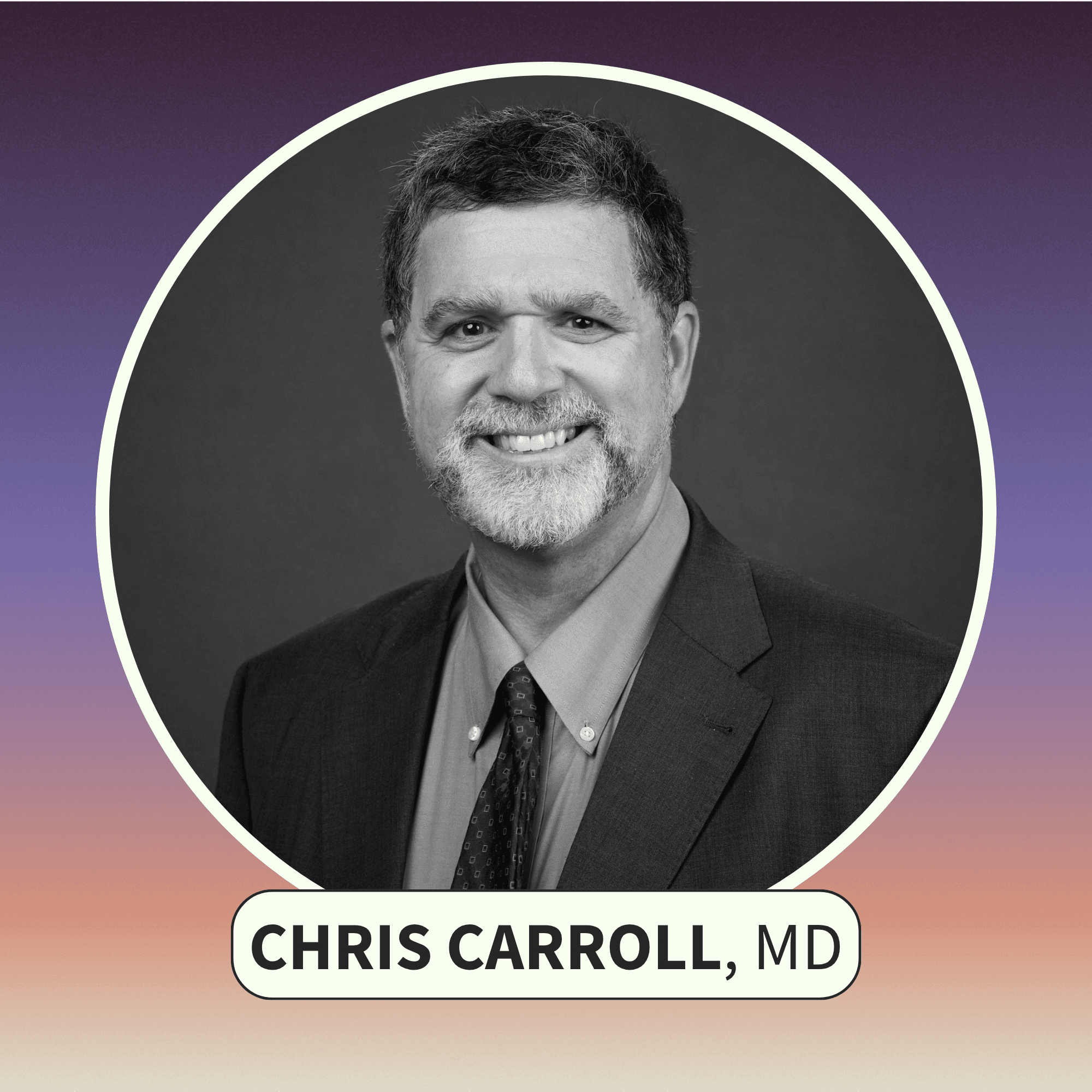
Rounds at The Zoo with Chris Carroll, MD
Pediatric intensivist Dr. Chris Carroll tells the story of an unexpected consult: a young gorilla named Kevin, critically ill with Shigella sepsis during an outbreak at the Jacksonville Zoo. What begins as a strange crossover between human and veterinary medicine becomes something deeper as Chris works alongside veterinarians trying to save Kevin’s life. In the process, he is struck not only by the similarities between caring for sick children and sick animals, but by the reverence and tenderness the veterinary team brings to their work. We talk about pediatric ICU medicine, the human-animal boundary, grief across species, and what doctors might learn from veterinarians about compassion.
0:00/1:34
The Nocturnists
Season
9
Episode
4
|
Rounds at The Zoo with Chris Carroll, MD
Pediatric intensivist Dr. Chris Carroll tells the story of an unexpected consult: a young gorilla named Kevin, critically ill with Shigella sepsis during an outbreak at the Jacksonville Zoo. What begins as a strange crossover between human and veterinary medicine becomes something deeper as Chris works alongside veterinarians trying to save Kevin’s life. In the process, he is struck not only by the similarities between caring for sick children and sick animals, but by the reverence and tenderness the veterinary team brings to their work. We talk about pediatric ICU medicine, the human-animal boundary, grief across species, and what doctors might learn from veterinarians about compassion.
0:00/1:34
About Our Guest
Dr. Chris Carroll is a physician, educator, and clinical investigator with more than two decades of experience advancing the care of critically ill children. He has published more than 300 academic abstracts, papers and book chapters and has served on international consensus panels that established clinical guidelines for pediatric sepsis, pediatric acute respiratory distress syndrome, and pediatric asthma. Dr. Carroll has held numerous leadership roles in organized medicine, most recently as Deputy Editor for Multimedia for the journal CHEST and College Regent-at-Large for the American College of Chest Physicians. He lives in Jacksonville, FL with his wife, Kate, and whichever pets his adult children have not yet claimed as their own.
About The Show
The Nocturnists is an award-winning medical storytelling podcast, hosted by physician Emily Silverman. We feature personal stories from frontline clinicians, conversations with healthcare-related authors, and art-makers. Our mission is to humanize healthcare and foster joy, wonder, and curiosity among clinicians and patients alike.
resources
Credits
About Our Guest
Dr. Chris Carroll is a physician, educator, and clinical investigator with more than two decades of experience advancing the care of critically ill children. He has published more than 300 academic abstracts, papers and book chapters and has served on international consensus panels that established clinical guidelines for pediatric sepsis, pediatric acute respiratory distress syndrome, and pediatric asthma. Dr. Carroll has held numerous leadership roles in organized medicine, most recently as Deputy Editor for Multimedia for the journal CHEST and College Regent-at-Large for the American College of Chest Physicians. He lives in Jacksonville, FL with his wife, Kate, and whichever pets his adult children have not yet claimed as their own.
About The Show
The Nocturnists is an award-winning medical storytelling podcast, hosted by physician Emily Silverman. We feature personal stories from frontline clinicians, conversations with healthcare-related authors, and art-makers. Our mission is to humanize healthcare and foster joy, wonder, and curiosity among clinicians and patients alike.
resources
Credits
Transcript
Note: The Nocturnists is an audio-first experience with emotion and sound design that can be difficult to fully capture in text. Transcripts are provided to support accessibility and reference, but may contain minor inaccuracies. If quoting in print, please consult the audio when possible.
Emily Silverman: This is The Nocturnists, and I'm Emily Silverman. Today's episode features Dr. Chris Carroll, a pediatric intensivist who got a call one day, unlike any consult he had ever received. He had just dropped off his daughter at college and was driving home when the phone rang. On the other end was a veterinarian from the Jacksonville Zoo, where a Shigella outbreak had swept through a troop of great apes. They wanted help caring for a very sick patient, a three-year-old gorilla named Kevin.
Chris found himself stepping into a completely different kind of ICU, one with crates instead of hospital beds, aging units of gorilla plasma shipped on dry ice, and a veterinary team caring for their patients with extraordinary tenderness and craft. What stayed with him was not just Kevin, but the way the veterinarians spoke about him, touched him, and mourned him. In our conversation, Chris and I talk about pediatric critical care, what human doctors can learn from veterinarians, and how caring for one young gorilla changed the way Chris thinks about medicine. First, here's a clip from Chris's life story, which he told on stage at a Nocturnists satellites event produced by CHEST. Here's Chris.
[music]
Chris Carroll: I had dropped my daughter off at college, and was driving home, and I got a call from a person who wanted me to see a patient. There was a patient, Kevin, who was three years old, had septic shock, was on norepinephrine and propofol, and they want a second opinion. I said, "Sure, I'll come by and see him." I'd never been to this facility before. The security guard directed me around back. It looked like your typical medical clinic, maybe, albeit one that wasn't quite as well funded.
One difference was when I walked in the door, there was a real thick, earthy, musty smell when I walked back there. Led down the corridor by several patient rooms. There was a room with what looked to be a cat tower of some sort, with, I think, a porcupine in it. There was another room with a large bird, I think it was an emu. There was another room. The third room, there was a tiger in the back corner. I got to where Kevin was, and it was a big room. It was about half the size of this room.
In the middle of the floor, all by themselves, was a small aluminum crate or cage. It looked like a dog cage, only missing one side. There, in a nest of blankets, propped up was Kevin. There you go. That's a picture of Kevin. As you might have guessed, Kevin is not a human child. Kevin is a gorilla.
[music]
Emily Silverman: I am sitting here with Dr. Chris Carroll. Chris, thank you so much for coming on the show.
Chris Carroll: Oh, thanks for having me.
Emily Silverman: What was it like for you to tell your story out loud on stage in front of an audience of peers?
Chris Carroll: I had been prepped by the team, and my coach, Cara, had prepped me that this was going to be an emotional and cathartic procedure. Procedures may be a bad word, but emotional and cathartic. It's experience.
Emily Silverman: Talking like a true ICU doctor.
Speaker 1: Talking like an ICU doctor, yes. It was the emotional experience to tell the story, and it was that. It was very emotional to tell the story on the After Hour stage in front of my peers. One of my adult children was there too, which was really something. He has long been one of the performers in the family. He excelled in high school in speech and debate and in theater. I got to hear lots of his performances over the years, and I think it was moving for him too, to hear me perform in that way because I don't think he had ever thought of me as someone who would do something like that.
Emily Silverman: What did he think of your performance?
Chris Carroll: He was very proud.
Emily Silverman: Great. You are an ICU doctor, more specifically, you're a pediatric ICU doctor, which, when I hear that, I'm just like, "Oh, that sounds so hard," but for a lot of people, it's their calling. Was wondering if you could share a bit with us about what brought you to ICU medicine, and specifically working with kids and critically ill children, and how did you get there, and what is that like?
Chris Carroll: Yes. I think that's true for a lot of us. It is a calling to go into pediatric ICU medicine. These are patients that are going to be there, whether you know they're there or not. You have to think of it as a job where you're helping people. You're going in there specifically to help these patients and families. There are a lot easier ways to make a living than being a doctor as well as an ICU doctor. Having that attitude that this is something I'm doing to serve these patients, to serve the world, to serve community, that's how I look
at it.
I don't know how other people do it without that attitude. I think a lot of the really good ICU doctors and nurses, and respiratory therapists, do see it as a mission to help
people. As to how I got here, I don't know. I think sometimes we don't really realize why we're making the decisions we make, but in retrospect, it fit me very well. I really
enjoy working with patients and families in a way that I don't know that I saw in my adult medicine rotations, and that was really important to me.
Then once I was in pediatrics, the ability to see real change and real tangible improvement in your patients, you can make a real difference real quickly. Patients get sick quickly, and they turn around real quickly. You can make a real difference in a pediatric patient in a real, tangible way that was very appealing to me.
Emily Silverman: When I think about adult ICU medicine, I think about sepsis, heart failure, strokes, brain bleeds, things like that. What is the patient population like in pediatric ICU? Do you have a lot of kids with genetic syndromes, or how is the disease profile, or disease state profile different in peds? What are some common, just types of cases that you would encounter in the ICU?
Chris Carroll: That's a great question. About half of our patient days are made up of children who have some technology dependence or some chronic condition that brings them
there, so children who have cerebral palsy or maybe some brain damage that they were born with, or maybe some genetic abnormality that they were born with. Half of our kids are otherwise healthy kids who come in for the first time with sepsis, with a new onset brain tumor, with a new onset stroke, with asthma, with other respiratory diseases, bronchiolitis, pneumonias. That's probably our most common acute illness.
We see a fair amount of trauma in post-op surgical patients who have had some surgical procedure, be that an airway procedure or something more invasive. There's a larger variety of patients, I think, than you see in adult populations, just because of that large population of children with chronic diseases that may not survive into adulthood. We see a lot of
kids with rare genetic diseases that I will see something every week that I probably have not seen in a decade. There's a lot of learning involved in pediatric ICU medicine as well too, because you're constantly seeing new things that you maybe haven't seen in years. We still see a lot of the bread and butter stuff that adult ICU providers see too, sepsis and asthma and DKA, and things like that.
Emily Silverman: Here you are working as a pediatric ICU doctor, and then one day you're driving home after dropping off your daughter at college, and you get an interesting phone call about a new patient, about a new consult. Tell us about that phone call and where it came from, and what that was about.
Chris Carroll: I'm not really sure how this person got my number. My wife is a minister in town, and I think that someone in her parish may have given this person my cell phone number. It was an unusual call. I said, "I think I can talk to you. Can I call you right back?" She said, "Sure." I called the chief medical officer of the hospital and said, "Hey, I just got
this call. Can I talk to this person?" He said, "Yes, just try to stay out of the news, Chris."
[laughter]
Chris Carroll: To try, I think, was an operative term. I called her back and talked to her a little bit about what she was doing and what they needed.
Emily Silverman: Who was she, and what did she need?
Chris Carroll: I'll give away the spoiler. It was the head veterinarian at the zoo here in Jacksonville, and they were undergoing a outbreak of Shigella sepsis that had already taken
the lives of two of the bonobos. I think at that time, two or maybe three had passed away already of the adult gorillas in the zoo. Shigella sepsis is something that rarely affects
troops, but can be devastating, and they wanted some help. Specifically, they had a baby gorilla at the zoo with sepsis, and they were having trouble.
Every time they tried to put an NG down, the patient, he had a bradycardic near arrest, and they didn't know why. They also were concerned about the gorilla's abdominal distension, and that maybe he was developing a perforation and might need a surgeon. They wanted a lot of second opinions for things that they were already doing a great job on, which was interesting. I think I have a reason for why they did that that I discovered later, but they needed help managing the sepsis.
Emily Silverman: Did they ask you to come down to the zoo?
Chris Carroll: Not right away. The first day, they just wanted some help on the phone. Then the next morning, it was before seven o'clock, I got a call that they had some labs that they had drawn overnight, and they wanted my opinion on the labs, and what they should do.
Emily Silverman: Are the labs the same? Is it like a BMP and a CBC?
Chris Carroll: It was like a BNP and a CBC. Yes, the labs were surprisingly similar. I think it was another couple of days before they invited me to come see the gorilla. It was a lot of phone calls and text back and forth the first day. Then, as they got to know me, they said, "Why don't you come by?' The CBC is the same. The electrolytes are the same. How
they replace electrolytes is a little bit different. The pharmacy is a little more bare bones than what we were used to in our pharmacies.
Emily Silverman: You went down.
Chris Carroll: Yes, I went down.
Emily Silverman: You come into the zoo. It was at the zoo, or was it--?
Chris Carroll: It was at the zoo, yes. They have the area where we can see the gorillas, like a habitat. Then back behind that, they have a more private area where the gorillas will go at night, and they have more cages back there. When an animal is really sick, they have to sedate them and bring them back to their hospital, which is another building. It's a building apart from the enclosures.
Emily Silverman: Which part did they bring you to on your first visit?
Chris Carroll: My first visit, they had already sedated Kevin, I think they called it. They knocked him down, and they had brought him back to their hospital area, where they had other animals. They had facilities that they could put an animal by itself. Also, if you think of comparing this to a hospital, they had ward rooms where they could put animals by
themselves and wouldn't need constant care. Then they had two large rooms, one of which was mostly set up like an operating room, and one was mostly set up like an intensive care unit, where they could have a small cage on the ground or a larger cage if it was a larger animal.
They had what looked like a large metal dog crate on the ground with three sides enclosed and one side open. It was all metal, and there was like a little nest of blankets. They had him propped up in there with an IV taped into his arm. In pediatric experience, this is something we're very used to, having to sedate children and as well as immobilize their arms to keep them from moving and dislodging their devices. That was something I was very familiar with, but gorillas are stronger than your average two or three-year-old.
Emily Silverman: When you walk in, and you see Kevin in the nest of blankets, are you able to just walk right up to Kevin and kneel and interact with him and talk with him? What was your interaction?
Chris Carroll: If you were a braver person, you would walk right up to them and just start touching them and doing it. I was a little nervous having, essentially, a wild animal in
there. I was a little more cautious and did not walk up to him right away, and was asking, "Is this okay?" I had to be prompted a little bit to go in there and help him. By the
end of the first visit, I was helping them do some chest physiotherapy and reposition his airway, and how it helped them suction him. It's interesting gorillas have large canines like dogs do. I don't know if you have a dog, but if you've ever tried to give your dog a pill or some medicine, you can sometimes slip them past a little gap in their canines there. Gorillas have that too. You can slip a medicine in there with a syringe if you need it to, and you can't really do that on people.
Emily Silverman: How did Kevin respond to you or respond to the team? Was he just out of it, or was he interactive?
Chris Carroll: No, he was very out of it. The first time I saw him, he was on a little bit of propofol, or it could have been Precedex. I can't remember which was the first day, but he was also on Precedex at the time. He was on some Neuro MP to keep his blood pressure up. It wasn't very much sedation. He was quite sick the first time I saw him.
Emily Silverman: Then what happened? Did you keep going back?
Chris Carroll: Yes. At first, it was just a one-time thing, and then he got a little bit better that day. Once we were able to put an NG down his belly, decompressed, and we were able to replace some of his electrolytes and give him some fluid. Just with the time and the antibiotics, he got a little bit better. We gave him some FFP, which we were stretching the definition of the word fresh, because they had it shipped in from around the country, and some of it was quite old, like years old.
Emily Silverman: Is it donated from other animals?
Chris Carroll: Donated from other gorillas. It's really interesting. One of the first things they said is, "Can we give him some albumin?" They said, "No, that's human albumin. You can't do that." [laughs] Okay, you can't do that.
Emily Silverman: That's a no.
Chris Carroll: There is a gorilla in the Atlanta area that will voluntarily donate blood. Stick his arm out, and they can get some whole blood from him. Other than that, you have to sedate another member of the troop and get blood from them if you wanted to do it. Veterinarians are much more hands-on than human doctors are. We can talk about
the differences between veterinary and human medicine, because that was really what motivated me to tell this story, but they're much more hands-on. They're doing a lot of the blood work themselves. If an animal passes away, they have to do the necropsy on the animal afterwards.
There's not really a blood bank. They're spinning it down themselves and separating the pack cells from the plasma. They're way more hands-on than the typical human doctor is. Over the next two to three weeks, he had some waxing and waning. When I told the story in After Hours, I condensed it a little bit, but we actually sent him back to his troop twice to see how he would do because you either have the animal sedated in the back or being held in one of those ward rooms, one of those private areas where they can be hand-fed by a keeper, or you send them back out with the rest of the troop and hope things go well.
Gorillas, they're primates. They're more social than a lot of other animals. They've got a large troop that loves them and cares for them in their gorilla way. We were hopeful both times that he would do well when we sent him back out. He had some waxing and waning periods where he would get better and then worse as we adjusted his antibiotics and his fluids, and transfused him.
Emily Silverman: If you sent Kevin back out to the troop, the ways that you would know he wasn't doing well is what he would just sit and not participate in whatever the other gorillas were doing.
Chris Carroll: Yes. Our hope was that the other gorillas would interact with him because he's still pretty juvenile. He was only three years old. He's not much more than
a baby in the gorilla world. That was our hope. He just laid there on the ground and didn't really do anything, and the other gorillas stayed away from him, which was disheartening.
Emily Silverman: Did it seem like they were rejecting him, or that they just didn't notice him?
Chris Carroll: The keepers, who were the ones who go in and do the major part of the interaction with them, they essentially raise these animals if they're born in the zoo, like Kevin was, they thought that they knew he wasn't going to get better.
Emily Silverman: They had a predictive--
Chris Carroll: Yes. They said they knew he wasn't going to get better, and they were distancing themselves from him.
Emily Silverman: Did he have a mom there?
Chris Carroll: He did, yes. His mom was there. His dad had passed away. The Jacksonville Zoo has, it still has the largest troop of gorillas in the country. At the time that Kevin was born, there's not usually two main grown-up silverbacks in the troop, but there were in this case. I don't want to say they co-led the troop, because Kevin's dad was much older, but wasn't really the leader anymore. He was, I don't know, the grandfather figure or whatever.
The other leader of the troop, Rumpelstiltskin, he was there and definitely was a good paternal figure, even to the gorillas that he wasn't the biological father for. Kevin's mom was there and still alive, and she was an experienced mom. She had raised another kid already, and I think was six or seven at the time.
Emily Silverman: Even she distanced herself.
Chris Carroll: She did not. She would have been the one who would have spent most time with him, but she did not. She distanced herself.
Emily Silverman: You tried to reintroduce Kevin into the environment. It didn't quite work. Then tell us what happened next.
Chris Carroll: I got a call at about 4:00 or 5:00 in the morning that they had found him unconscious, covered in flies, and just unresponsive. I ran over to the zoo. They had already intubated him by the time I got there. We don't know how long his downtime was. He clearly had a prolonged hypoxic-ischemic event where he wasn't breathing properly. It
was acidotic. When I got to him, he had a heart rate and blood pressure, and they were bag and masks ventilating him on the floor of the back area where the gorillas live.
It was clear he had suffered pretty severe brain damage. His pupils were fixed and dilated. He didn't have a cough or a gag. He didn't have a corneal reflex. He wasn't responsive or breathing in any way. It was clear he wasn't going to make it.
[music]
Emily Silverman: Were you there when he died?
Chris Carroll: Yes. I went back to the back area, where they have all the cages. There's little lines on the ground you have to walk between so the animals don't reach out and grab you. Gorillas have a smell that's-- You might remember if you've ever been to a gorilla house or some zoo, or you've been to it, but it's a very pungent smell that's very gorilla. Since then, if I've been back to the zoo, I'm like, you can smell it amongst all the other smells. All the other gorillas were around, and they were quite agitated and quite upset at the time that we were there, and that's potentially we were hurting Kevin, or something was wrong with Kevin.
Even though they had ignored him when we came back, and they had intubated him, it's not something they usually do back there, they knew something was up. I ran through the brain death exam. I didn't do all the components, but it was enough to he was going to have pretty severe brain damage. As I'm doing this, the alpha gorilla, I don't actually think they call it that, but the head gorilla, or the leader of the troop, the big 400-pound gorilla, starts throwing himself at the cage. They had warned me. They said, "He's going to try to scare you."
Emily Silverman: You're doing this brain death exam in a space where all the other gorillas can see you.
Chris Carroll: While the other gorillas are around you, yes. They're all around us. They can all see us. They're right next to us. The wall of the cage behind me is not even a foot from the other gorillas, and they said, "Just be aware. Don't look him in the eye. He's going to throw himself at the cage when you're in there, because he's going to see you as a threat, because he doesn't know you." I went back there, and sure enough, he's thrown himself at the cage when I go down and start touching Kevin.
Emily Silverman: What does that mean, throwing himself at the cage?
Chris Carroll: He is throwing all 400 pounds of himself against the wall of the cage. It wasn't like a jail cell, but it was some sort of plastic or some support there. He couldn't reach out and grab me, but he could throw himself at the wall, and he could see me there. That's what he did.
Emily Silverman: Did it feel like he was trying to get inside or he was making a statement?
Chris Carroll: It felt like a show. It didn't feel like he was trying to kill me. It felt like, "I just want you to know I'm here, and so you better not be doing anything bad to him." They asked me, "If it's a human patient, what would we do?" I said, "If this were a human patient, we would bring him back to the hospital. We would have him on life support for a while. We keep doing everything we'd been doing for the previous two to three weeks, and there might be some hope for neurologic recovery.
Given the fact that we were two to three weeks into this, and he was continuing to get worse, there might not be neurologic recovery from this. He might continue to get worse. He might need a trach. He might need a G-Tube. He certainly would need prolonged hospitalization before we figured out what was wrong with him. By that, I mean at least another three or four days in the hospital." That was something that's very challenging for them to do, because keeping a gorilla sedated is challenging.
During those two to three weeks, this is part of the story I didn't tell in the After Hours, but they had had issues with IVs. There was a time where we had to bring some of our nurses in to put in PICC line in him because they couldn't get IV access on Kevin. I remember I sent a call out to our nurses, and I got more than a few, "Are you serious, Chris? This is a joke. Do you really need our help with a gorilla?" I said, "Yes."
Emily Silverman: Somebody came and did the PICC?
Chris Carroll: Oh, yes. We had two nurses come and put in a PICC. They had ultrasound, and we were using the ultrasound to do it, but he was sick, so his veins were not good veins. Plus, he was a juvenile. It's harder to get PICC lines in little animals. This is something our nurses do all the time, and they're definitely better at PICCs than I am. It was really not something that was feasible to keep Kevin alive for a few more weeks, given what had happened.
She called up the head of the zoo and told her the situation, and said that she recommended withdrawing support. The head of the zoo said, "Just wait until I get there." We sat there for another half hour, bagging him for a while. The other gorillas settled down. The head of the zoo, she got there, she was very sympathetic, and we explained what the condition was. She thanked everybody for all their hard work, and we agreed to withdraw support.
We took the tube out, and we took all the blankets and equipment off of him and left him there. The other gorillas could see that he was gone. They were right there with him. They didn't let them in the same cage as he was, but they could see him right there. They knew he was gone. As soon as we walked out, you could hear them howling for a while.
Emily Silverman: Howling like all of them at the same time.
Chris Carroll: No, but just crying. You could hear them crying. Maybe all at the same time. It was a lot like a human family would be. Any of us who've worked in ICU medicine knows what happens when you tell a family that their loved one has died, and they just start to cry. They just have a real expression of grief, and that was very true for Kevin's family as well. They just started to cry in a very human-like way.
Emily Silverman: This is something that you've seen many times in the ICU with human families, just like you said, and to now experience it with a gorilla patient and a gorilla family, and you're in the zoo. What was that like to jump from one species to another?
Chris Carroll: What really struck me in the whole experience of working with the veterinarians was the compassion and the humanization that they showed for their animals. Not just Kevin, I got to be on rounds with them a couple of times, where they run through the rounds on the morning about how the different animals are doing. It was fall, so they were setting up the Halloween exhibits for the Halloween displays, and that was stressing out. The animals, they were exhibiting weird behaviors.
We had to talk about whether or not it was appropriate to medicate them and things like that or a different animal was scratching at something, and they thought that maybe it was infected, and maybe we need to bring them back and take a closer look at it. During that whole process, I was really struck at how they humanized their animals. They treated them all as fully living beings, fully human, even though they weren't. They actively humanized them all and treated them with a love and compassion that I have certainly seen lacking in many of our care of our human patients. I can elaborate more on that if you want me to.
Emily Silverman: Yes. Was it the fact that there was more ownership? They were doing everything, they were doing autopsies, they were drawing blood themselves. Was it more that they felt like they had ownership over the process?
Chris Carroll: Some of it was. Some of the connection, I think, was that they had raised many of these animals since birth.
Emily Silverman: They're like parents too.
Chris Carroll: They were serving a dual role of parent and caregiver. I think a lot of the reason that they wanted me to be there is because they wanted to be sure that they had done everything they could because the decisions they made, I think 99% of them, I didn't add a lot to the discussion. I was just agreeing with them, but they really wanted to know what would a human doctor do in this situation. They wanted to make sure that Kevin was getting the best care for his sepsis.
There was maybe a few times where I thought of something that they hadn't thought of or suggested something, a technique or approach. A lot of times, they just really wanted validation that they were doing everything. I think some of it was that they didn't have the distancing that we do in human medicine. We distance ourselves. We're told from a young age, either explicitly or just non explicitly, in the hidden curriculum that we all learn from our mentees, that we have to distance ourselves, that we should not get close to these families.
One of the things that I learned was that there is another way to do things. I said to the veterinarians that I worked with, and then the ones that I've continued to work with over time, that I'm still grappling how to put into words the difference in how they relate to their animals, because I think some of it's shame that we are-- I'll put me in that situation that I don't always treat the patients with the compassion that the veterinarians would treat their animals.
It's a busy day. We have lots of patients. We have lots of rounds to get through. I get it. Sometimes hard to spend those extra few minutes with patients and families. You want to be able to sit down and spend an hour with each family, talking with them, but you don't always have the time to do that. It was very different in the veterinary world.
Emily Silverman: I'm thinking about gorillas in the wild and gorillas in the zoo. Obviously, when you're in the wild, you're in the wild. You have complete freedom, in a sense. You're
not limited to the campus of the zoo, and you definitely don't get a PICC line and intubated when you get sepsis in the wild. You definitely don't develop close relationships with humans in the wild. You don't have to manage your reaction to Halloween decoration in the wild, and in the wild, probably Kevin would have died covered with flies right away,
Chris Carroll: Right away, yes, or maybe they would have never gotten a Shigella to begin with, or maybe. I don't know.
Emily Silverman: Yes, or it'd have been something else.
Chris Carroll: Or maybe he died of something else.
Emily Silverman: Or another animal would eat him. There's a certain level of safety when you're separating the animals from each other. They're not going to be eating each other. Then, in the zoo, of course, we think a lot about the cages and just the moral aspect of that. Then there is this safety. They provide food. I'm sure there's a certain level of having that relationship with the human zoo team, and the exceptional medical care that was given. I'm just wondering, after this experience, how do you look at zoos, and how do you look at animals in the zoo, and thinking about the human animal interface, or the human animal relationship?
Chris Carroll: That's a great question. I think, certainly, I wrestle with the concept of zoos, like many people do. I think the idea of having an animal in captivity is challenging because, as you said, you could be making their quality of life worse in a lot of ways, despite all the caring and compassion that the zoo staff provides to these animals. I also think that zoos are important to teach people, particularly children, about the concept of the wide world out there. Going to a zoo and seeing these animals can foster a love for nature and
for animals that it might not be possible to do without zoos. We will protect things that we love. Maybe it is a good thing, in that-- Oops.
Emily Silverman: Little kitty cat.
Chris Carroll: This is my cat. This is my kitty cat. I could tell you about her in a minute. She's only got three paws.
Emily Silverman: Before your interaction with Kevin, were you an animal person, a pet person? I know for me, I didn't grow up with that many pets and animals around. I got a dog later when I was in middle school, and that's a whole other story. It wasn't the best relationship. I have people in my life who just have a really strong love for and connection with animals, and they're very attuned. There's a nonverbal communication that's happening.
It's something that I'm interested in learning more about and maybe growing myself in that way. Sometimes I'm afraid, even to just pick up a dog or pick up a cat. Then they can sense that I'm afraid. Then when I reach for them, they clench up, and then I clench up, and it's like this whole thing. If you're easy and you're natural, and I don't know, there's just something really special about the human animal bond. I'm wondering if that's something you had before, Kevin, or if that's something that has deepened since.
Chris Carroll: I didn't really have that strong of a human animal bond. I'd had a cat when my children were little. We had a few animals, but none of them seemed to last very long. I had a cat. Shortly after this experience, I did get this little cat. I don't know. This is not going to be videoed, but this is my cat, Zoe.
Emily Silverman: Beautiful cat.
Chris Carroll: Oh, she's going to bite me. Doesn't want to be held. You're going down. There's a six-lane highway not too far from my house. My wife's driving to church one morning, and she sees this little animal on the road, dragging itself across the highway and literally getting run over by cars, like cars are running over her. She makes it across all six lanes of traffic. My wife takes a U-turn, goes and gets her. We estimated, and we took her to the vet. She was about six weeks old. She had unequal pupils. Was really small and emaciated.
She has one leg that is paralyzed, doesn't move. This is the dark side of veterinary medicine is they said, "Do you want to take financial responsibility for this animal? Because otherwise we're going to have to put it to sleep?" The answer was yes. $1,000 later, after the kitty head CAT scan and the blood org and the X-rays and everything else, they said, "This is what I would do, but if it lives a couple of weeks, then bring it back, and we'll see what we can do next." That was it. "If she lives another week or two, bring her back."
We did that for a few weeks. The first week or two, really months, she was either in a tiny little box with food and water in a litter box area on the side, or we were holding her. She was so small. Now she's seven months old, and nothing stops her with three legs. She gets onto the highest areas of our house. She's proven herself to not be an outside cat because of her previous experience in the highways. She is very resilient, and she doesn't let anything stop her. She bullies her older cat sibling all the time.
Emily Silverman: I think that's a good note to end on. Is there anything else you want to share with our audience about ICU medicine, pediatric ICU, veterinary medicine, Kevin? Anything from the story to end on?
Chris Carroll: No, I think in the After Hour speech, I've ended with the quote from the late Jane Goodall, who had recently passed away this year, that I think is a good quote to end on. We are all interconnected, people, animals, our environment. When nature suffers, we suffer, and when nature flourishes, we all flourish,
Emily Silverman: Beautiful. Dr. Chris Carroll, thank you so much for coming on the show.
Chris Carroll: Thank you for having me. It was really great experience.
[music]
Emily Silverman: This episode of The Nocturnists was produced by me and producer and head of story development Molly Rose-Williams. Our executive producer is Ali Block, and Ashley Pettit is our program director. Original theme music was composed by Yosef Munro with additional music from Blue Dot Sessions. The Nocturnists is made possible by listeners like you. If you enjoy what you hear and you want to support our work, consider subscribing to The Nocturnists+.
You'll get access to The Nocturnists: After Hours, our monthly bonus series featuring original conversations from our team, along with merch discounts and a full archive of episodes, all in one place. Subscriptions start at just $10 a month. Learn more at thenocturnists.org/plus or through the link in the description. Thank you for listening and being part of this community. Until next time, I'm your host, Emily Silverman.
Transcript
Note: The Nocturnists is an audio-first experience with emotion and sound design that can be difficult to fully capture in text. Transcripts are provided to support accessibility and reference, but may contain minor inaccuracies. If quoting in print, please consult the audio when possible.
Emily Silverman: This is The Nocturnists, and I'm Emily Silverman. Today's episode features Dr. Chris Carroll, a pediatric intensivist who got a call one day, unlike any consult he had ever received. He had just dropped off his daughter at college and was driving home when the phone rang. On the other end was a veterinarian from the Jacksonville Zoo, where a Shigella outbreak had swept through a troop of great apes. They wanted help caring for a very sick patient, a three-year-old gorilla named Kevin.
Chris found himself stepping into a completely different kind of ICU, one with crates instead of hospital beds, aging units of gorilla plasma shipped on dry ice, and a veterinary team caring for their patients with extraordinary tenderness and craft. What stayed with him was not just Kevin, but the way the veterinarians spoke about him, touched him, and mourned him. In our conversation, Chris and I talk about pediatric critical care, what human doctors can learn from veterinarians, and how caring for one young gorilla changed the way Chris thinks about medicine. First, here's a clip from Chris's life story, which he told on stage at a Nocturnists satellites event produced by CHEST. Here's Chris.
[music]
Chris Carroll: I had dropped my daughter off at college, and was driving home, and I got a call from a person who wanted me to see a patient. There was a patient, Kevin, who was three years old, had septic shock, was on norepinephrine and propofol, and they want a second opinion. I said, "Sure, I'll come by and see him." I'd never been to this facility before. The security guard directed me around back. It looked like your typical medical clinic, maybe, albeit one that wasn't quite as well funded.
One difference was when I walked in the door, there was a real thick, earthy, musty smell when I walked back there. Led down the corridor by several patient rooms. There was a room with what looked to be a cat tower of some sort, with, I think, a porcupine in it. There was another room with a large bird, I think it was an emu. There was another room. The third room, there was a tiger in the back corner. I got to where Kevin was, and it was a big room. It was about half the size of this room.
In the middle of the floor, all by themselves, was a small aluminum crate or cage. It looked like a dog cage, only missing one side. There, in a nest of blankets, propped up was Kevin. There you go. That's a picture of Kevin. As you might have guessed, Kevin is not a human child. Kevin is a gorilla.
[music]
Emily Silverman: I am sitting here with Dr. Chris Carroll. Chris, thank you so much for coming on the show.
Chris Carroll: Oh, thanks for having me.
Emily Silverman: What was it like for you to tell your story out loud on stage in front of an audience of peers?
Chris Carroll: I had been prepped by the team, and my coach, Cara, had prepped me that this was going to be an emotional and cathartic procedure. Procedures may be a bad word, but emotional and cathartic. It's experience.
Emily Silverman: Talking like a true ICU doctor.
Speaker 1: Talking like an ICU doctor, yes. It was the emotional experience to tell the story, and it was that. It was very emotional to tell the story on the After Hour stage in front of my peers. One of my adult children was there too, which was really something. He has long been one of the performers in the family. He excelled in high school in speech and debate and in theater. I got to hear lots of his performances over the years, and I think it was moving for him too, to hear me perform in that way because I don't think he had ever thought of me as someone who would do something like that.
Emily Silverman: What did he think of your performance?
Chris Carroll: He was very proud.
Emily Silverman: Great. You are an ICU doctor, more specifically, you're a pediatric ICU doctor, which, when I hear that, I'm just like, "Oh, that sounds so hard," but for a lot of people, it's their calling. Was wondering if you could share a bit with us about what brought you to ICU medicine, and specifically working with kids and critically ill children, and how did you get there, and what is that like?
Chris Carroll: Yes. I think that's true for a lot of us. It is a calling to go into pediatric ICU medicine. These are patients that are going to be there, whether you know they're there or not. You have to think of it as a job where you're helping people. You're going in there specifically to help these patients and families. There are a lot easier ways to make a living than being a doctor as well as an ICU doctor. Having that attitude that this is something I'm doing to serve these patients, to serve the world, to serve community, that's how I look
at it.
I don't know how other people do it without that attitude. I think a lot of the really good ICU doctors and nurses, and respiratory therapists, do see it as a mission to help
people. As to how I got here, I don't know. I think sometimes we don't really realize why we're making the decisions we make, but in retrospect, it fit me very well. I really
enjoy working with patients and families in a way that I don't know that I saw in my adult medicine rotations, and that was really important to me.
Then once I was in pediatrics, the ability to see real change and real tangible improvement in your patients, you can make a real difference real quickly. Patients get sick quickly, and they turn around real quickly. You can make a real difference in a pediatric patient in a real, tangible way that was very appealing to me.
Emily Silverman: When I think about adult ICU medicine, I think about sepsis, heart failure, strokes, brain bleeds, things like that. What is the patient population like in pediatric ICU? Do you have a lot of kids with genetic syndromes, or how is the disease profile, or disease state profile different in peds? What are some common, just types of cases that you would encounter in the ICU?
Chris Carroll: That's a great question. About half of our patient days are made up of children who have some technology dependence or some chronic condition that brings them
there, so children who have cerebral palsy or maybe some brain damage that they were born with, or maybe some genetic abnormality that they were born with. Half of our kids are otherwise healthy kids who come in for the first time with sepsis, with a new onset brain tumor, with a new onset stroke, with asthma, with other respiratory diseases, bronchiolitis, pneumonias. That's probably our most common acute illness.
We see a fair amount of trauma in post-op surgical patients who have had some surgical procedure, be that an airway procedure or something more invasive. There's a larger variety of patients, I think, than you see in adult populations, just because of that large population of children with chronic diseases that may not survive into adulthood. We see a lot of
kids with rare genetic diseases that I will see something every week that I probably have not seen in a decade. There's a lot of learning involved in pediatric ICU medicine as well too, because you're constantly seeing new things that you maybe haven't seen in years. We still see a lot of the bread and butter stuff that adult ICU providers see too, sepsis and asthma and DKA, and things like that.
Emily Silverman: Here you are working as a pediatric ICU doctor, and then one day you're driving home after dropping off your daughter at college, and you get an interesting phone call about a new patient, about a new consult. Tell us about that phone call and where it came from, and what that was about.
Chris Carroll: I'm not really sure how this person got my number. My wife is a minister in town, and I think that someone in her parish may have given this person my cell phone number. It was an unusual call. I said, "I think I can talk to you. Can I call you right back?" She said, "Sure." I called the chief medical officer of the hospital and said, "Hey, I just got
this call. Can I talk to this person?" He said, "Yes, just try to stay out of the news, Chris."
[laughter]
Chris Carroll: To try, I think, was an operative term. I called her back and talked to her a little bit about what she was doing and what they needed.
Emily Silverman: Who was she, and what did she need?
Chris Carroll: I'll give away the spoiler. It was the head veterinarian at the zoo here in Jacksonville, and they were undergoing a outbreak of Shigella sepsis that had already taken
the lives of two of the bonobos. I think at that time, two or maybe three had passed away already of the adult gorillas in the zoo. Shigella sepsis is something that rarely affects
troops, but can be devastating, and they wanted some help. Specifically, they had a baby gorilla at the zoo with sepsis, and they were having trouble.
Every time they tried to put an NG down, the patient, he had a bradycardic near arrest, and they didn't know why. They also were concerned about the gorilla's abdominal distension, and that maybe he was developing a perforation and might need a surgeon. They wanted a lot of second opinions for things that they were already doing a great job on, which was interesting. I think I have a reason for why they did that that I discovered later, but they needed help managing the sepsis.
Emily Silverman: Did they ask you to come down to the zoo?
Chris Carroll: Not right away. The first day, they just wanted some help on the phone. Then the next morning, it was before seven o'clock, I got a call that they had some labs that they had drawn overnight, and they wanted my opinion on the labs, and what they should do.
Emily Silverman: Are the labs the same? Is it like a BMP and a CBC?
Chris Carroll: It was like a BNP and a CBC. Yes, the labs were surprisingly similar. I think it was another couple of days before they invited me to come see the gorilla. It was a lot of phone calls and text back and forth the first day. Then, as they got to know me, they said, "Why don't you come by?' The CBC is the same. The electrolytes are the same. How
they replace electrolytes is a little bit different. The pharmacy is a little more bare bones than what we were used to in our pharmacies.
Emily Silverman: You went down.
Chris Carroll: Yes, I went down.
Emily Silverman: You come into the zoo. It was at the zoo, or was it--?
Chris Carroll: It was at the zoo, yes. They have the area where we can see the gorillas, like a habitat. Then back behind that, they have a more private area where the gorillas will go at night, and they have more cages back there. When an animal is really sick, they have to sedate them and bring them back to their hospital, which is another building. It's a building apart from the enclosures.
Emily Silverman: Which part did they bring you to on your first visit?
Chris Carroll: My first visit, they had already sedated Kevin, I think they called it. They knocked him down, and they had brought him back to their hospital area, where they had other animals. They had facilities that they could put an animal by itself. Also, if you think of comparing this to a hospital, they had ward rooms where they could put animals by
themselves and wouldn't need constant care. Then they had two large rooms, one of which was mostly set up like an operating room, and one was mostly set up like an intensive care unit, where they could have a small cage on the ground or a larger cage if it was a larger animal.
They had what looked like a large metal dog crate on the ground with three sides enclosed and one side open. It was all metal, and there was like a little nest of blankets. They had him propped up in there with an IV taped into his arm. In pediatric experience, this is something we're very used to, having to sedate children and as well as immobilize their arms to keep them from moving and dislodging their devices. That was something I was very familiar with, but gorillas are stronger than your average two or three-year-old.
Emily Silverman: When you walk in, and you see Kevin in the nest of blankets, are you able to just walk right up to Kevin and kneel and interact with him and talk with him? What was your interaction?
Chris Carroll: If you were a braver person, you would walk right up to them and just start touching them and doing it. I was a little nervous having, essentially, a wild animal in
there. I was a little more cautious and did not walk up to him right away, and was asking, "Is this okay?" I had to be prompted a little bit to go in there and help him. By the
end of the first visit, I was helping them do some chest physiotherapy and reposition his airway, and how it helped them suction him. It's interesting gorillas have large canines like dogs do. I don't know if you have a dog, but if you've ever tried to give your dog a pill or some medicine, you can sometimes slip them past a little gap in their canines there. Gorillas have that too. You can slip a medicine in there with a syringe if you need it to, and you can't really do that on people.
Emily Silverman: How did Kevin respond to you or respond to the team? Was he just out of it, or was he interactive?
Chris Carroll: No, he was very out of it. The first time I saw him, he was on a little bit of propofol, or it could have been Precedex. I can't remember which was the first day, but he was also on Precedex at the time. He was on some Neuro MP to keep his blood pressure up. It wasn't very much sedation. He was quite sick the first time I saw him.
Emily Silverman: Then what happened? Did you keep going back?
Chris Carroll: Yes. At first, it was just a one-time thing, and then he got a little bit better that day. Once we were able to put an NG down his belly, decompressed, and we were able to replace some of his electrolytes and give him some fluid. Just with the time and the antibiotics, he got a little bit better. We gave him some FFP, which we were stretching the definition of the word fresh, because they had it shipped in from around the country, and some of it was quite old, like years old.
Emily Silverman: Is it donated from other animals?
Chris Carroll: Donated from other gorillas. It's really interesting. One of the first things they said is, "Can we give him some albumin?" They said, "No, that's human albumin. You can't do that." [laughs] Okay, you can't do that.
Emily Silverman: That's a no.
Chris Carroll: There is a gorilla in the Atlanta area that will voluntarily donate blood. Stick his arm out, and they can get some whole blood from him. Other than that, you have to sedate another member of the troop and get blood from them if you wanted to do it. Veterinarians are much more hands-on than human doctors are. We can talk about
the differences between veterinary and human medicine, because that was really what motivated me to tell this story, but they're much more hands-on. They're doing a lot of the blood work themselves. If an animal passes away, they have to do the necropsy on the animal afterwards.
There's not really a blood bank. They're spinning it down themselves and separating the pack cells from the plasma. They're way more hands-on than the typical human doctor is. Over the next two to three weeks, he had some waxing and waning. When I told the story in After Hours, I condensed it a little bit, but we actually sent him back to his troop twice to see how he would do because you either have the animal sedated in the back or being held in one of those ward rooms, one of those private areas where they can be hand-fed by a keeper, or you send them back out with the rest of the troop and hope things go well.
Gorillas, they're primates. They're more social than a lot of other animals. They've got a large troop that loves them and cares for them in their gorilla way. We were hopeful both times that he would do well when we sent him back out. He had some waxing and waning periods where he would get better and then worse as we adjusted his antibiotics and his fluids, and transfused him.
Emily Silverman: If you sent Kevin back out to the troop, the ways that you would know he wasn't doing well is what he would just sit and not participate in whatever the other gorillas were doing.
Chris Carroll: Yes. Our hope was that the other gorillas would interact with him because he's still pretty juvenile. He was only three years old. He's not much more than
a baby in the gorilla world. That was our hope. He just laid there on the ground and didn't really do anything, and the other gorillas stayed away from him, which was disheartening.
Emily Silverman: Did it seem like they were rejecting him, or that they just didn't notice him?
Chris Carroll: The keepers, who were the ones who go in and do the major part of the interaction with them, they essentially raise these animals if they're born in the zoo, like Kevin was, they thought that they knew he wasn't going to get better.
Emily Silverman: They had a predictive--
Chris Carroll: Yes. They said they knew he wasn't going to get better, and they were distancing themselves from him.
Emily Silverman: Did he have a mom there?
Chris Carroll: He did, yes. His mom was there. His dad had passed away. The Jacksonville Zoo has, it still has the largest troop of gorillas in the country. At the time that Kevin was born, there's not usually two main grown-up silverbacks in the troop, but there were in this case. I don't want to say they co-led the troop, because Kevin's dad was much older, but wasn't really the leader anymore. He was, I don't know, the grandfather figure or whatever.
The other leader of the troop, Rumpelstiltskin, he was there and definitely was a good paternal figure, even to the gorillas that he wasn't the biological father for. Kevin's mom was there and still alive, and she was an experienced mom. She had raised another kid already, and I think was six or seven at the time.
Emily Silverman: Even she distanced herself.
Chris Carroll: She did not. She would have been the one who would have spent most time with him, but she did not. She distanced herself.
Emily Silverman: You tried to reintroduce Kevin into the environment. It didn't quite work. Then tell us what happened next.
Chris Carroll: I got a call at about 4:00 or 5:00 in the morning that they had found him unconscious, covered in flies, and just unresponsive. I ran over to the zoo. They had already intubated him by the time I got there. We don't know how long his downtime was. He clearly had a prolonged hypoxic-ischemic event where he wasn't breathing properly. It
was acidotic. When I got to him, he had a heart rate and blood pressure, and they were bag and masks ventilating him on the floor of the back area where the gorillas live.
It was clear he had suffered pretty severe brain damage. His pupils were fixed and dilated. He didn't have a cough or a gag. He didn't have a corneal reflex. He wasn't responsive or breathing in any way. It was clear he wasn't going to make it.
[music]
Emily Silverman: Were you there when he died?
Chris Carroll: Yes. I went back to the back area, where they have all the cages. There's little lines on the ground you have to walk between so the animals don't reach out and grab you. Gorillas have a smell that's-- You might remember if you've ever been to a gorilla house or some zoo, or you've been to it, but it's a very pungent smell that's very gorilla. Since then, if I've been back to the zoo, I'm like, you can smell it amongst all the other smells. All the other gorillas were around, and they were quite agitated and quite upset at the time that we were there, and that's potentially we were hurting Kevin, or something was wrong with Kevin.
Even though they had ignored him when we came back, and they had intubated him, it's not something they usually do back there, they knew something was up. I ran through the brain death exam. I didn't do all the components, but it was enough to he was going to have pretty severe brain damage. As I'm doing this, the alpha gorilla, I don't actually think they call it that, but the head gorilla, or the leader of the troop, the big 400-pound gorilla, starts throwing himself at the cage. They had warned me. They said, "He's going to try to scare you."
Emily Silverman: You're doing this brain death exam in a space where all the other gorillas can see you.
Chris Carroll: While the other gorillas are around you, yes. They're all around us. They can all see us. They're right next to us. The wall of the cage behind me is not even a foot from the other gorillas, and they said, "Just be aware. Don't look him in the eye. He's going to throw himself at the cage when you're in there, because he's going to see you as a threat, because he doesn't know you." I went back there, and sure enough, he's thrown himself at the cage when I go down and start touching Kevin.
Emily Silverman: What does that mean, throwing himself at the cage?
Chris Carroll: He is throwing all 400 pounds of himself against the wall of the cage. It wasn't like a jail cell, but it was some sort of plastic or some support there. He couldn't reach out and grab me, but he could throw himself at the wall, and he could see me there. That's what he did.
Emily Silverman: Did it feel like he was trying to get inside or he was making a statement?
Chris Carroll: It felt like a show. It didn't feel like he was trying to kill me. It felt like, "I just want you to know I'm here, and so you better not be doing anything bad to him." They asked me, "If it's a human patient, what would we do?" I said, "If this were a human patient, we would bring him back to the hospital. We would have him on life support for a while. We keep doing everything we'd been doing for the previous two to three weeks, and there might be some hope for neurologic recovery.
Given the fact that we were two to three weeks into this, and he was continuing to get worse, there might not be neurologic recovery from this. He might continue to get worse. He might need a trach. He might need a G-Tube. He certainly would need prolonged hospitalization before we figured out what was wrong with him. By that, I mean at least another three or four days in the hospital." That was something that's very challenging for them to do, because keeping a gorilla sedated is challenging.
During those two to three weeks, this is part of the story I didn't tell in the After Hours, but they had had issues with IVs. There was a time where we had to bring some of our nurses in to put in PICC line in him because they couldn't get IV access on Kevin. I remember I sent a call out to our nurses, and I got more than a few, "Are you serious, Chris? This is a joke. Do you really need our help with a gorilla?" I said, "Yes."
Emily Silverman: Somebody came and did the PICC?
Chris Carroll: Oh, yes. We had two nurses come and put in a PICC. They had ultrasound, and we were using the ultrasound to do it, but he was sick, so his veins were not good veins. Plus, he was a juvenile. It's harder to get PICC lines in little animals. This is something our nurses do all the time, and they're definitely better at PICCs than I am. It was really not something that was feasible to keep Kevin alive for a few more weeks, given what had happened.
She called up the head of the zoo and told her the situation, and said that she recommended withdrawing support. The head of the zoo said, "Just wait until I get there." We sat there for another half hour, bagging him for a while. The other gorillas settled down. The head of the zoo, she got there, she was very sympathetic, and we explained what the condition was. She thanked everybody for all their hard work, and we agreed to withdraw support.
We took the tube out, and we took all the blankets and equipment off of him and left him there. The other gorillas could see that he was gone. They were right there with him. They didn't let them in the same cage as he was, but they could see him right there. They knew he was gone. As soon as we walked out, you could hear them howling for a while.
Emily Silverman: Howling like all of them at the same time.
Chris Carroll: No, but just crying. You could hear them crying. Maybe all at the same time. It was a lot like a human family would be. Any of us who've worked in ICU medicine knows what happens when you tell a family that their loved one has died, and they just start to cry. They just have a real expression of grief, and that was very true for Kevin's family as well. They just started to cry in a very human-like way.
Emily Silverman: This is something that you've seen many times in the ICU with human families, just like you said, and to now experience it with a gorilla patient and a gorilla family, and you're in the zoo. What was that like to jump from one species to another?
Chris Carroll: What really struck me in the whole experience of working with the veterinarians was the compassion and the humanization that they showed for their animals. Not just Kevin, I got to be on rounds with them a couple of times, where they run through the rounds on the morning about how the different animals are doing. It was fall, so they were setting up the Halloween exhibits for the Halloween displays, and that was stressing out. The animals, they were exhibiting weird behaviors.
We had to talk about whether or not it was appropriate to medicate them and things like that or a different animal was scratching at something, and they thought that maybe it was infected, and maybe we need to bring them back and take a closer look at it. During that whole process, I was really struck at how they humanized their animals. They treated them all as fully living beings, fully human, even though they weren't. They actively humanized them all and treated them with a love and compassion that I have certainly seen lacking in many of our care of our human patients. I can elaborate more on that if you want me to.
Emily Silverman: Yes. Was it the fact that there was more ownership? They were doing everything, they were doing autopsies, they were drawing blood themselves. Was it more that they felt like they had ownership over the process?
Chris Carroll: Some of it was. Some of the connection, I think, was that they had raised many of these animals since birth.
Emily Silverman: They're like parents too.
Chris Carroll: They were serving a dual role of parent and caregiver. I think a lot of the reason that they wanted me to be there is because they wanted to be sure that they had done everything they could because the decisions they made, I think 99% of them, I didn't add a lot to the discussion. I was just agreeing with them, but they really wanted to know what would a human doctor do in this situation. They wanted to make sure that Kevin was getting the best care for his sepsis.
There was maybe a few times where I thought of something that they hadn't thought of or suggested something, a technique or approach. A lot of times, they just really wanted validation that they were doing everything. I think some of it was that they didn't have the distancing that we do in human medicine. We distance ourselves. We're told from a young age, either explicitly or just non explicitly, in the hidden curriculum that we all learn from our mentees, that we have to distance ourselves, that we should not get close to these families.
One of the things that I learned was that there is another way to do things. I said to the veterinarians that I worked with, and then the ones that I've continued to work with over time, that I'm still grappling how to put into words the difference in how they relate to their animals, because I think some of it's shame that we are-- I'll put me in that situation that I don't always treat the patients with the compassion that the veterinarians would treat their animals.
It's a busy day. We have lots of patients. We have lots of rounds to get through. I get it. Sometimes hard to spend those extra few minutes with patients and families. You want to be able to sit down and spend an hour with each family, talking with them, but you don't always have the time to do that. It was very different in the veterinary world.
Emily Silverman: I'm thinking about gorillas in the wild and gorillas in the zoo. Obviously, when you're in the wild, you're in the wild. You have complete freedom, in a sense. You're
not limited to the campus of the zoo, and you definitely don't get a PICC line and intubated when you get sepsis in the wild. You definitely don't develop close relationships with humans in the wild. You don't have to manage your reaction to Halloween decoration in the wild, and in the wild, probably Kevin would have died covered with flies right away,
Chris Carroll: Right away, yes, or maybe they would have never gotten a Shigella to begin with, or maybe. I don't know.
Emily Silverman: Yes, or it'd have been something else.
Chris Carroll: Or maybe he died of something else.
Emily Silverman: Or another animal would eat him. There's a certain level of safety when you're separating the animals from each other. They're not going to be eating each other. Then, in the zoo, of course, we think a lot about the cages and just the moral aspect of that. Then there is this safety. They provide food. I'm sure there's a certain level of having that relationship with the human zoo team, and the exceptional medical care that was given. I'm just wondering, after this experience, how do you look at zoos, and how do you look at animals in the zoo, and thinking about the human animal interface, or the human animal relationship?
Chris Carroll: That's a great question. I think, certainly, I wrestle with the concept of zoos, like many people do. I think the idea of having an animal in captivity is challenging because, as you said, you could be making their quality of life worse in a lot of ways, despite all the caring and compassion that the zoo staff provides to these animals. I also think that zoos are important to teach people, particularly children, about the concept of the wide world out there. Going to a zoo and seeing these animals can foster a love for nature and
for animals that it might not be possible to do without zoos. We will protect things that we love. Maybe it is a good thing, in that-- Oops.
Emily Silverman: Little kitty cat.
Chris Carroll: This is my cat. This is my kitty cat. I could tell you about her in a minute. She's only got three paws.
Emily Silverman: Before your interaction with Kevin, were you an animal person, a pet person? I know for me, I didn't grow up with that many pets and animals around. I got a dog later when I was in middle school, and that's a whole other story. It wasn't the best relationship. I have people in my life who just have a really strong love for and connection with animals, and they're very attuned. There's a nonverbal communication that's happening.
It's something that I'm interested in learning more about and maybe growing myself in that way. Sometimes I'm afraid, even to just pick up a dog or pick up a cat. Then they can sense that I'm afraid. Then when I reach for them, they clench up, and then I clench up, and it's like this whole thing. If you're easy and you're natural, and I don't know, there's just something really special about the human animal bond. I'm wondering if that's something you had before, Kevin, or if that's something that has deepened since.
Chris Carroll: I didn't really have that strong of a human animal bond. I'd had a cat when my children were little. We had a few animals, but none of them seemed to last very long. I had a cat. Shortly after this experience, I did get this little cat. I don't know. This is not going to be videoed, but this is my cat, Zoe.
Emily Silverman: Beautiful cat.
Chris Carroll: Oh, she's going to bite me. Doesn't want to be held. You're going down. There's a six-lane highway not too far from my house. My wife's driving to church one morning, and she sees this little animal on the road, dragging itself across the highway and literally getting run over by cars, like cars are running over her. She makes it across all six lanes of traffic. My wife takes a U-turn, goes and gets her. We estimated, and we took her to the vet. She was about six weeks old. She had unequal pupils. Was really small and emaciated.
She has one leg that is paralyzed, doesn't move. This is the dark side of veterinary medicine is they said, "Do you want to take financial responsibility for this animal? Because otherwise we're going to have to put it to sleep?" The answer was yes. $1,000 later, after the kitty head CAT scan and the blood org and the X-rays and everything else, they said, "This is what I would do, but if it lives a couple of weeks, then bring it back, and we'll see what we can do next." That was it. "If she lives another week or two, bring her back."
We did that for a few weeks. The first week or two, really months, she was either in a tiny little box with food and water in a litter box area on the side, or we were holding her. She was so small. Now she's seven months old, and nothing stops her with three legs. She gets onto the highest areas of our house. She's proven herself to not be an outside cat because of her previous experience in the highways. She is very resilient, and she doesn't let anything stop her. She bullies her older cat sibling all the time.
Emily Silverman: I think that's a good note to end on. Is there anything else you want to share with our audience about ICU medicine, pediatric ICU, veterinary medicine, Kevin? Anything from the story to end on?
Chris Carroll: No, I think in the After Hour speech, I've ended with the quote from the late Jane Goodall, who had recently passed away this year, that I think is a good quote to end on. We are all interconnected, people, animals, our environment. When nature suffers, we suffer, and when nature flourishes, we all flourish,
Emily Silverman: Beautiful. Dr. Chris Carroll, thank you so much for coming on the show.
Chris Carroll: Thank you for having me. It was really great experience.
[music]
Emily Silverman: This episode of The Nocturnists was produced by me and producer and head of story development Molly Rose-Williams. Our executive producer is Ali Block, and Ashley Pettit is our program director. Original theme music was composed by Yosef Munro with additional music from Blue Dot Sessions. The Nocturnists is made possible by listeners like you. If you enjoy what you hear and you want to support our work, consider subscribing to The Nocturnists+.
You'll get access to The Nocturnists: After Hours, our monthly bonus series featuring original conversations from our team, along with merch discounts and a full archive of episodes, all in one place. Subscriptions start at just $10 a month. Learn more at thenocturnists.org/plus or through the link in the description. Thank you for listening and being part of this community. Until next time, I'm your host, Emily Silverman.
0:00/1:34

Humanizing healthcare through storytelling.
podcast
Humanizing healthcare through storytelling.
podcast