
The Nocturnists
Season
8
Episode
7
|
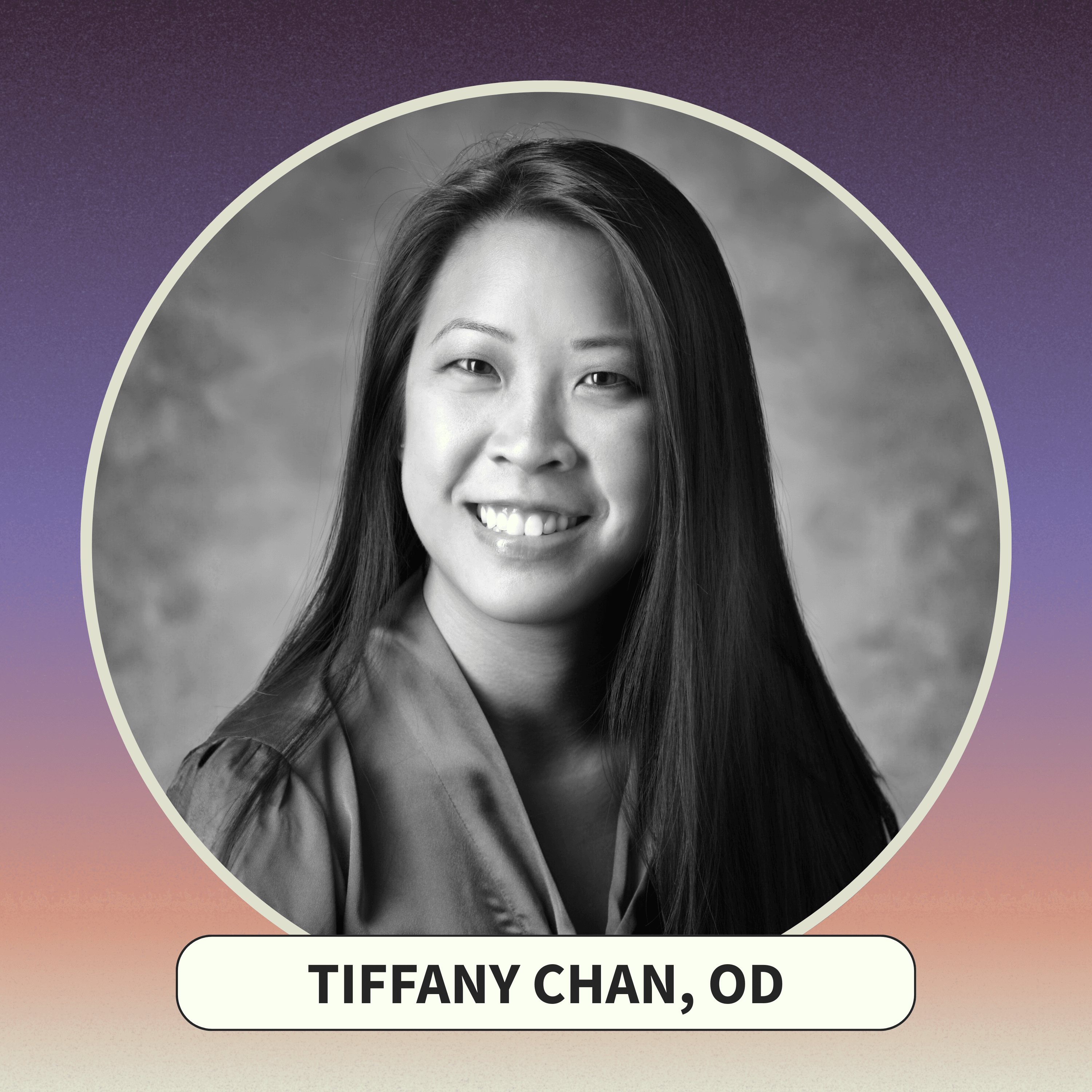
Choosing Home with Tiffany Chan, OD
Tiffany Chan shares how her journey from a small-town family optometry practice to high-intensity academic medicine at Johns Hopkins was transformed when her mother suffered a major brain bleed, drawing her back home to care for her family. Ultimately, her mother’s recovery, later passing, and the deep relationships her parents built with their patients helped Tiffany realize that the meaningful, community-rooted life she truly valued was in Grass Valley, where she now continues the family practice and honors her mother’s legacy.
0:00/1:34
The Nocturnists
Season
8
Episode
7
|
Choosing Home with Tiffany Chan, OD
Tiffany Chan shares how her journey from a small-town family optometry practice to high-intensity academic medicine at Johns Hopkins was transformed when her mother suffered a major brain bleed, drawing her back home to care for her family. Ultimately, her mother’s recovery, later passing, and the deep relationships her parents built with their patients helped Tiffany realize that the meaningful, community-rooted life she truly valued was in Grass Valley, where she now continues the family practice and honors her mother’s legacy.
0:00/1:34
About Our Guest
Dr. Tiffany Chan is a second-generation optometrist with advanced training in complex eye disease and low vision rehabilitation. She earned her optometry degree from UC Berkeley, completed a residency at the Northport Veterans Affairs Medical Center, and went on to a fellowship at Johns Hopkins University, where she later served as an Assistant Professor at the Wilmer Eye Institute. Dr. Chan previously served as Chief of the Low Vision Service at California Pacific Medical Center in San Francisco and continues to participate in national research collaborations. She now provides care at Chan Family Optometry, her family-owned private practice in her hometown. A Fellow of the American Academy of Optometry and an award-winning clinician, Dr. Chan is also a former collegiate gymnast—inducted into the UC Davis Cal Aggie Athletic Hall of Fame—and appeared as a background elite gymnast in the Disney film Stick It, bringing a unique blend of discipline, performance, and precision to her work in optometry
About The Show
The Nocturnists is an award-winning medical storytelling podcast, hosted by physician Emily Silverman. We feature personal stories from frontline clinicians, conversations with healthcare-related authors, and art-makers. Our mission is to humanize healthcare and foster joy, wonder, and curiosity among clinicians and patients alike.
resources
Credits
About Our Guest
Dr. Tiffany Chan is a second-generation optometrist with advanced training in complex eye disease and low vision rehabilitation. She earned her optometry degree from UC Berkeley, completed a residency at the Northport Veterans Affairs Medical Center, and went on to a fellowship at Johns Hopkins University, where she later served as an Assistant Professor at the Wilmer Eye Institute. Dr. Chan previously served as Chief of the Low Vision Service at California Pacific Medical Center in San Francisco and continues to participate in national research collaborations. She now provides care at Chan Family Optometry, her family-owned private practice in her hometown. A Fellow of the American Academy of Optometry and an award-winning clinician, Dr. Chan is also a former collegiate gymnast—inducted into the UC Davis Cal Aggie Athletic Hall of Fame—and appeared as a background elite gymnast in the Disney film Stick It, bringing a unique blend of discipline, performance, and precision to her work in optometry
About The Show
The Nocturnists is an award-winning medical storytelling podcast, hosted by physician Emily Silverman. We feature personal stories from frontline clinicians, conversations with healthcare-related authors, and art-makers. Our mission is to humanize healthcare and foster joy, wonder, and curiosity among clinicians and patients alike.
resources
Credits
The Nocturnists is made possible by the California Medical Association, and donations from people like you!
This episode is sponsored by The Physicians Foundation as well as Unleashed: Redesigning Health Care, a podcast that features clinician-innovators who have changed care on the front lines. Their stories, their voices, their ingenuity.
Transcript
Note: The Nocturnists is an audio-first experience with emotion and sound design that can be difficult to fully capture in text. Transcripts are provided to support accessibility and reference, but may contain minor inaccuracies. If quoting in print, please consult the audio when possible.
Emily: I'm Emily Silverman, and this is The Nocturnists. Today's guest is optometrist Tiffany Chan who performed on stage at a live storytelling event produced by Dr. Rebecca George at the Sierra Valley Health Center in Nevada City, California in 2025 an event that was made possible with support from the California Healthcare Foundation. Tiffany grew up in the Gold Rush town of Grass Valley, built a career in elite academic medicine at Johns Hopkins, and ultimately, found her way back home after her mother's sudden
illness transformed her sense of place and purpose. In my conversation with Tiffany, we talk about the tension between working at an elite academic medical center and the pull of home, how her mother's medical crises reshaped her understanding of healing, the intimacy and continuity of small-town relationship-driven medicine and carrying forward her family's and community's cultural and caregiving legacies. I hope you enjoy Tiffany as much as I did. First, take a listen to her story performed live on stage in Nevada City.
Tiffany Chan: Mrs. Parker, my high school English teacher asked, "Why do you want to become a doctor?" "I want to help people," I say cheerfully, and she responds, "There's a lot of ways to help people, besides becoming a doctor." That certainly surprised me, took me back. Now, many years later, I finally see her message as words of encouragement. I end up following my parents' footsteps, especially my dad. We were both born and raised in Grass Valley, so we both went to Hennessy. We went to Nevada Union High School, undergrad at UC Davis and optometry school at UC Berkeley.
I was planning on joining the family practice when I graduated, but I decided to do a residency instead at a veterans hospital in New York. It was a phenomenal program. We got to work at the center of balance, collaborate with audiology and physical med and rehab in helping those veterans who had balance issues, some from blast injuries, some age related. As amazing as the program was, the accommodations were the exact opposite. For $200 a month, I got to stay on the VA campus, and it was like an abandoned insane asylum. The lights were flickering. It had probably last been renovated in the '70s, and there were a whole list of things that were contraband.
We weren't allowed to have any of the normal things, drugs, alcohol, tobacco, but they also listed things like cooking devices and babies. I was planning on going home after that, but then I was accepted into a competitive fellowship at Johns Hopkins in Baltimore in low vision rehabilitation. Then I was definitely going to go home after that, but Johns Hopkins opened up a faculty position, and I thought, "How could I turn this down?" Fast forward, I'm 29 years old, sitting in my one-bedroom apartment in Baltimore, and it feels more empty than usual.
It's late. I'm exhausted. It's been another 14-hour workday in the clinic, which is pretty much the norm. I'm sitting on my couch. I have my reheated bowl of leftover pasta, and it's
warm in my hands, even through the pot holder. I'm just staring at my cell phone. My parents are on speaker phone, 3,000 miles away. They say, "We're getting the practice appraised. No, we're not ready to sell the office any time soon, but it's good to think ahead and good to know your options." I cringe at the news. There's a pit in my stomach, and I don't really know what to do.
Do I go home and take over the family practice? That has been the plan all along, but then these opportunities keep coming up. I had just gotten promoted to assistant professor at one of the top hospitals in the country. The third satellite clinic that I helped to get up and running was gaining momentum and referrals, and my research mentor said, "I think you can apply for a special grant so you could continue seeing patients while working toward your PhD." I had been drawn toward public health lately. All of those things should make me happy, but I just felt more conflicted, more confused, and not sure which path to take.
I realize I've been silent this whole time, just stewing in my own thoughts, and my parents say, "We just want you to be happy." I know their wishes are genuine, but it
doesn't help me move. I feel like I'm just stuck on this hamster wheel. Do I stay, or do I go? Fast forward a few years, and I'm visiting Portland to apply to the service chief position at Oregon's top Eye Institute, and I am buzzing from the amazing two days that I had interviewing with the faculty and chairman. I smile when I see I get a text message from my dad, and I can't wait to tell him about my day.
My parents are at the Nevada County Fair, which has always had a special place in our heart. We look forward to the fair every year, especially Treat Street with the hand-dipped corn dogs and the loaded baked potatoes from the Rough and Ready Fire Department. Bummer, I missed it again this year, but I'm still excited to share about my day, and that's what I freeze, and I reread the text. Dad's message reads, "Mom not feeling well. Taken by ambulance to Sierra Nevada Memorial Hospital. Love, Dad." I call, and he says that they were watching a concert at the Pine Street stage when my mom experienced a horrible headache that she said was like an ice pick through her head.
She was worried about a brain bleed, but the Emergency Department said it's likely just dehydration. I found out later, they had asked her, "How much have you had to drink today?" She said, "A whole bottle." She didn't realize they were asking about alcohol. They didn't realize she meant water. My dad says, "Mom's getting rest. You should get some rest, too." He knows I'm scheduled on the first flight back to Baltimore in the morning. Sleep feels impossible, but I must have dozed off, because I woke to a very loud text alert, "Mom was right. Subarachnoid hemorrhage. Getting airlifted to Mercy San Juan. Love, Dad."
I call immediately, and it turns out the Emergency Department was pretty impressed that my mom self-diagnosed her brain bleed. They said, "You're pretty astute. You do have a subarachnoid hemorrhage." Mom said she didn't want to be right. That's when panic set in. I know the stats, maybe a 50% survival rate. Many people don't even make it to the hospital. I know I need to get home immediately. I cancel my flight to Baltimore and fly home first thing in the morning, and my panic momentarily subsides when I see my mom resting so peacefully. She's curled up on her side, and she looks so tiny, even smaller than her 4'11" frame in that big hospital bed.
The interventional radiologist mentions a very risky position of the aneurysm, and he says, "It looks like it's at a blood vessel bifurcation. If we do treatment, it could cut off blood supply to one of her vessels," which means she could have a stroke or possibly not come out of surgery. Not treating is actually not an option. As my mom is getting wheeled into the OR, my sister leans down and whispers in my mom's ear the sex of her unborn baby, just in case. We all hold our breaths while my mom is in the operating room, and we all sigh a relief when she comes out, and she looks so good, and the aneurysm was successfully coiled.
Her cheeks are nice and rosy, and she says she feels good and for us to go home and get some rest while she recovers in the hospital. My sister and I sleep in our old bunk beds, like we usually do when we're home, and sleep was so welcome now that my mom was safe. The house phone wakes us up, and dad comes into the bedroom and says, "It's the hospital." Not good news. During the night, mom had another brain bleed and a hemorrhagic stroke. The drive to the hospital is a total blur, and we file into her room in the ICU, so many tubes and unfamiliar noises. We find out she lost control all of the control of her body on the left side and all of the vision on her left side in both eyes.
A condition I'm all too familiar with. The vision loss is called homonymous hemianopsia, and that topic is what I had been lecturing about at our national academy of optometry meetings for the past three years. My parents liked to attend the meetings and would fly to wherever they were, Denver, New Orleans, Boston, and they liked to sit in the audience amongst the other hundreds of optometrists that I was lecturing to. I had no idea all these years of training were exactly what I needed when I came home. My dad, sister, and I drive two hours every day to visit our mom in the hospital.
Most of the time she was resting. Sometimes she would wake up and say random things like ask about the waffle sale at church, or one time she said, "Nobody tried to kill us." Then we asked, "Who's trying to get us, Mom?" She responds by saying, "In the James Bond movies, when you're on a helicopter, there's always a villain that's trying to get you, but my helicopter didn't have a villain." We say, "That makes sense," and she would go back and rest, doctors, therapists and nurses were constantly coming in and out of her ICU room. One of the doctors says fairly curtly, "Squeeze my fingers," and my mom responds in a pretty sleepy slur, "What kind of doctor are you?"
"Uh-oh," we all thought. The doctor puffs up a little bit and says, "I'm a neurosurgeon." After a brief thought, my mom says, "I'd better not squeeze too hard then, I wouldn't want to damage your hands for surgery." The whole room erupts in laughter, and the surgeon says, "I think we can skip the cognitive test." My mom finally gets discharged from the ICU into the general hospital, from the general hospital into acute rehabilitation. My brother-in-law says, "Acute rehab, better than ugly rehab," and my mom likes that joke. We get to acute rehab, and the therapists all ask what goals she has, "Zumba," she says enthusiastically, even though she's still paralyzed on the left side, and she actually can't sit up by herself.
She has the best attitude during therapy, and everybody enjoys working with her, even that poor occupational therapist who gets soaked every time my mom practices washing her own hair. We find out my mom has left-sided neglect, which means she's unaware of the left side of her body, and so we very warmly nickname her neglected hand lefty, and we
laugh together when that sinister lefty is resting in the oatmeal during therapy in the practice kitchen. She finally gets discharged to home therapy, and as she was finishing up home
therapy, they ask a series of questions to check on her safety and independence in the home.
One of the questions was, "What do you do when the power goes out?" My mom responds, "I close my eyes, take a deep breath and count backwards from 10, 9, 8." I look at the therapist, and she has a very concerned look on her face. I say, "Oh, boy, where is mom going with this?" My mom continues, "Three, two, one, and room. The generator goes on," and she's just beaming from her very clever answer. I take three months of family medical leave from my position at Johns Hopkins. At the end of the three months, I know my boss is waiting on my answer. Am I staying in California, or am I returning to academia in Baltimore?
I do love being home, but I'm just so drawn to the prestige of the university and climbing that academic ladder that so few are invited to. I think of all of these opportunities as a gift, because I'm just a shy kid from a small town in northern California that most people have never heard of, where my high school classmates, trying to be very kind, asked me, "How do you like it here?" They had mistaken me as an exchange student, even though I had been in their class all year, and my parents and my family has been here since the gold rush. My great-grandfather was a cook at the National Hotel down the street and also for the family at the Empire Mine.
My dad returns to work to keep our family business alive. Bills and payroll don't stop just because of a family crisis, but my mom still requires 24/7 care. My sister and I, we stay in our old bunk beds and help take care of her. My sister's always taking good care of me, too. When we were little, we spent countless hours at the fair looking at all the horses. She was tall enough that she could peek over the stall, and then she would report back about what kind of horse, what color, important things like if there was a foal, and then she would
pick me up, so I could peek over that half door every single stall, one horse at a time.
It's the best having a sister, especially a really good one. Finally, I hear the message from God or the universe, it's time to come home. I know in my heart it's true, and it's so
clear. My boss is so supportive, even though I know how badly impacted the schedule will be and how long the wait times are, but my mom is the type of patient we see in our low vision clinic, and so we know the terrain will be rocky and the outcome unknown. When my mom is stable enough, I return to work, and I join my dad at the private practice, and most of my patients are my mom's patients, and they always ask about her, "How's she doing? I really miss her."
I relay all of those messages and well wishes. She liked that. After 40 years of patient care, she was so happy that she had made an impact and that people remembered her. She missed her patients, too. She loved patient care. Fast forward to June 8, 2024, my phone buzzes in my pocket. It's my dad calling. My parents are on a bus to Manzanar, the World War II Japanese internment camp. The trip was being organized by my mom's theater group that she co founded, Community Asian Theatre of the Sierra, or CATS. I think, "I hope they're having a good time, but how could they not. They're on a bus with 50 of their friends and some of our family."
I answer the phone, as I usually do, "Hey, dad, how's it going?" He says, "We got to the rest stop, and we're having a hard time waking mom up." I alert my sister, and we rush outside, where the reception is better. The sun already feels warm, and I put the call on speaker phone. My dad relays that they're on their way to a hospital in Reno, and my sister and I say, "We'll meet you there." We rush around the house, packing. Memories from the past creep up, and we think about, "We should pack layers." It was pretty chilly in the hospital sometimes. Last time we were in the ICU for three weeks, we don't know what's in store this time.
Then my phone rings again. It's dad calling. We rush outside and put the call on speaker phone, and he says, "Hey, girls," I hear his voice crack, "Mom passed away." I forget how to breathe, and all the wind gets knocked out of me, and my sister wraps me in her arms so tightly and helps me sit on the step. I don't understand how this could happen, because she was so vibrant and chipper yesterday when I saw her. I can't imagine hearing this news alone, and I'm so glad that my sister's with me. This stage, the Nevada Theatre also has very special meaning and is also part of my mom's legacy. It holds 30 years of memories of the plays that she's done with her theater group, CATS, that brought culture and diversity to our community.
The ticket box that you got your tickets from, that was named after my mom earlier this year. One month ago, on this very stage, my sister directed her first play in our mom's honor, and then bravely stepped in when one of her actors had a nasty pickleball incident. The baby that was in my sister's belly during the aneurysm surgery, she had her theatrical debut with her little sister on the stage as well. It's been tricky going back to the office, and I wish I could have worked with my mom and been a colleague together, working and seeing patients. I feel grateful that I'm still connected to her through her patients who share stories of her joyful energy and care.
One of my 31-year-old patients recently came in with his mom. My mom had been his patient since he was three years old, and he said, very matter of factly, "I remember your mom when she still looked like you." This wave of emotion just came over me, and I looked at his mom, and we just burst into tears. He had no idea how much he just filled my heart and that emotion that keeps happening every single day. One of the things that I love about optometry is getting to see patients every year, once a year for our annual wellness exams, but that also means I'm still working through patients, seeing them for the first time since my mom passed.
They offer condolences, and we end up crying together. At first, I felt like it was very funny crying with my patients in the exam room, but now I welcome it. I like to think of the exam room as a safe place for tears, which is a healthy thing in eye care, except when it skews the tear samples of my dry eye patients. To be honest, I welcome those tears, and I feel like it's such a gift that I get to spend that time and I savor in just celebrating my mom and really honoring her memories. I spend those few extra moments just crying with the patients and hugging.
Then after the exam, I wipe away the tears, take a deep breath and walk into the next exam and apologize for being a few minutes behind. I can look back on my mom's brain bleed with gratitude. It brought me home, and it really taught me about perspective and what's important in life. She really made a miraculous recovery. She was able to resume Zumba, and we got to make really incredible memories. My mom really enjoyed international travel, and so sometimes, because she knew life was precious, she would just book trips without really consulting me. She'd say, "Hey, Tiff, I booked a trip," and I'd say, "Cool, where are we going?"
Then we joke about how I'd have to ask my boss for time off, which was pretty funny at the time because I took over the practice, so I really just had to ask myself. I am glad to be
home, and that means that I get to go on walks with my dad after work, and I get to attend my nieces softball, basketball, gymnastics, ballet, swimming, and soccer practices. Next week, I get to go to their moving up ceremony from first and second grade. It means I actually get to be with my family during holidays. I get to attend my sister's play 15 times, and I get to go to the Nevada County Fair.
I think back on my days of academia and the dozens of lectures that I was invited to give, and I think I'm so fortunate that I can bring this expertise back to my community, because vision impairment and blindness don't have any boundaries, and they really don't care about titles. Sometimes we wonder, "Why do things happen in our lives, or which path should we take?" We don't really know, is it a detour, or is it something that we're in training for the unprepared? One thing we do know is that hindsight is 20/20. Thank you.
[applause]
[music]
[pause 00:27:18]
Emily: I am sitting here with Tiffany Chan. Tiffany, thank you so much for coming on to The Nocturnists.
Tiffany: Thank you for having me. I really appreciate it.
Emily: Tiffany, the show was a couple months back. How was the show for you? How was the performance?
Tiffany: It was really an incredible experience. I think it was more than I could have hoped for. I was a little bit nervous going into it. Usually, I'm really the audience person, and just the whole process was really incredible and gave me a lot of insight, I think, into my feelings and medicine and healing and family. It was just beyond my dreams and expectations, I think, of when I first started the project.
Emily: You had a really natural, grounded stage presence. It was just wonderful to watch. I just wanted to share that with you.
Tiffany: Wow, thank you. I think it was probably a lot of my mom channeling through, and she was such a performer and stage person, and I think that she really helped me get through the performance.
Emily: I would love to start by talking about Grass Valley. So I had the opportunity to come to Nevada City and sit in the Nevada Theatre and stay at that wonderful hotel on that little street. For the audience listening, the town feels like a movie set. It feels like a gold rush Western. I had such a blast visiting and met a lot of wonderful people who were from there, and it's just such a unique place. Not a lot of people know about it. It's got this gold rush history. Just tell us a bit about growing up in that place and what that was like.
Tiffany: I think Grass Valley and Nevada City are pretty special places, and it really is like a little slice of the gold rush, just really quaint. I think growing up, I probably didn't realize how special it was until I moved away and then coming back and feeling that hometown feel. I think the pace is a little bit slower than a lot of other places in California. Actually doing the medicine story helped me think a lot more about my family and contributions to the area. It's been interesting because the Historical Society in town has actually talked to my family a little bit more about having four generations in the area, which I didn't really think was so special.
Now, I realize that's really a special, unique thing to grow up and have those memories, and then talking to my dad and his siblings and hearing about how it was growing up here just feels like a really special place and brings you back to just how things were a little bit slower. Also, at the Nevada Theatre, having a lot of historical value and just really a neat place, I think
Emily: Four generations is a lot. You mentioned in the story that-- I think it was your great-grandfather was a cook at the National Hotel, and then cooked for the family-
Tiffany: At the Empire Mine.
Emily: -at the Empire mine. What do you know about him? What do you know about that history? What is the Empire Mine? You might have to-
Tiffany: Sure.
Emily: -give us a download.
Tiffany: One of the big things about Nevada County is even during the Depression, the area did really well because gold mining was a big part of our economy, so it wasn't hit as hard as a lot of other places. I think part of why my family became so established in the area is because of having that steady job as a cook really rooted my family in the area where a lot of other families may have come to try to strike it rich and then leaving the area for other things. We've really been rooted here. My grandparents had a store, and my grandpa had a big produce garden and selling all the produce from things that he grew.
I think my great grandfather was a really good cook, and so that's how he was able to make a living. I know that some of my other family members ended up opening restaurants in downtown. There's a restaurant in downtown Grass Valley called the Owl Tavern, and my grandma's sister and her husband, they were cooks there, too. There's just this
long lineage of cooks in our family. It's funny because food is our love language, too. It's been passed down from generation to generation.
Emily: Then beyond your great-grandfather, your mom poured her heart into community theater and cultural work. Tell us about her performer persona and her contributions to the community through theater.
Tiffany: Sure. It started out actually my dad, when he was younger, he did ballet. Then that same ballet teacher, my sister and I ended up taking ballet there, and our family started doing The Nutcracker as my mom, dad, my sister and I, and then the woman who owned the ballet company, Nelda, she decided to do some local theater. That's really where it started. We did Flower Drum Song. I think my mom, I would say, probably her first time in theater, and just really, there was something about it that she just loved. We did Teahouse of the August Moon. From there, I think she really realized talking to her friends that we wanted to bring more culture and diversity into the area.
She and her friends started a theater group, and we were in our living room at home when all of her friends-- my sister and I were were in there trying to think of a name for the theater group. They came up with Community Asian Theatre of the Sierra and using the acronym CATS. The whole goal was to bring culture and diversity to the area. They were deciding on trying to do one Asian themed play every year, and it grew from there where they do more cultural events and bringing different types of movies and screenings to the local theater. Really, the whole goal was to bring more diversity into the area.
Emily: they did a lot of performances on the same stage that you told your story on. Was that-
Tiffany: That's right.
Emily: -special for you?
Tiffany: It was really super special. That was part of when I was looking at medicine story and seeing that the show was going to be held at the Nevada Theatre on June 3rd, which was the day before my mom's birthday. It just felt like just such a serendipity that all of those things came together and that I could perform on the stage where it had really held 30 years of memories of where CATS did all of their performances, the hard work and dedication and all of the really talented people in the area coming together and really mostly just volunteers, honestly. I know how many hours my mom would spend researching the plays.
She was always doing research and going to different place to try to find the next show Tt bring to Nevada County. Being up on that stage really had so much meaning, and I felt like she was really with me on the stage.
Emily: Tell us about your dad. He was a community optometrist. What was it like seeing his practice through your eyes as a kid?
Tiffany: Actually, both of my parents were optometrists.
Emily: Oh, both of them.
Tiffany: Yes. My dad grew up here in Grass Valley, and he met my mom at optometry school at UC Berkeley. My dad was a year ahead of my mom, and they knew each other just from school. Then there was a really hot day and a tree that had some shade, and so one of them asked the other one, "Hey, can I sit in the shade with you?" That's where it all started. My parents dated, and my dad was in the Navy. My dad would fly up from San Diego to see my mom. They would spend every weekend together. Then they were trying to decide where to practice. I think at first they were thinking about San Francisco, and then they took a drive up to Grass Valley.
My parents said that on one of the drives, my dad was taking my mom to the dump, and she thought how beautiful this area is, and so, "If it's this pretty going to the dump, how nice everything else must be." Then they started looking at practices in Grass Valley. Dr Bowles had a practice, and they approached him, and I think it was just meant to be. He started reducing his time in the office, and they started increasing their time. It was just a one-exam lane office. At first, they would take turns, one would be the receptionists, the other one would be the doctor, and then they switch. The building is still there. It's a bookstore now in downtown Grass Valley on Bank Street, but just this tiny, one-exam lane office.
Emily: Did you hang around there a lot as a kid?
Tiffany: I did. I was pretty little, so the only thing I remember is hiding under the chairs in the waiting room. Those were my memories of their first office, and then they built another office with two exam lanes, and they shared a private office. Then my mom's dream was to build an office from the ground up, and so now we have an office with five exam lanes.
Emily: Did you always picture yourself following in their footsteps and going into optometry?
Tiffany: I really did not think I was going to go into Optometry. I think it was really just being a little kid where everybody would ask, "Oh, are you going to do what your mom and dad do?" I said, "Definitely not." I didn't really have a good reason why. I think it was just being a little bit rebellious and not wanting to just follow. It was really an undergrad when my roommate at UC Davis was going to medical school, and I just was thinking a lot about what I was interested in. She was going through thinking about what specialty, what residency to apply to. That was the first time I had ever really been open to thinking about optometry.
I think the entire time, probably from middle school all the way up until undergrad, I was planning on going to medical school, and then I just realized so many of the things that I was very interested in were in line with what my parents did.
Emily: Tell us about optometry, because I think you might be the first optometrists that we've had on the show. A lot of the people listening, when they think of optometry, they probably think of getting fitted for glasses and a Snellen chart and, "Which is sharper? One or two?"
[laughter]
Emily: There's a lot more to it than that. You describe in your story, working with veterans and working with particular injuries that they had. Maybe for those listening who don't really understand the full scope of optometry and what the specialty encompasses, maybe you can fill that in for us, because it has such a richness to it.
Tiffany: Sure. I think part of optometry and part of this is really my parents' relationship with their patients, and so that probably has a lot to do with being in a small town where my parents opened up their practice in 1978. One of the things that really drew me to the profession was the relationship that they have with their patients. I remember going into the store and people just saying, "Hi," and, "Hi, Doc," and things like that. It's just such a nice relationship. Diving deeper into optometry, there really are a lot of areas of specialties, and so certainly, which is better, one or two is a large part of our day.
The specialty that I went into is called low-vision rehabilitation in working with patients who have chronic vision impairment. It's those patients that we cannot correct with glasses or surgery or contact lenses. Even with the best vision that they have, they still have functional deficits. They have difficulty with their activities of daily living. It's a different type of challenge, I would say. It started when I was in optometry school, and I had just an amazing mentor, Dr. Greer and Dr Bailey, and just thinking so much about the entire individual that their vision is impacting every aspect of their life, and really going through how is their ability to read, or watch television, or drive, or cook, or see faces.
There's a lot of really functional implications and also social implications, where people, if you can't recognize somebody walking down the street, it can be really embarrassing that somebody thinks you're being rude, but actually they couldn't see the face, so they didn't know who was waving at them. After I graduated from optometry school, it really is optional to do a residency, so that's something that's a little bit unique. I wanted to do a residency, and I went to a veterans hospital in New York, and they had a really fantastic program for a low vision rehabilitation, but they also had other specialties.
One of the things that drew me to that specific veterans hospital is that they had the center of balance. We worked with audiology and physical med and rehab to really
evaluate veterans who have balance issues, and it could have been because of blast injuries or age related conditions. We're all evaluating separately, and then we'd get together at the end of the morning and talk about what things could be rehabilitated. It was a really special VA with lots of collaboration, but it really helped me think about the entire individual. My mentor at the time, Dr. Fisher, he had encouraged me to apply to a fellowship in low-vision rehabilitation, which I really wasn't thinking about at all.
I was initially supposed to go home to practice with my parents right after Berkeley, and then after the residency, I was saying, "I'm going to go home, for sure," but he encouraged me to apply for this fellowship. It's super specialty training and low-vision rehabilitation. What it really did for me is open up even more doors to research. It's a little bit funny, because initially I was thinking optometry is great because the person comes in and you give them glasses, and it's such an immediate fix. Then I ended up going into a specialty where in low-vision rehabilitation, very few of the patients can actually improve with glasses.
I was really looking at it more from a rehabilitation standpoint or helping them adapt to their vision loss, and in a situation where a lot of patients here, "I'm sorry, there's nothing
more that can be done." In low-vision rehabilitation, there's always something that can be done. It's just a very different approach to eye care.
[music]
[pause 00:44:04]
Emily: Tell us about coming from a small town in northern California and then landing at the mega institution of Johns Hopkins. I went there for medical school, and there's a feeling of awe when you're there. They get millions and millions of research dollars. There's so many interesting things happening there. It's an academic powerhouse. It's obviously very prestigious. What was your time there like? How did it feel to be in that environment?
Tiffany: Johns Hopkins was such an intense place to be. Everybody is just working so hard, and there were a lot of really long days, but it was so expected. It's really a place of, I would say intensity is a good word, to be quite honest.
Emily: It is a very intense place.
Tiffany: Yes. It was a magical place, too. Honestly, it just felt surreal that I got accepted into the fellowship, and I was so grateful, and I thought my chances were so low. I'm just from this little, tiny town. I was just in awe of being there. Then I think actually, as you slowly gain trust from our colleagues and some of these world-renowned surgeons who
would call and just ask about, "This patient, we tried to do surgery, and it's not taking-- their vision is having some issues and asking for my help." Even right now, it seems so surreal that the surgeons were asking for my help. I am so grateful for the opportunity, but I think work-life balance wasn't really a real thing over there.
Emily: You're at Johns Hopkins in this intense environment, which is, on the one hand, magical, interdisciplinary, collaborative and cutting edge, and on the other hand, just very intense and cutting edge, but also cutthroat, probably in a way. I think you mentioned something in your story about like the academic hamster wheel and that drive to always be climbing the ladder or getting to the next level and hitting the next milestone. There you are. Then your mom starts getting sick and having events, having strokes, and so you're going back home, you're going back to Johns Hopkins.
Things crystallize into mom is sick, like, "Do I stay here, far away from my town, my family, my community, my legacy in the shining tower of academic medicine, all the way
across the country? Do I go home? Do I be with mom? Do I carry on the tiny family practice in the middle of nowhere in California?" That's such a big decision. I know I personally
have felt that tension in my life. Was wondering if you could maybe take a minute and bring us into that tension, into what it was like to be living in that choice or in that tension.
Tiffany: Sure. I think that tension began even as I accepted the faculty position after my fellowship. Part of me, I felt like I was supposed to go home, like I said, after graduating from school, and then I did this residency, and then I did this fellowship. Those were all things that I was lucky to be able to do, but I always felt like I was supposed to go home. Even thinking back on it, my parents were always so supportive, and they were always encouraging me. I don't know exactly where that feeling of I'm supposed to came from, but I just felt like this pull, and also I always wanted to be with my family.
I'm really family oriented, and so it was really hard to be away from them, and yet, this prestigious place wanted me there, and it was just one of those things that's-- how do you how do you say no to such an opportunity that you're so lucky to have that so few people get? How do you make the decision to say no to this academic ladder? These opportunities just kept coming up, and it was something where it almost felt like it wasn't really an option to say no, because of how fortunate I was to have that opportunity that not very many people get.
When my mom got sick, it was really hard, because I knew how badly impacted the schedule was. At our low-vision clinic at Hopkins, we were seeing a lot of patients, and even so, we had a really pretty long backlog. When I went home, my boss at Hopkins, Dr. Judy Goldstein, was amazingly supportive. When my mom had the aneurysm rupture, I actually didn't go back and forth to Hopkins. I was just at the ICU with my mom, and we just stayed there. She had so many complications during the course of her stay at the ICU, and it was a lot longer than anticipated. My boss was so incredible.
I think part of it is that we've had patients at Hopkins, and the condition my mom had or the visual condition of homonymous hemianopsia is something that I had lectured on. It was so interesting being on the other side, just the gravity of not knowing. One of my early papers, actually, when I was doing my fellowship, was the ability for low-vision rehabilitation
physicians to predict the outcomes of their patients. What I found and what I had to report, was that we are not good at predicting, and it stunk to have to present that and say, "We're actually not good at predicting who's going to have a good outcome," but I think it's because we think everybody's going to have a good outcome.
When my mom was sick, I actually did not go back. That whole time, I was thinking about how far out the wait time would be and how impacted the schedules were, and I knew my colleagues were seeing patients during their lunches and adding on days from their normally protected research days, just to help me and allow me to be with my family. That time was really weighing on me of, "How do I make that decision? Do I go back to academia, or do I stay at home with my family?" Then it just clicked, and it was like I'm meant to be home. It, I think, really gave me a sense of clarity when it really came down to it, when my mom was really sick that I didn't have before.
Emily: What was it like telling Johns Hopkins that you weren't coming back?
Tiffany: It was pretty nerve-racking, but I knew my boss would understand. She totally got it. She knew how close I was to my family, and I think that she already knew, just with the situation and when I was in the ICU and trying to help my mom with really initial rehab and working with the occupational therapist and physical therapist and speech and language pathologists that would come through. It was so interesting, even with just some of the exercises that my mom had to do, are cognitive exercises, and she was so surprised that she couldn't do them. Part of her knew that she couldn't do it, and she knew she could do it before, but she wasn't quite sure why she couldn't do it.
It was super interesting because she was such a bright person and loved those type of cognitive games before. To see her struggle, it just really helped us see the gravity of the situation. She was such a trooper, honestly, through the whole thing. It was a tough decision, but also a very clear decision. I think it was just the hard part was sharing that I had made a decision.
Emily: You were home, and your mom passed away, and you talk about that in the story, and then you talk about the patients in the clinic who all knew your family and that they have these annual eye wellness exams. For the first year after your mom died, it was almost like continual greeting with people coming into the office seeing you for the first time since your mom passed, and you said often you would hug, or they would tell you stories about your mom. Those stories just almost sends a shiver down my spine because we don't really have that in healthcare anymore really.
Everything is now corporatized, and nobody knows each other, and everything's a chat bot or a phone tree, or you show up and it's like, "Oh, what's your insurance card?" They don't know your name or anything about you. Your description of that community health clinic, like the gold rush town, it just, in some ways, feels like something out of another time. I'm wondering, how you see that, or how you feel about that? Do you feel like you've just escaped and found this little pocket of the past that you're living in and enjoying that? Do you worry that modernity will catch up and that the region will succumb to the same corporatized forces that other parts of the country has? How do you see that environment?
Tiffany: I do see this as a very special place to be. Honestly, through all the family things and my mom's health, it's really highlighted how special it is to be here and the relationships that my parents developed, and then passing on that relationship to me, which I'm just so grateful for. My mom actually, her aneurysm rupture was in 2016, and she actually recovered fully from that. I had all of these years of seeing her patients, and they would pass along a hello and, "Tell your mom I said hi, I miss her. How's she doing?" There was a little bit of that where there was a connection still. I would text her after the appointment, "Oh, such and such said hello, and they wanted to tell you about their kids," and things like that, where she could carry that on.
I think that was really important to her because she had built those relationships with people over the past 40 years. When she passed away, it was really surprising because she had recovered. Essentially, had gotten back to where she was, and she was at the top of her game. She didn't return to the practice. That was one thing that I wish we could have practiced together because I think that would have been really cool. She returned to theater. She was the artistic director, producer. She found the plays, and she was one of the main characters in the show that they did, and it was beautiful.
One of the things that really stuck out, actually, when she was in rehab, and I mentioned this in the show, was that her goal when she got into acute rehab was to do Zumba. What I didn't mention was the therapists all do these functional independence measures, and they're looking to see what's their expectation of this person. Walking up steps, she was a zero. I think a zero out of three, I think, is the scale. She was a zero, and then post-rehab, they had marked her as an expected zero, so they weren't even expecting her to be able to walk up steps.
As she got better, we were traveling, and that was something that was really important to her. There was one of the Southeast Asian countries that had a ton of steps, I think we were in Cambodia, and that was really important to her. She walked up those hundreds of steps. [unintelligible 00:57:42] took these pictures, and it was so emotional because she wasn't expected to do so well. Getting back into the gym and encouraging other people to working out, it was something that-- when I did the medicine story, it really brought up some of those memories of things that, "Wow, she was really sick before."
When she mentioned that she wanted to do Zumba, nobody thought it was possible. That was a huge, huge milestone of being able to come back, going back to the exams. At first, it was so hard. When my mom passed away, and her patients would come through, I was trying to figure out how to navigate this. How do you get through a day where so many of her patients were now my patients, and we were used to saying hi and, "How's your mom doing?" Now, they're offering condolences. At first, we tried things like the staff saying, "It's really hard for Dr. Chan to talk about her mom," and we tried that for maybe a half a day where it was like, "Please don't bring it up."
I would just walk in, and I knew there was such a relationship with the patient and my mom, so just looking at each other, we would just burst into tears. It happened a lot at first, but there literally was not a single day the first year after she passed that I didn't cry with a patient. Sometimes it was super emotional, and sometimes it was just a little bit of tears, but it was literally every single day, which I think is such a testament to my mom's relationship with her patients and how much they just loved her and cared about her, but also how much she loved her patients. She loved patient care, and she got so much joy from that, and just the stories of hearing about my mom, and at first, it was so hard and it was gut wrenching, and my heart was hurting so bad.
Then, there came a point where even though I was crying, and it was sadness, but also joy, and I could see those special relationships as celebrations of my mom. I became more grateful for being able to talk about her and keep her memory alive and celebrate her. It was such a different perspective of being in a small town and taking over my parents' private practice, where it's just I'm so grateful, and it's hard for me to articulate all the feelings that come with it.
Emily: Do you think the community will stay that way, or do you worry about the community, like losing that, because it's probably one of the last bastions of that, like their pockets around the country, but I don't know. Do you ever think about that?
Tiffany: I had not thought about that.
Emily: Oh, gosh. Now I've incepted a cynical viewpoint into your—maybe I shouldn't ask.
Tiffany: To be honest—no, I think this is just such a special place. I remember my mom just talking about how much she loved coming into the office. My parents and I were going on a walk around their neighborhood. This was probably a couple years before my mom passed, and we were just going for a walk, and my mom was saying how much she loved seeing patients and how she just couldn't wait to go into the office. It was like she was seeing her friends. It really is a special relationship.
Now I do look forward to seeing those patients. As I get familiar with the names and seeing them year after year, I feel like that's going to be maintained, at least in this area. I guess thinking about that, when I was at Hopkins, it was such a formal place. I never called a patient by their first name. They certainly wouldn't call me by my first name. Everybody wore white coats, and it was just so formal. It was a very different place. Actually, one of my mom's patients when I came through, and it was a second or third year after I saw him, and he said, boy, you've really loosened up a lot. You were pretty uptight the first time we saw you. [chuckles]
Emily: You brought a bit of Hopkins home with you?
Tiffany: I sure did.
Emily: Temporarily.
Tiffany: Yes, it really surprised me, but I always thought of it as just such a formal place, and I don't think I realized that I was loosening up and then actually enjoying the exams.
Emily: As you were just talking, I was thinking, about my dad, who's in his 80s, and he lives in Florida. My mom died a few years ago, so it's just him, and he really likes to go to the bank, and talk to so and so at the bank, who he's known for years and who he has a relationship with. I can think of moments where I've said to my dad, like, hey, you know you can do that online, like you can cash that check with your phone, you can transfer that money on the app.
It's something we lose, I think, with technology and everything becoming digitized, and everything being so easily accessible that interface with other people. I think we forget sometimes that the reason dad goes to the bank to deposit the check isn't only to go to the bank and deposit the check. It's also like to see Betty. [laughs] He wants to see Betty.
Our kind of systems don't necessarily take that into account, or don't factor in those aspects, that kind of like social lubrication that leads to the kind of coherence of societies and communities maybe we miss out on, and there's just so much breakdown happening in society these days on so many different levels, and just hearing you talk about, even if it's just an annual wellness exam, like thinking of it as a touch point, like a health touch point, but also a social touch point and a community touch point, it's something I think we really underestimate in healthcare.
Tiffany: I think that's so true. A lot of our patients, we hear that all my days are spent going to the doctor, and so why not enjoy those times.
[music]
Emily: As we wind to a close, I'm wondering if you have any advice for people who are approaching decision points like that in their life. I think it's a really common scenario these days so much of the wealth and of the job opportunities, and of the innovation and the excitement is kind of clustered in a couple cities, often it's coastal cities, and there's a lot of pressure to live in those cities, work in those cities, and buy a home and raise families in those cities, and it's just becoming really difficult, and it's not feasible for everyone.
I feel like often our generation encounters these moments where it's like, do I stay in New York, or do I stay in San Francisco, and keep the fancy job and the sexy excitement of all of the dynamism and excitement and innovation that's flowing here? Or do I move back to my hometown? Or do I plant my flag in a more humble place where there's a slower pace of life?
I think sometimes people, they worry that if they leave the big city, that it represents a failure, that they couldn't hack it, or they couldn't cut it, or something like that. I know that I've definitely had those feelings, and I know many friends have. At the same time, there's also this paradoxical envy, I think, when people do leave the city and move to the hometown and get a big house, and they have a yard, and their peers back in the city, it's like, oh, I wish I could have a big house like that. It's just such a tension right now having to do with the economy, and just populations and where people are choosing to live and make their lives.
All that said, cities are great. There's so much benefit to living in a big, thriving, bustling city, and I know that you experienced that firsthand at Johns Hopkins. I guess Baltimore isn't like a huge city, but Hopkins, in a way, is a city. It can feel like a city—a medical city, in a way. Just wondering, like for people who are approaching that precipice or making that decision, obviously you fell on one end of that. You're really close with your family, and you have all that legacy in that town, and so for you, that's what made sense for you.
Other people maybe are not as close with their family, or there's all different reasons that go into making those decisions, but just wondering if you were like a sage or giving advice, particularly for people in healthcare, but I guess anyone, like, what would you say to someone who's making that decision?
Tiffany: I think one of the things that we don't really do very often these days is just take a beat and get some quiet time and think really about our priorities and living in alignment with what we value, because it's different for everybody. Like you were talking about, what is important at that moment in time, is it really climbing that academic ladder? Is that something that will bring joy and gaining all of the experience and connections? Is it important to be home with family, or is it something where a combination of both of those is really important?
I think that that's also something of thinking outside of the box. I really did struggle with the prestige of leaving Johns Hopkins this huge name, and feeling like that was a huge part of who I was. I felt like I lost part of myself when I moved home, even though it was for very good reason, and then I was able to join the faculty at California Pacific Medical Center in San Francisco, and so I was able to be home with my family, and also teach ophthalmology residents, and see low-vision patients in San Francisco one week out of the month, and participate in research, and so I was still collaborating with colleagues around the country on their research projects and keeping my foot in the door.
I think that aside from just thinking about what's the right thing for me in the moment and really having that quiet time of just letting my thoughts just take wild and go on their their own journey, and trying to figure out what's the best solution, but in hindsight, the time away from my
parents and all of the extra time that I spent that has really helped in who I am today, and also I feel like I was able to bring so much back to my community.
The other piece of it that I think part of me was afraid if I leave, I'll never be able to go back, but I don't think that's true. I think that if that's something where I wanted to get back into academia and be able to do research again, that I would be able to, and so the doors don't necessarily close, it's just different doors.
I feel like once I started thinking about what are the important things, then these different opportunities opened up that I may not have been open to, or even realizing that they were available until I allowed myself to have that extra time and really think about values and priorities.
Emily: Any future storytelling for you?
Tiffany: I don't know.
Emily: Back on stage?
[laughter]
Tiffany: It was a really cool experience, and the other docs that were doing the medicine story with me, we were all saying how it was like going through therapy, because it brought up all of these thoughts and emotions, and just really thinking about ourselves and our story, and thinking about in a way that we had never done before honestly, and really, it brought up so many memories that I had not thought about since, even when my mom was sick, and it was just the coolest process. Yes, I'd be open to more opportunities.
Emily: Awesome. Well, I loved sitting in the audience, hearing you perform, and then getting to unpack the story a little bit with you today. Yes, you seem like a really amazing clinician and daughter and just person, and you have a very calming presence. I feel very calm and centered after speaking to you, which I don't know, that's probably helpful in optometry, on some level, you probably also do well with other fields where people need that calming presence, but it's really lovely. It's lovely to be in your presence today and to have you be part of The Nocturnists family. Thank you again for participating in the Satellites program and telling your story and coming on the show today.
Tiffany: Oh, thank you. Thank you for this opportunity and taking the time, and I really enjoyed our time together today, and really appreciate The Nocturnists for allowing this satellite opportunity. It was really incredible.
Emily: Awesome.
[music]
Emily: This episode of The Nocturnists was produced by me, and producer and head of story development, Molly Rose-Williams. Our executive producer is Ali Block, and Ashley Pettit is our program director. Original theme music was composed by Yosef Munro, and additional music comes from Blue Dot Sessions. The Nocturnists is made possible by the California Medical Association, a physician-led organization that works to ensure the doctor-patient relationship remains at the center of medicine. To learn more about the CMA, visit cmadocs.org.
This episode of The Nocturnists conversations is sponsored by the Physicians Foundation, which supports physician well-being, practice sustainability, and leadership in delivering high-quality, cost-efficient care. The Nocturnists is also made possible by donations from listeners like you. In fact, we recently moved over to Substack, which makes it easier than ever to support our work directly. By joining us with a donation of $2, $5, or $10 a month, you'll become an essential part of our creative community. I'm your host, Emily Silverman. See you next week.
Transcript
Note: The Nocturnists is an audio-first experience with emotion and sound design that can be difficult to fully capture in text. Transcripts are provided to support accessibility and reference, but may contain minor inaccuracies. If quoting in print, please consult the audio when possible.
Emily: I'm Emily Silverman, and this is The Nocturnists. Today's guest is optometrist Tiffany Chan who performed on stage at a live storytelling event produced by Dr. Rebecca George at the Sierra Valley Health Center in Nevada City, California in 2025 an event that was made possible with support from the California Healthcare Foundation. Tiffany grew up in the Gold Rush town of Grass Valley, built a career in elite academic medicine at Johns Hopkins, and ultimately, found her way back home after her mother's sudden
illness transformed her sense of place and purpose. In my conversation with Tiffany, we talk about the tension between working at an elite academic medical center and the pull of home, how her mother's medical crises reshaped her understanding of healing, the intimacy and continuity of small-town relationship-driven medicine and carrying forward her family's and community's cultural and caregiving legacies. I hope you enjoy Tiffany as much as I did. First, take a listen to her story performed live on stage in Nevada City.
Tiffany Chan: Mrs. Parker, my high school English teacher asked, "Why do you want to become a doctor?" "I want to help people," I say cheerfully, and she responds, "There's a lot of ways to help people, besides becoming a doctor." That certainly surprised me, took me back. Now, many years later, I finally see her message as words of encouragement. I end up following my parents' footsteps, especially my dad. We were both born and raised in Grass Valley, so we both went to Hennessy. We went to Nevada Union High School, undergrad at UC Davis and optometry school at UC Berkeley.
I was planning on joining the family practice when I graduated, but I decided to do a residency instead at a veterans hospital in New York. It was a phenomenal program. We got to work at the center of balance, collaborate with audiology and physical med and rehab in helping those veterans who had balance issues, some from blast injuries, some age related. As amazing as the program was, the accommodations were the exact opposite. For $200 a month, I got to stay on the VA campus, and it was like an abandoned insane asylum. The lights were flickering. It had probably last been renovated in the '70s, and there were a whole list of things that were contraband.
We weren't allowed to have any of the normal things, drugs, alcohol, tobacco, but they also listed things like cooking devices and babies. I was planning on going home after that, but then I was accepted into a competitive fellowship at Johns Hopkins in Baltimore in low vision rehabilitation. Then I was definitely going to go home after that, but Johns Hopkins opened up a faculty position, and I thought, "How could I turn this down?" Fast forward, I'm 29 years old, sitting in my one-bedroom apartment in Baltimore, and it feels more empty than usual.
It's late. I'm exhausted. It's been another 14-hour workday in the clinic, which is pretty much the norm. I'm sitting on my couch. I have my reheated bowl of leftover pasta, and it's
warm in my hands, even through the pot holder. I'm just staring at my cell phone. My parents are on speaker phone, 3,000 miles away. They say, "We're getting the practice appraised. No, we're not ready to sell the office any time soon, but it's good to think ahead and good to know your options." I cringe at the news. There's a pit in my stomach, and I don't really know what to do.
Do I go home and take over the family practice? That has been the plan all along, but then these opportunities keep coming up. I had just gotten promoted to assistant professor at one of the top hospitals in the country. The third satellite clinic that I helped to get up and running was gaining momentum and referrals, and my research mentor said, "I think you can apply for a special grant so you could continue seeing patients while working toward your PhD." I had been drawn toward public health lately. All of those things should make me happy, but I just felt more conflicted, more confused, and not sure which path to take.
I realize I've been silent this whole time, just stewing in my own thoughts, and my parents say, "We just want you to be happy." I know their wishes are genuine, but it
doesn't help me move. I feel like I'm just stuck on this hamster wheel. Do I stay, or do I go? Fast forward a few years, and I'm visiting Portland to apply to the service chief position at Oregon's top Eye Institute, and I am buzzing from the amazing two days that I had interviewing with the faculty and chairman. I smile when I see I get a text message from my dad, and I can't wait to tell him about my day.
My parents are at the Nevada County Fair, which has always had a special place in our heart. We look forward to the fair every year, especially Treat Street with the hand-dipped corn dogs and the loaded baked potatoes from the Rough and Ready Fire Department. Bummer, I missed it again this year, but I'm still excited to share about my day, and that's what I freeze, and I reread the text. Dad's message reads, "Mom not feeling well. Taken by ambulance to Sierra Nevada Memorial Hospital. Love, Dad." I call, and he says that they were watching a concert at the Pine Street stage when my mom experienced a horrible headache that she said was like an ice pick through her head.
She was worried about a brain bleed, but the Emergency Department said it's likely just dehydration. I found out later, they had asked her, "How much have you had to drink today?" She said, "A whole bottle." She didn't realize they were asking about alcohol. They didn't realize she meant water. My dad says, "Mom's getting rest. You should get some rest, too." He knows I'm scheduled on the first flight back to Baltimore in the morning. Sleep feels impossible, but I must have dozed off, because I woke to a very loud text alert, "Mom was right. Subarachnoid hemorrhage. Getting airlifted to Mercy San Juan. Love, Dad."
I call immediately, and it turns out the Emergency Department was pretty impressed that my mom self-diagnosed her brain bleed. They said, "You're pretty astute. You do have a subarachnoid hemorrhage." Mom said she didn't want to be right. That's when panic set in. I know the stats, maybe a 50% survival rate. Many people don't even make it to the hospital. I know I need to get home immediately. I cancel my flight to Baltimore and fly home first thing in the morning, and my panic momentarily subsides when I see my mom resting so peacefully. She's curled up on her side, and she looks so tiny, even smaller than her 4'11" frame in that big hospital bed.
The interventional radiologist mentions a very risky position of the aneurysm, and he says, "It looks like it's at a blood vessel bifurcation. If we do treatment, it could cut off blood supply to one of her vessels," which means she could have a stroke or possibly not come out of surgery. Not treating is actually not an option. As my mom is getting wheeled into the OR, my sister leans down and whispers in my mom's ear the sex of her unborn baby, just in case. We all hold our breaths while my mom is in the operating room, and we all sigh a relief when she comes out, and she looks so good, and the aneurysm was successfully coiled.
Her cheeks are nice and rosy, and she says she feels good and for us to go home and get some rest while she recovers in the hospital. My sister and I sleep in our old bunk beds, like we usually do when we're home, and sleep was so welcome now that my mom was safe. The house phone wakes us up, and dad comes into the bedroom and says, "It's the hospital." Not good news. During the night, mom had another brain bleed and a hemorrhagic stroke. The drive to the hospital is a total blur, and we file into her room in the ICU, so many tubes and unfamiliar noises. We find out she lost control all of the control of her body on the left side and all of the vision on her left side in both eyes.
A condition I'm all too familiar with. The vision loss is called homonymous hemianopsia, and that topic is what I had been lecturing about at our national academy of optometry meetings for the past three years. My parents liked to attend the meetings and would fly to wherever they were, Denver, New Orleans, Boston, and they liked to sit in the audience amongst the other hundreds of optometrists that I was lecturing to. I had no idea all these years of training were exactly what I needed when I came home. My dad, sister, and I drive two hours every day to visit our mom in the hospital.
Most of the time she was resting. Sometimes she would wake up and say random things like ask about the waffle sale at church, or one time she said, "Nobody tried to kill us." Then we asked, "Who's trying to get us, Mom?" She responds by saying, "In the James Bond movies, when you're on a helicopter, there's always a villain that's trying to get you, but my helicopter didn't have a villain." We say, "That makes sense," and she would go back and rest, doctors, therapists and nurses were constantly coming in and out of her ICU room. One of the doctors says fairly curtly, "Squeeze my fingers," and my mom responds in a pretty sleepy slur, "What kind of doctor are you?"
"Uh-oh," we all thought. The doctor puffs up a little bit and says, "I'm a neurosurgeon." After a brief thought, my mom says, "I'd better not squeeze too hard then, I wouldn't want to damage your hands for surgery." The whole room erupts in laughter, and the surgeon says, "I think we can skip the cognitive test." My mom finally gets discharged from the ICU into the general hospital, from the general hospital into acute rehabilitation. My brother-in-law says, "Acute rehab, better than ugly rehab," and my mom likes that joke. We get to acute rehab, and the therapists all ask what goals she has, "Zumba," she says enthusiastically, even though she's still paralyzed on the left side, and she actually can't sit up by herself.
She has the best attitude during therapy, and everybody enjoys working with her, even that poor occupational therapist who gets soaked every time my mom practices washing her own hair. We find out my mom has left-sided neglect, which means she's unaware of the left side of her body, and so we very warmly nickname her neglected hand lefty, and we
laugh together when that sinister lefty is resting in the oatmeal during therapy in the practice kitchen. She finally gets discharged to home therapy, and as she was finishing up home
therapy, they ask a series of questions to check on her safety and independence in the home.
One of the questions was, "What do you do when the power goes out?" My mom responds, "I close my eyes, take a deep breath and count backwards from 10, 9, 8." I look at the therapist, and she has a very concerned look on her face. I say, "Oh, boy, where is mom going with this?" My mom continues, "Three, two, one, and room. The generator goes on," and she's just beaming from her very clever answer. I take three months of family medical leave from my position at Johns Hopkins. At the end of the three months, I know my boss is waiting on my answer. Am I staying in California, or am I returning to academia in Baltimore?
I do love being home, but I'm just so drawn to the prestige of the university and climbing that academic ladder that so few are invited to. I think of all of these opportunities as a gift, because I'm just a shy kid from a small town in northern California that most people have never heard of, where my high school classmates, trying to be very kind, asked me, "How do you like it here?" They had mistaken me as an exchange student, even though I had been in their class all year, and my parents and my family has been here since the gold rush. My great-grandfather was a cook at the National Hotel down the street and also for the family at the Empire Mine.
My dad returns to work to keep our family business alive. Bills and payroll don't stop just because of a family crisis, but my mom still requires 24/7 care. My sister and I, we stay in our old bunk beds and help take care of her. My sister's always taking good care of me, too. When we were little, we spent countless hours at the fair looking at all the horses. She was tall enough that she could peek over the stall, and then she would report back about what kind of horse, what color, important things like if there was a foal, and then she would
pick me up, so I could peek over that half door every single stall, one horse at a time.
It's the best having a sister, especially a really good one. Finally, I hear the message from God or the universe, it's time to come home. I know in my heart it's true, and it's so
clear. My boss is so supportive, even though I know how badly impacted the schedule will be and how long the wait times are, but my mom is the type of patient we see in our low vision clinic, and so we know the terrain will be rocky and the outcome unknown. When my mom is stable enough, I return to work, and I join my dad at the private practice, and most of my patients are my mom's patients, and they always ask about her, "How's she doing? I really miss her."
I relay all of those messages and well wishes. She liked that. After 40 years of patient care, she was so happy that she had made an impact and that people remembered her. She missed her patients, too. She loved patient care. Fast forward to June 8, 2024, my phone buzzes in my pocket. It's my dad calling. My parents are on a bus to Manzanar, the World War II Japanese internment camp. The trip was being organized by my mom's theater group that she co founded, Community Asian Theatre of the Sierra, or CATS. I think, "I hope they're having a good time, but how could they not. They're on a bus with 50 of their friends and some of our family."
I answer the phone, as I usually do, "Hey, dad, how's it going?" He says, "We got to the rest stop, and we're having a hard time waking mom up." I alert my sister, and we rush outside, where the reception is better. The sun already feels warm, and I put the call on speaker phone. My dad relays that they're on their way to a hospital in Reno, and my sister and I say, "We'll meet you there." We rush around the house, packing. Memories from the past creep up, and we think about, "We should pack layers." It was pretty chilly in the hospital sometimes. Last time we were in the ICU for three weeks, we don't know what's in store this time.
Then my phone rings again. It's dad calling. We rush outside and put the call on speaker phone, and he says, "Hey, girls," I hear his voice crack, "Mom passed away." I forget how to breathe, and all the wind gets knocked out of me, and my sister wraps me in her arms so tightly and helps me sit on the step. I don't understand how this could happen, because she was so vibrant and chipper yesterday when I saw her. I can't imagine hearing this news alone, and I'm so glad that my sister's with me. This stage, the Nevada Theatre also has very special meaning and is also part of my mom's legacy. It holds 30 years of memories of the plays that she's done with her theater group, CATS, that brought culture and diversity to our community.
The ticket box that you got your tickets from, that was named after my mom earlier this year. One month ago, on this very stage, my sister directed her first play in our mom's honor, and then bravely stepped in when one of her actors had a nasty pickleball incident. The baby that was in my sister's belly during the aneurysm surgery, she had her theatrical debut with her little sister on the stage as well. It's been tricky going back to the office, and I wish I could have worked with my mom and been a colleague together, working and seeing patients. I feel grateful that I'm still connected to her through her patients who share stories of her joyful energy and care.
One of my 31-year-old patients recently came in with his mom. My mom had been his patient since he was three years old, and he said, very matter of factly, "I remember your mom when she still looked like you." This wave of emotion just came over me, and I looked at his mom, and we just burst into tears. He had no idea how much he just filled my heart and that emotion that keeps happening every single day. One of the things that I love about optometry is getting to see patients every year, once a year for our annual wellness exams, but that also means I'm still working through patients, seeing them for the first time since my mom passed.
They offer condolences, and we end up crying together. At first, I felt like it was very funny crying with my patients in the exam room, but now I welcome it. I like to think of the exam room as a safe place for tears, which is a healthy thing in eye care, except when it skews the tear samples of my dry eye patients. To be honest, I welcome those tears, and I feel like it's such a gift that I get to spend that time and I savor in just celebrating my mom and really honoring her memories. I spend those few extra moments just crying with the patients and hugging.
Then after the exam, I wipe away the tears, take a deep breath and walk into the next exam and apologize for being a few minutes behind. I can look back on my mom's brain bleed with gratitude. It brought me home, and it really taught me about perspective and what's important in life. She really made a miraculous recovery. She was able to resume Zumba, and we got to make really incredible memories. My mom really enjoyed international travel, and so sometimes, because she knew life was precious, she would just book trips without really consulting me. She'd say, "Hey, Tiff, I booked a trip," and I'd say, "Cool, where are we going?"
Then we joke about how I'd have to ask my boss for time off, which was pretty funny at the time because I took over the practice, so I really just had to ask myself. I am glad to be
home, and that means that I get to go on walks with my dad after work, and I get to attend my nieces softball, basketball, gymnastics, ballet, swimming, and soccer practices. Next week, I get to go to their moving up ceremony from first and second grade. It means I actually get to be with my family during holidays. I get to attend my sister's play 15 times, and I get to go to the Nevada County Fair.
I think back on my days of academia and the dozens of lectures that I was invited to give, and I think I'm so fortunate that I can bring this expertise back to my community, because vision impairment and blindness don't have any boundaries, and they really don't care about titles. Sometimes we wonder, "Why do things happen in our lives, or which path should we take?" We don't really know, is it a detour, or is it something that we're in training for the unprepared? One thing we do know is that hindsight is 20/20. Thank you.
[applause]
[music]
[pause 00:27:18]
Emily: I am sitting here with Tiffany Chan. Tiffany, thank you so much for coming on to The Nocturnists.
Tiffany: Thank you for having me. I really appreciate it.
Emily: Tiffany, the show was a couple months back. How was the show for you? How was the performance?
Tiffany: It was really an incredible experience. I think it was more than I could have hoped for. I was a little bit nervous going into it. Usually, I'm really the audience person, and just the whole process was really incredible and gave me a lot of insight, I think, into my feelings and medicine and healing and family. It was just beyond my dreams and expectations, I think, of when I first started the project.
Emily: You had a really natural, grounded stage presence. It was just wonderful to watch. I just wanted to share that with you.
Tiffany: Wow, thank you. I think it was probably a lot of my mom channeling through, and she was such a performer and stage person, and I think that she really helped me get through the performance.
Emily: I would love to start by talking about Grass Valley. So I had the opportunity to come to Nevada City and sit in the Nevada Theatre and stay at that wonderful hotel on that little street. For the audience listening, the town feels like a movie set. It feels like a gold rush Western. I had such a blast visiting and met a lot of wonderful people who were from there, and it's just such a unique place. Not a lot of people know about it. It's got this gold rush history. Just tell us a bit about growing up in that place and what that was like.
Tiffany: I think Grass Valley and Nevada City are pretty special places, and it really is like a little slice of the gold rush, just really quaint. I think growing up, I probably didn't realize how special it was until I moved away and then coming back and feeling that hometown feel. I think the pace is a little bit slower than a lot of other places in California. Actually doing the medicine story helped me think a lot more about my family and contributions to the area. It's been interesting because the Historical Society in town has actually talked to my family a little bit more about having four generations in the area, which I didn't really think was so special.
Now, I realize that's really a special, unique thing to grow up and have those memories, and then talking to my dad and his siblings and hearing about how it was growing up here just feels like a really special place and brings you back to just how things were a little bit slower. Also, at the Nevada Theatre, having a lot of historical value and just really a neat place, I think
Emily: Four generations is a lot. You mentioned in the story that-- I think it was your great-grandfather was a cook at the National Hotel, and then cooked for the family-
Tiffany: At the Empire Mine.
Emily: -at the Empire mine. What do you know about him? What do you know about that history? What is the Empire Mine? You might have to-
Tiffany: Sure.
Emily: -give us a download.
Tiffany: One of the big things about Nevada County is even during the Depression, the area did really well because gold mining was a big part of our economy, so it wasn't hit as hard as a lot of other places. I think part of why my family became so established in the area is because of having that steady job as a cook really rooted my family in the area where a lot of other families may have come to try to strike it rich and then leaving the area for other things. We've really been rooted here. My grandparents had a store, and my grandpa had a big produce garden and selling all the produce from things that he grew.
I think my great grandfather was a really good cook, and so that's how he was able to make a living. I know that some of my other family members ended up opening restaurants in downtown. There's a restaurant in downtown Grass Valley called the Owl Tavern, and my grandma's sister and her husband, they were cooks there, too. There's just this
long lineage of cooks in our family. It's funny because food is our love language, too. It's been passed down from generation to generation.
Emily: Then beyond your great-grandfather, your mom poured her heart into community theater and cultural work. Tell us about her performer persona and her contributions to the community through theater.
Tiffany: Sure. It started out actually my dad, when he was younger, he did ballet. Then that same ballet teacher, my sister and I ended up taking ballet there, and our family started doing The Nutcracker as my mom, dad, my sister and I, and then the woman who owned the ballet company, Nelda, she decided to do some local theater. That's really where it started. We did Flower Drum Song. I think my mom, I would say, probably her first time in theater, and just really, there was something about it that she just loved. We did Teahouse of the August Moon. From there, I think she really realized talking to her friends that we wanted to bring more culture and diversity into the area.
She and her friends started a theater group, and we were in our living room at home when all of her friends-- my sister and I were were in there trying to think of a name for the theater group. They came up with Community Asian Theatre of the Sierra and using the acronym CATS. The whole goal was to bring culture and diversity to the area. They were deciding on trying to do one Asian themed play every year, and it grew from there where they do more cultural events and bringing different types of movies and screenings to the local theater. Really, the whole goal was to bring more diversity into the area.
Emily: they did a lot of performances on the same stage that you told your story on. Was that-
Tiffany: That's right.
Emily: -special for you?
Tiffany: It was really super special. That was part of when I was looking at medicine story and seeing that the show was going to be held at the Nevada Theatre on June 3rd, which was the day before my mom's birthday. It just felt like just such a serendipity that all of those things came together and that I could perform on the stage where it had really held 30 years of memories of where CATS did all of their performances, the hard work and dedication and all of the really talented people in the area coming together and really mostly just volunteers, honestly. I know how many hours my mom would spend researching the plays.
She was always doing research and going to different place to try to find the next show Tt bring to Nevada County. Being up on that stage really had so much meaning, and I felt like she was really with me on the stage.
Emily: Tell us about your dad. He was a community optometrist. What was it like seeing his practice through your eyes as a kid?
Tiffany: Actually, both of my parents were optometrists.
Emily: Oh, both of them.
Tiffany: Yes. My dad grew up here in Grass Valley, and he met my mom at optometry school at UC Berkeley. My dad was a year ahead of my mom, and they knew each other just from school. Then there was a really hot day and a tree that had some shade, and so one of them asked the other one, "Hey, can I sit in the shade with you?" That's where it all started. My parents dated, and my dad was in the Navy. My dad would fly up from San Diego to see my mom. They would spend every weekend together. Then they were trying to decide where to practice. I think at first they were thinking about San Francisco, and then they took a drive up to Grass Valley.
My parents said that on one of the drives, my dad was taking my mom to the dump, and she thought how beautiful this area is, and so, "If it's this pretty going to the dump, how nice everything else must be." Then they started looking at practices in Grass Valley. Dr Bowles had a practice, and they approached him, and I think it was just meant to be. He started reducing his time in the office, and they started increasing their time. It was just a one-exam lane office. At first, they would take turns, one would be the receptionists, the other one would be the doctor, and then they switch. The building is still there. It's a bookstore now in downtown Grass Valley on Bank Street, but just this tiny, one-exam lane office.
Emily: Did you hang around there a lot as a kid?
Tiffany: I did. I was pretty little, so the only thing I remember is hiding under the chairs in the waiting room. Those were my memories of their first office, and then they built another office with two exam lanes, and they shared a private office. Then my mom's dream was to build an office from the ground up, and so now we have an office with five exam lanes.
Emily: Did you always picture yourself following in their footsteps and going into optometry?
Tiffany: I really did not think I was going to go into Optometry. I think it was really just being a little kid where everybody would ask, "Oh, are you going to do what your mom and dad do?" I said, "Definitely not." I didn't really have a good reason why. I think it was just being a little bit rebellious and not wanting to just follow. It was really an undergrad when my roommate at UC Davis was going to medical school, and I just was thinking a lot about what I was interested in. She was going through thinking about what specialty, what residency to apply to. That was the first time I had ever really been open to thinking about optometry.
I think the entire time, probably from middle school all the way up until undergrad, I was planning on going to medical school, and then I just realized so many of the things that I was very interested in were in line with what my parents did.
Emily: Tell us about optometry, because I think you might be the first optometrists that we've had on the show. A lot of the people listening, when they think of optometry, they probably think of getting fitted for glasses and a Snellen chart and, "Which is sharper? One or two?"
[laughter]
Emily: There's a lot more to it than that. You describe in your story, working with veterans and working with particular injuries that they had. Maybe for those listening who don't really understand the full scope of optometry and what the specialty encompasses, maybe you can fill that in for us, because it has such a richness to it.
Tiffany: Sure. I think part of optometry and part of this is really my parents' relationship with their patients, and so that probably has a lot to do with being in a small town where my parents opened up their practice in 1978. One of the things that really drew me to the profession was the relationship that they have with their patients. I remember going into the store and people just saying, "Hi," and, "Hi, Doc," and things like that. It's just such a nice relationship. Diving deeper into optometry, there really are a lot of areas of specialties, and so certainly, which is better, one or two is a large part of our day.
The specialty that I went into is called low-vision rehabilitation in working with patients who have chronic vision impairment. It's those patients that we cannot correct with glasses or surgery or contact lenses. Even with the best vision that they have, they still have functional deficits. They have difficulty with their activities of daily living. It's a different type of challenge, I would say. It started when I was in optometry school, and I had just an amazing mentor, Dr. Greer and Dr Bailey, and just thinking so much about the entire individual that their vision is impacting every aspect of their life, and really going through how is their ability to read, or watch television, or drive, or cook, or see faces.
There's a lot of really functional implications and also social implications, where people, if you can't recognize somebody walking down the street, it can be really embarrassing that somebody thinks you're being rude, but actually they couldn't see the face, so they didn't know who was waving at them. After I graduated from optometry school, it really is optional to do a residency, so that's something that's a little bit unique. I wanted to do a residency, and I went to a veterans hospital in New York, and they had a really fantastic program for a low vision rehabilitation, but they also had other specialties.
One of the things that drew me to that specific veterans hospital is that they had the center of balance. We worked with audiology and physical med and rehab to really
evaluate veterans who have balance issues, and it could have been because of blast injuries or age related conditions. We're all evaluating separately, and then we'd get together at the end of the morning and talk about what things could be rehabilitated. It was a really special VA with lots of collaboration, but it really helped me think about the entire individual. My mentor at the time, Dr. Fisher, he had encouraged me to apply to a fellowship in low-vision rehabilitation, which I really wasn't thinking about at all.
I was initially supposed to go home to practice with my parents right after Berkeley, and then after the residency, I was saying, "I'm going to go home, for sure," but he encouraged me to apply for this fellowship. It's super specialty training and low-vision rehabilitation. What it really did for me is open up even more doors to research. It's a little bit funny, because initially I was thinking optometry is great because the person comes in and you give them glasses, and it's such an immediate fix. Then I ended up going into a specialty where in low-vision rehabilitation, very few of the patients can actually improve with glasses.
I was really looking at it more from a rehabilitation standpoint or helping them adapt to their vision loss, and in a situation where a lot of patients here, "I'm sorry, there's nothing
more that can be done." In low-vision rehabilitation, there's always something that can be done. It's just a very different approach to eye care.
[music]
[pause 00:44:04]
Emily: Tell us about coming from a small town in northern California and then landing at the mega institution of Johns Hopkins. I went there for medical school, and there's a feeling of awe when you're there. They get millions and millions of research dollars. There's so many interesting things happening there. It's an academic powerhouse. It's obviously very prestigious. What was your time there like? How did it feel to be in that environment?
Tiffany: Johns Hopkins was such an intense place to be. Everybody is just working so hard, and there were a lot of really long days, but it was so expected. It's really a place of, I would say intensity is a good word, to be quite honest.
Emily: It is a very intense place.
Tiffany: Yes. It was a magical place, too. Honestly, it just felt surreal that I got accepted into the fellowship, and I was so grateful, and I thought my chances were so low. I'm just from this little, tiny town. I was just in awe of being there. Then I think actually, as you slowly gain trust from our colleagues and some of these world-renowned surgeons who
would call and just ask about, "This patient, we tried to do surgery, and it's not taking-- their vision is having some issues and asking for my help." Even right now, it seems so surreal that the surgeons were asking for my help. I am so grateful for the opportunity, but I think work-life balance wasn't really a real thing over there.
Emily: You're at Johns Hopkins in this intense environment, which is, on the one hand, magical, interdisciplinary, collaborative and cutting edge, and on the other hand, just very intense and cutting edge, but also cutthroat, probably in a way. I think you mentioned something in your story about like the academic hamster wheel and that drive to always be climbing the ladder or getting to the next level and hitting the next milestone. There you are. Then your mom starts getting sick and having events, having strokes, and so you're going back home, you're going back to Johns Hopkins.
Things crystallize into mom is sick, like, "Do I stay here, far away from my town, my family, my community, my legacy in the shining tower of academic medicine, all the way
across the country? Do I go home? Do I be with mom? Do I carry on the tiny family practice in the middle of nowhere in California?" That's such a big decision. I know I personally
have felt that tension in my life. Was wondering if you could maybe take a minute and bring us into that tension, into what it was like to be living in that choice or in that tension.
Tiffany: Sure. I think that tension began even as I accepted the faculty position after my fellowship. Part of me, I felt like I was supposed to go home, like I said, after graduating from school, and then I did this residency, and then I did this fellowship. Those were all things that I was lucky to be able to do, but I always felt like I was supposed to go home. Even thinking back on it, my parents were always so supportive, and they were always encouraging me. I don't know exactly where that feeling of I'm supposed to came from, but I just felt like this pull, and also I always wanted to be with my family.
I'm really family oriented, and so it was really hard to be away from them, and yet, this prestigious place wanted me there, and it was just one of those things that's-- how do you how do you say no to such an opportunity that you're so lucky to have that so few people get? How do you make the decision to say no to this academic ladder? These opportunities just kept coming up, and it was something where it almost felt like it wasn't really an option to say no, because of how fortunate I was to have that opportunity that not very many people get.
When my mom got sick, it was really hard, because I knew how badly impacted the schedule was. At our low-vision clinic at Hopkins, we were seeing a lot of patients, and even so, we had a really pretty long backlog. When I went home, my boss at Hopkins, Dr. Judy Goldstein, was amazingly supportive. When my mom had the aneurysm rupture, I actually didn't go back and forth to Hopkins. I was just at the ICU with my mom, and we just stayed there. She had so many complications during the course of her stay at the ICU, and it was a lot longer than anticipated. My boss was so incredible.
I think part of it is that we've had patients at Hopkins, and the condition my mom had or the visual condition of homonymous hemianopsia is something that I had lectured on. It was so interesting being on the other side, just the gravity of not knowing. One of my early papers, actually, when I was doing my fellowship, was the ability for low-vision rehabilitation
physicians to predict the outcomes of their patients. What I found and what I had to report, was that we are not good at predicting, and it stunk to have to present that and say, "We're actually not good at predicting who's going to have a good outcome," but I think it's because we think everybody's going to have a good outcome.
When my mom was sick, I actually did not go back. That whole time, I was thinking about how far out the wait time would be and how impacted the schedules were, and I knew my colleagues were seeing patients during their lunches and adding on days from their normally protected research days, just to help me and allow me to be with my family. That time was really weighing on me of, "How do I make that decision? Do I go back to academia, or do I stay at home with my family?" Then it just clicked, and it was like I'm meant to be home. It, I think, really gave me a sense of clarity when it really came down to it, when my mom was really sick that I didn't have before.
Emily: What was it like telling Johns Hopkins that you weren't coming back?
Tiffany: It was pretty nerve-racking, but I knew my boss would understand. She totally got it. She knew how close I was to my family, and I think that she already knew, just with the situation and when I was in the ICU and trying to help my mom with really initial rehab and working with the occupational therapist and physical therapist and speech and language pathologists that would come through. It was so interesting, even with just some of the exercises that my mom had to do, are cognitive exercises, and she was so surprised that she couldn't do them. Part of her knew that she couldn't do it, and she knew she could do it before, but she wasn't quite sure why she couldn't do it.
It was super interesting because she was such a bright person and loved those type of cognitive games before. To see her struggle, it just really helped us see the gravity of the situation. She was such a trooper, honestly, through the whole thing. It was a tough decision, but also a very clear decision. I think it was just the hard part was sharing that I had made a decision.
Emily: You were home, and your mom passed away, and you talk about that in the story, and then you talk about the patients in the clinic who all knew your family and that they have these annual eye wellness exams. For the first year after your mom died, it was almost like continual greeting with people coming into the office seeing you for the first time since your mom passed, and you said often you would hug, or they would tell you stories about your mom. Those stories just almost sends a shiver down my spine because we don't really have that in healthcare anymore really.
Everything is now corporatized, and nobody knows each other, and everything's a chat bot or a phone tree, or you show up and it's like, "Oh, what's your insurance card?" They don't know your name or anything about you. Your description of that community health clinic, like the gold rush town, it just, in some ways, feels like something out of another time. I'm wondering, how you see that, or how you feel about that? Do you feel like you've just escaped and found this little pocket of the past that you're living in and enjoying that? Do you worry that modernity will catch up and that the region will succumb to the same corporatized forces that other parts of the country has? How do you see that environment?
Tiffany: I do see this as a very special place to be. Honestly, through all the family things and my mom's health, it's really highlighted how special it is to be here and the relationships that my parents developed, and then passing on that relationship to me, which I'm just so grateful for. My mom actually, her aneurysm rupture was in 2016, and she actually recovered fully from that. I had all of these years of seeing her patients, and they would pass along a hello and, "Tell your mom I said hi, I miss her. How's she doing?" There was a little bit of that where there was a connection still. I would text her after the appointment, "Oh, such and such said hello, and they wanted to tell you about their kids," and things like that, where she could carry that on.
I think that was really important to her because she had built those relationships with people over the past 40 years. When she passed away, it was really surprising because she had recovered. Essentially, had gotten back to where she was, and she was at the top of her game. She didn't return to the practice. That was one thing that I wish we could have practiced together because I think that would have been really cool. She returned to theater. She was the artistic director, producer. She found the plays, and she was one of the main characters in the show that they did, and it was beautiful.
One of the things that really stuck out, actually, when she was in rehab, and I mentioned this in the show, was that her goal when she got into acute rehab was to do Zumba. What I didn't mention was the therapists all do these functional independence measures, and they're looking to see what's their expectation of this person. Walking up steps, she was a zero. I think a zero out of three, I think, is the scale. She was a zero, and then post-rehab, they had marked her as an expected zero, so they weren't even expecting her to be able to walk up steps.
As she got better, we were traveling, and that was something that was really important to her. There was one of the Southeast Asian countries that had a ton of steps, I think we were in Cambodia, and that was really important to her. She walked up those hundreds of steps. [unintelligible 00:57:42] took these pictures, and it was so emotional because she wasn't expected to do so well. Getting back into the gym and encouraging other people to working out, it was something that-- when I did the medicine story, it really brought up some of those memories of things that, "Wow, she was really sick before."
When she mentioned that she wanted to do Zumba, nobody thought it was possible. That was a huge, huge milestone of being able to come back, going back to the exams. At first, it was so hard. When my mom passed away, and her patients would come through, I was trying to figure out how to navigate this. How do you get through a day where so many of her patients were now my patients, and we were used to saying hi and, "How's your mom doing?" Now, they're offering condolences. At first, we tried things like the staff saying, "It's really hard for Dr. Chan to talk about her mom," and we tried that for maybe a half a day where it was like, "Please don't bring it up."
I would just walk in, and I knew there was such a relationship with the patient and my mom, so just looking at each other, we would just burst into tears. It happened a lot at first, but there literally was not a single day the first year after she passed that I didn't cry with a patient. Sometimes it was super emotional, and sometimes it was just a little bit of tears, but it was literally every single day, which I think is such a testament to my mom's relationship with her patients and how much they just loved her and cared about her, but also how much she loved her patients. She loved patient care, and she got so much joy from that, and just the stories of hearing about my mom, and at first, it was so hard and it was gut wrenching, and my heart was hurting so bad.
Then, there came a point where even though I was crying, and it was sadness, but also joy, and I could see those special relationships as celebrations of my mom. I became more grateful for being able to talk about her and keep her memory alive and celebrate her. It was such a different perspective of being in a small town and taking over my parents' private practice, where it's just I'm so grateful, and it's hard for me to articulate all the feelings that come with it.
Emily: Do you think the community will stay that way, or do you worry about the community, like losing that, because it's probably one of the last bastions of that, like their pockets around the country, but I don't know. Do you ever think about that?
Tiffany: I had not thought about that.
Emily: Oh, gosh. Now I've incepted a cynical viewpoint into your—maybe I shouldn't ask.
Tiffany: To be honest—no, I think this is just such a special place. I remember my mom just talking about how much she loved coming into the office. My parents and I were going on a walk around their neighborhood. This was probably a couple years before my mom passed, and we were just going for a walk, and my mom was saying how much she loved seeing patients and how she just couldn't wait to go into the office. It was like she was seeing her friends. It really is a special relationship.
Now I do look forward to seeing those patients. As I get familiar with the names and seeing them year after year, I feel like that's going to be maintained, at least in this area. I guess thinking about that, when I was at Hopkins, it was such a formal place. I never called a patient by their first name. They certainly wouldn't call me by my first name. Everybody wore white coats, and it was just so formal. It was a very different place. Actually, one of my mom's patients when I came through, and it was a second or third year after I saw him, and he said, boy, you've really loosened up a lot. You were pretty uptight the first time we saw you. [chuckles]
Emily: You brought a bit of Hopkins home with you?
Tiffany: I sure did.
Emily: Temporarily.
Tiffany: Yes, it really surprised me, but I always thought of it as just such a formal place, and I don't think I realized that I was loosening up and then actually enjoying the exams.
Emily: As you were just talking, I was thinking, about my dad, who's in his 80s, and he lives in Florida. My mom died a few years ago, so it's just him, and he really likes to go to the bank, and talk to so and so at the bank, who he's known for years and who he has a relationship with. I can think of moments where I've said to my dad, like, hey, you know you can do that online, like you can cash that check with your phone, you can transfer that money on the app.
It's something we lose, I think, with technology and everything becoming digitized, and everything being so easily accessible that interface with other people. I think we forget sometimes that the reason dad goes to the bank to deposit the check isn't only to go to the bank and deposit the check. It's also like to see Betty. [laughs] He wants to see Betty.
Our kind of systems don't necessarily take that into account, or don't factor in those aspects, that kind of like social lubrication that leads to the kind of coherence of societies and communities maybe we miss out on, and there's just so much breakdown happening in society these days on so many different levels, and just hearing you talk about, even if it's just an annual wellness exam, like thinking of it as a touch point, like a health touch point, but also a social touch point and a community touch point, it's something I think we really underestimate in healthcare.
Tiffany: I think that's so true. A lot of our patients, we hear that all my days are spent going to the doctor, and so why not enjoy those times.
[music]
Emily: As we wind to a close, I'm wondering if you have any advice for people who are approaching decision points like that in their life. I think it's a really common scenario these days so much of the wealth and of the job opportunities, and of the innovation and the excitement is kind of clustered in a couple cities, often it's coastal cities, and there's a lot of pressure to live in those cities, work in those cities, and buy a home and raise families in those cities, and it's just becoming really difficult, and it's not feasible for everyone.
I feel like often our generation encounters these moments where it's like, do I stay in New York, or do I stay in San Francisco, and keep the fancy job and the sexy excitement of all of the dynamism and excitement and innovation that's flowing here? Or do I move back to my hometown? Or do I plant my flag in a more humble place where there's a slower pace of life?
I think sometimes people, they worry that if they leave the big city, that it represents a failure, that they couldn't hack it, or they couldn't cut it, or something like that. I know that I've definitely had those feelings, and I know many friends have. At the same time, there's also this paradoxical envy, I think, when people do leave the city and move to the hometown and get a big house, and they have a yard, and their peers back in the city, it's like, oh, I wish I could have a big house like that. It's just such a tension right now having to do with the economy, and just populations and where people are choosing to live and make their lives.
All that said, cities are great. There's so much benefit to living in a big, thriving, bustling city, and I know that you experienced that firsthand at Johns Hopkins. I guess Baltimore isn't like a huge city, but Hopkins, in a way, is a city. It can feel like a city—a medical city, in a way. Just wondering, like for people who are approaching that precipice or making that decision, obviously you fell on one end of that. You're really close with your family, and you have all that legacy in that town, and so for you, that's what made sense for you.
Other people maybe are not as close with their family, or there's all different reasons that go into making those decisions, but just wondering if you were like a sage or giving advice, particularly for people in healthcare, but I guess anyone, like, what would you say to someone who's making that decision?
Tiffany: I think one of the things that we don't really do very often these days is just take a beat and get some quiet time and think really about our priorities and living in alignment with what we value, because it's different for everybody. Like you were talking about, what is important at that moment in time, is it really climbing that academic ladder? Is that something that will bring joy and gaining all of the experience and connections? Is it important to be home with family, or is it something where a combination of both of those is really important?
I think that that's also something of thinking outside of the box. I really did struggle with the prestige of leaving Johns Hopkins this huge name, and feeling like that was a huge part of who I was. I felt like I lost part of myself when I moved home, even though it was for very good reason, and then I was able to join the faculty at California Pacific Medical Center in San Francisco, and so I was able to be home with my family, and also teach ophthalmology residents, and see low-vision patients in San Francisco one week out of the month, and participate in research, and so I was still collaborating with colleagues around the country on their research projects and keeping my foot in the door.
I think that aside from just thinking about what's the right thing for me in the moment and really having that quiet time of just letting my thoughts just take wild and go on their their own journey, and trying to figure out what's the best solution, but in hindsight, the time away from my
parents and all of the extra time that I spent that has really helped in who I am today, and also I feel like I was able to bring so much back to my community.
The other piece of it that I think part of me was afraid if I leave, I'll never be able to go back, but I don't think that's true. I think that if that's something where I wanted to get back into academia and be able to do research again, that I would be able to, and so the doors don't necessarily close, it's just different doors.
I feel like once I started thinking about what are the important things, then these different opportunities opened up that I may not have been open to, or even realizing that they were available until I allowed myself to have that extra time and really think about values and priorities.
Emily: Any future storytelling for you?
Tiffany: I don't know.
Emily: Back on stage?
[laughter]
Tiffany: It was a really cool experience, and the other docs that were doing the medicine story with me, we were all saying how it was like going through therapy, because it brought up all of these thoughts and emotions, and just really thinking about ourselves and our story, and thinking about in a way that we had never done before honestly, and really, it brought up so many memories that I had not thought about since, even when my mom was sick, and it was just the coolest process. Yes, I'd be open to more opportunities.
Emily: Awesome. Well, I loved sitting in the audience, hearing you perform, and then getting to unpack the story a little bit with you today. Yes, you seem like a really amazing clinician and daughter and just person, and you have a very calming presence. I feel very calm and centered after speaking to you, which I don't know, that's probably helpful in optometry, on some level, you probably also do well with other fields where people need that calming presence, but it's really lovely. It's lovely to be in your presence today and to have you be part of The Nocturnists family. Thank you again for participating in the Satellites program and telling your story and coming on the show today.
Tiffany: Oh, thank you. Thank you for this opportunity and taking the time, and I really enjoyed our time together today, and really appreciate The Nocturnists for allowing this satellite opportunity. It was really incredible.
Emily: Awesome.
[music]
Emily: This episode of The Nocturnists was produced by me, and producer and head of story development, Molly Rose-Williams. Our executive producer is Ali Block, and Ashley Pettit is our program director. Original theme music was composed by Yosef Munro, and additional music comes from Blue Dot Sessions. The Nocturnists is made possible by the California Medical Association, a physician-led organization that works to ensure the doctor-patient relationship remains at the center of medicine. To learn more about the CMA, visit cmadocs.org.
This episode of The Nocturnists conversations is sponsored by the Physicians Foundation, which supports physician well-being, practice sustainability, and leadership in delivering high-quality, cost-efficient care. The Nocturnists is also made possible by donations from listeners like you. In fact, we recently moved over to Substack, which makes it easier than ever to support our work directly. By joining us with a donation of $2, $5, or $10 a month, you'll become an essential part of our creative community. I'm your host, Emily Silverman. See you next week.
0:00/1:34

Humanizing healthcare through storytelling.
podcast
Humanizing healthcare through storytelling.
podcast