
The Nocturnists
Season
9
Episode
8
|
Beyond Moral Injury with Lisa Rosenbaum, MD
Cardiologist Dr. Lisa Rosenbaum tells the story of how her grandfather—a physician-writer whose experience as a patient transformed his view of medicine—influenced her sense of purpose, storytelling, and care. As she navigated her own path through medicine and writing, she became increasingly interested in the cultural narratives shaping physicians’ experiences, particularly during the COVID-19 era. Drawing on a viral “Milk Duds” story and broader shifts in burnout discourse, she explores the tension between systemic failures and individual agency, arguing that meaning in medicine can sometimes come not from stepping back, but from choosing deeper engagement with patients.
0:00/1:34
The Nocturnists
Season
9
Episode
8
|
Beyond Moral Injury with Lisa Rosenbaum, MD
Cardiologist Dr. Lisa Rosenbaum tells the story of how her grandfather—a physician-writer whose experience as a patient transformed his view of medicine—influenced her sense of purpose, storytelling, and care. As she navigated her own path through medicine and writing, she became increasingly interested in the cultural narratives shaping physicians’ experiences, particularly during the COVID-19 era. Drawing on a viral “Milk Duds” story and broader shifts in burnout discourse, she explores the tension between systemic failures and individual agency, arguing that meaning in medicine can sometimes come not from stepping back, but from choosing deeper engagement with patients.
0:00/1:34
About Our Guest
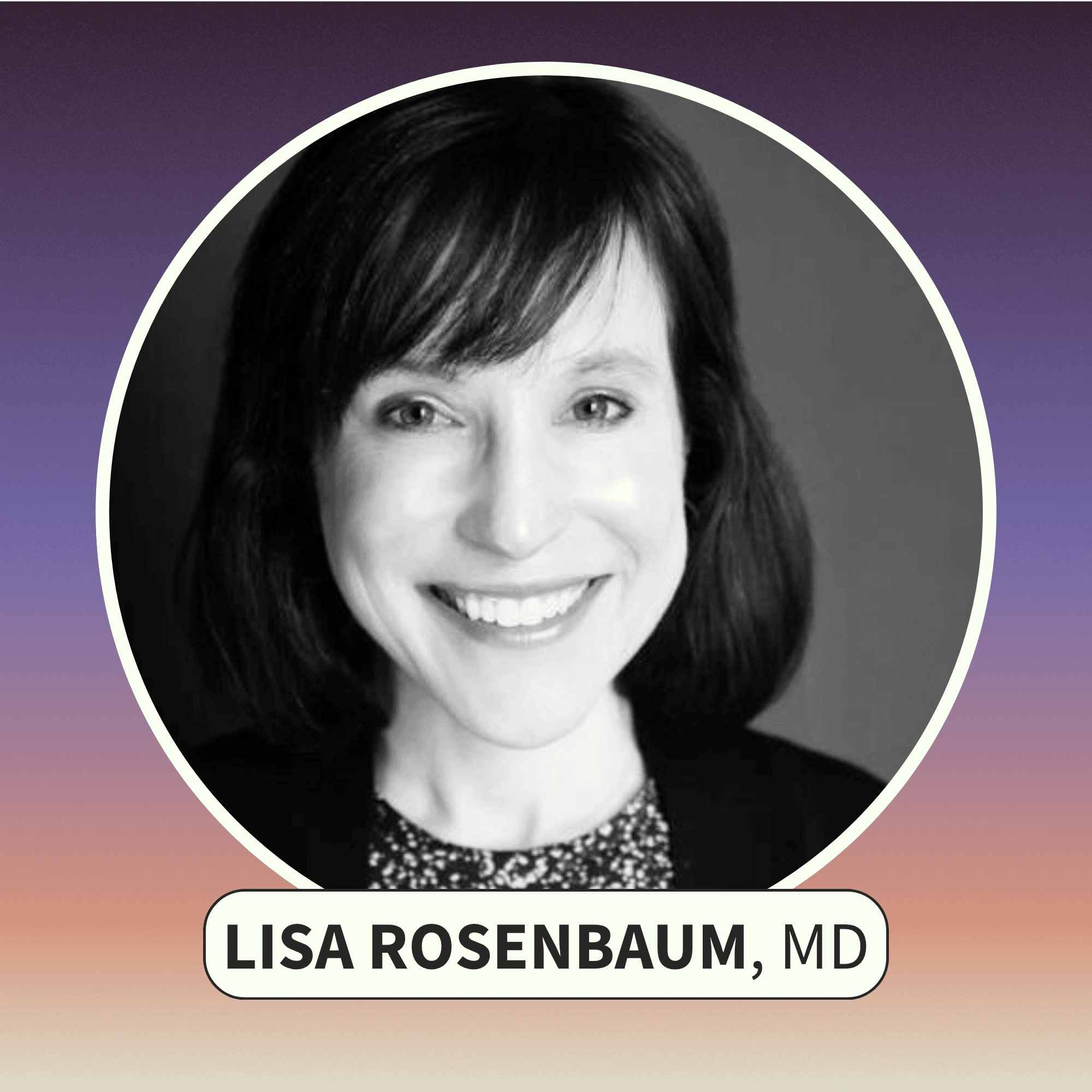
Lisa Rosenbaum is a cardiologist and an assistant professor at Harvard Medical School. She serves as the national correspondent for the New England Journal of Medicine, where she also hosts the podcast "Not Otherwise Specified." She completed medical school at the University of California, San Francisco, Internal Medicine residency at Massachusetts General Hospital, Cardiovascular Disease Fellowship at New York Presbyterian Weill-Cornell, and the National Clinical Scholars Program at the University of Pennsylvania. Her writing and podcast cover a range of issues at the intersection of science, medicine, and society. Prior to joining the Smith Center and BIDMC she practiced cardiology at Brigham and Women's Hospital for 9 years.
About The Show
The Nocturnists is an award-winning medical storytelling podcast, hosted by physician Emily Silverman. We feature personal stories from frontline clinicians, conversations with healthcare-related authors, and art-makers. Our mission is to humanize healthcare and foster joy, wonder, and curiosity among clinicians and patients alike.
resources
Credits
About Our Guest
Lisa Rosenbaum is a cardiologist and an assistant professor at Harvard Medical School. She serves as the national correspondent for the New England Journal of Medicine, where she also hosts the podcast "Not Otherwise Specified." She completed medical school at the University of California, San Francisco, Internal Medicine residency at Massachusetts General Hospital, Cardiovascular Disease Fellowship at New York Presbyterian Weill-Cornell, and the National Clinical Scholars Program at the University of Pennsylvania. Her writing and podcast cover a range of issues at the intersection of science, medicine, and society. Prior to joining the Smith Center and BIDMC she practiced cardiology at Brigham and Women's Hospital for 9 years.
About The Show
The Nocturnists is an award-winning medical storytelling podcast, hosted by physician Emily Silverman. We feature personal stories from frontline clinicians, conversations with healthcare-related authors, and art-makers. Our mission is to humanize healthcare and foster joy, wonder, and curiosity among clinicians and patients alike.
resources
Credits
Transcript
Note: The Nocturnists is an audio-first experience with emotion and sound design that can be difficult to fully capture in text. Transcripts are provided to support accessibility and reference, but may contain minor inaccuracies. If quoting in print, please consult the audio when possible.
Emily: I'm Emily Silverman, and you're listening to The Nocturnists. Medicine asks many things of the people who practice. Discipline, stamina, judgment, humility, but somewhere along the way another question emerges with increasing urgency. How do we care for the people doing the caring? Today's guest is Dr. Lisa Rosenbaum, a cardiologist at Beth Israel Deaconess Medical Center, assistant professor at Harvard Medical School, and national correspondent for The New England Journal of Medicine.
Through her essays and podcasting, Lisa has become one of medicine's most provocative and thoughtful public voices, writing about everything from physician well-being, to primary care, trust, and the uneasy relationship between science and society. In our conversation, Lisa and I talk about the physician burnout movement, the limits of self-care culture, and the meaning that can still be found in difficult work. We also explore the legacy of Lisa's grandfather, a physician writer whose life helped shape Lisa's perspective as a storyteller and a caregiver. I hope you enjoy this conversation as much as I did, but first, take a listen to Lisa, reading from one of her essays in The New England Journal. Beyond Moral Injury.
Lisa Rosenbaum: At some point, amid peak pandemic burnout, I came across a Twitter thread by Kathleen McFadden, then a chief resident at Massachusetts General Hospital. Expecting yet another depiction of the frustrations of our working lives, I skimmed her description of a busy morning with several new patients, one of whom was so preoccupied by having forgotten her Milk Duds that she couldn't give much history. The Milk Duds kept me reading. As any writer knows, a story can't include that sort of detail without returning to it.
Sure enough, late in the evening, inundated with administrative tasks, McFadden sees a box of Milk Duds in the chief's candy basket and takes it to the patient. Then McFadden surprised me. Rather than lecturing on humanity and medicine, or lamenting our institutions' exploitation of our good will, she turned the conversation about well-being on its head. Although the Milk Duds kept her at the hospital far longer than intended, her patient suddenly opened up. For the first time that day, she felt her work had meaning. So she wondered, what if improving our own well-being sometimes means spending more time at work rather than less?
McFadden has since quit Twitter, so I don't know how people reacted, but I imagine her opinion was unpopular. Though few physicians would dispute the imperative to take good care of patients, many argue that individual clinicians shouldn't have to constantly work harder to overcome the system's shortcomings. That's why being told to be resilient is infuriating. It implies that individuals are responsible for solving systemic problems. It's also why well-being interventions often feel farcical. Rather than making doctors do modules on sleep hygiene, why not create work environments that don't force us to spend our nights managing exploding inboxes?
[music]
Emily: I am sitting here with Dr. Lisa Rosenbaum. Lisa, thank you so much for coming on the show.
Lisa: Thank you so much for having me.
Emily: I have been following your work for a long time. You are a prolific writer, and you're also a physician podcaster, so we have a lot in common. I'm really excited to dive in today to your work in general, but also specifically into this piece that you shared. Before we go there, I would love to back up a bit and start with your grandfather.
In this piece, you mentioned that your grandfather was a rheumatologist for more than 50 years, and he also wrote a memoir called, A Taste of My Own Medicine: When the Doctor is the Patient, in which he described his own experience going through the looking glass and becoming a patient himself. So, I was wondering if you could tell us a bit about him and your relationship with him.
Lisa: Yes. My grandfather had an extraordinary role in my life. He still does, even though he died near the end of my residency. I think he'd just turned 94. As you laid out, he was a physician writer. First a physician. He practiced in Portland, Oregon, where I grew up. He was married to my grandmother, that was a huge central part of his life, and he had four sons, one of whom is my father. He was sort of the archetypal physician in the community. He practiced rheumatology, ultimately, but he also practiced general internal medicine, and he had an office that was in the center of Portland, Oregon, on a very popular street called 23rd Avenue.
Actually, across the street was my great grandmother's bakery, Rose's Restaurant, which was also sort of an iconic Portland place, so he and his partners would go there for lunch every day, which is just sort of part of the lore when I was growing up. I was very close to him. I was born in California, but when we were five, we moved back to Portland, that's where my parents had grown up, to be closer to them and the rest of the family. So, my childhood was very much one of spending weekends at my grandparents. My parents are both physicians, so they worked a lot, too. We'd be there with my cousins.
Portland is known for its beautiful forestry. He would always take me to the zoo, and to the trails near his home, and he was a storyteller. He told me stories my whole life. I would sit on his lap, and he would tell me stories. The main story when I was a kid was that I was actually a princess, because my grandmother was the daughter of the king, and in order to marry my grandmother, he had to slay all the dragons who were eating everybody. For a long time, I believed that story. Then when I was probably in grade school, it might have been even before.
I actually remember. It was before we moved to Portland, because I have this memory of him carrying me on his shoulders when we lived in Burlingame, California, and he used to-- it's like a joke in the Rosenbaum family that nobody can sing, but he used to sing me songs, and he had a hoarse voice. His hoarseness lasted months and months, and I sort of remember one of my early childhood memories of my parents worrying about it. He got diagnosed with pharyngeal cancer, eventually, and that became the premise of the book.
He was treated and cured with radiation, and then when he went back to practice, he felt like he could no longer be a doctor in the way he had been, because he was so newly aware of all of the injustices in the ways we treat patients. I would say, now the doctor as patient kind of trope is a bit-- it's like clichéd to me, at this point, but when he did it, it was more unusual, to the point that Disney bought the book and made it into the movie The Doctor. So, yes. That--
Emily: I've seen that movie.
Lisa: Yes. Yes, it's a great movie.
Emily: Oh my gosh, that was based on your grandfather?
Lisa: Yes, he was in it.
Emily: That's so neat. Okay.
Lisa: Another joke, this goes along with the not being able to sing Rosenbaum. We're just not good at that kind of art stuff, so he had a cameo in it where all he was supposed to do was wave at William Hurt, who was walking down the ward with his whole group of students and trainees, and he just couldn't get the timing of the wave. It took 17 times, but he's actually in the movie with my grandma sitting next to him. That was a big family life event. After that happened, I probably was around 11 or 12. He traveled
all over the world giving talks. He loved an audience. He was amazingly gifted at this.
He was extremely loving and extremely accessible. You could just feel his enjoyment. You know how now when you listen to people or you watch TikTok, like you can tell when people love their content. This was before the internet, but I would say my grandfather loved his content. So, a little side stories. I interim fell in love with writing, which we can get into, but it was more fiction writing. Then when I got into medical school, I was the first grandkid of the six. My sister now is a doctor, too, my younger sister, but I was the first.
So, he decided that he'd raised all of these questions about what was broken in medicine in the book, but now he wanted to answer them, so he had this idea that we would write a book together. By then he was in his late 80s, and he was cured of his cancer, but he ended up having Parkinson's disease and a little bit of associated dementia. So, for about seven years, he sent me these letters and stories that he would write that were meant to be questions to me. He would always say like, "Lisa, what would you do with this patient, or with this ethical dilemma?"
It was a delusion, in a sense. I was never able to get anything published about it until-- I think it was until after. Yes, it was not until after he died, but I was at UCSF, where you are well familiar, and they let me do some, like fourth year, it was kind of area of concentration, I want to say, or something, which basically I invented it, and it let me make this project my work. So, most of my fourth year I just-- he would write these things to me, I would kind of respond, and I would write and write and write, and I'd never publish anything, but we kept this up until just a few weeks before I finished my residency, when he died.
He would tell everybody that our book was going to be like this million dollar bestseller, and then he would tell people, which meant that I would leave medicine and get married and have kids with this-
[laughter]
Lisa: -funny aside. I loved him with my whole being. I still do. Just that kind of uncritical love, and he's in my head and heart still all of the time. I think a lot of my career and my passion has been shaped by him, unquestionably.
Emily: The fact that he was older and had some kind of Parkinson's related dementia, and you said something delusional, I mean, obviously the idea that it's going to be a multimillion dollar hit, or whatever, I can sense that, but in the content of the letters that you were writing back and forth, I think you mentioned in your piece that the stories were starting to blend together, all the patients became the same, and so when you say delusional, do you mean more like the letters he was writing were becoming incoherent over time?
Lisa: Right. I'm actually glad you didn't ask me to read the passage about where it all made sense, because it always makes me cry, but a lot of the letters were-- initially, the letters he wrote me were completely true. Like, "You're going to make mistakes and you need to learn to live with them. Patients don't expect you to play God, they expect you to be there with them when you can't." Things like that. Then his mind unraveled, essentially, and so he would send me the same stories. He'd always sit me down whenever I saw him. I would visit him in Portland.
He was in this big motorized chair, and his limbs were akimbo. He would kiss me, and he would say, "When are you coming home again?" Then he would say, "Let's get to work." I would just kneel at the base of his chair, and he would be like, say, "Lis, I have this new story to tell you, and I need to tell it to you immediately." It would be a story I'd already heard. Then at some point, all the patients had the same name, and then all the stories became about the people in his assisted living facility, or like a joke that he heard at lunch. There were a lot of jokes. That's just how it went, and I would never give up a moment of any of that, in terms of meaning in my life.
Even though he wasn't coherent by the end, there was still a lot of meaning in it. I think that at some point I realized that so many of the stories he sent me didn't have a point, but so many of them were about the people who let him into his life, as his patients. That that was the fundamental point. That to be able to care for them in a way that he could hold on to them well into his 90s, was what medicine meant to him, and so that felt like the answer to the question that he was really asking me, which is like, what is medicine? What is it about? How do we preserve that? I couldn't find it in any one story, but I could find it in the project, if that makes sense.
[music]
Emily: What ultimately drew you to medicine? You had it in your family, was it from a young age or was it later?
Lisa: Yes, the medicine part was much more obvious to me than the writing part. I mean, again, so you grow up in this family, I mean, he was formative, my parents, I'm so close to, and Portland, again, isn't-- it's bigger now, but then it wasn't as big. So, you go to the grocery store, you go to synagogue, whatever you're doing, you run into people who somebody in your family has cared for, and they tell you all the time like, "Your father let me see again." Or, "Your mother saved my life." She's a cardiologist. My father, he's a rheumatologist, but his science was all about uveitis.
So I think that for me, it was just this, like, I never even questioned it. I was like, "This is what you do to have a meaningful life." One thing I think about all the time now is how many parents would discourage their kids from going into medicine. Mine certainly did not pressure me at all, nor did they pressure my sister, but I think we both just witnessed it as like, this is what you do, and you will be satisfied. You'll work hard, but you will be satisfied.
Emily: Yes, a friend of mine has a friend [chuckles] who I don't know as well, but she always used to tell me about her friend who grew up in Vermont, and she came from a family of fiddlers, I think they were of Irish descent, and there was this very specific Irish fiddling tradition. It was like a musical family, and her parents did it, and their parents did it, and it was just this thing that was passed down generation to generation, and then this young woman, my friend's friend, became a fiddler, and she's still a fiddler.
I think there's a lot of that sometimes in families, like there's a trade or something, or a skill, or an artistic pursuit that's passed from generation to generation, and one way to think of it is like, "Well, obviously, the young kids are going to be pressured because, whatever, inertia," but there's another way to look at it, I think, which is almost like the family becomes like keepers of that trade, in a way. I think there's something really beautiful about that.
Lisa: Oh, same. I feel very moved by the fiddler story. So, yes. No, I totally agree. I love when patients even tell me, like when they are talking about, "Oh, my father, I took over his business." Like, in the same, you know, his construction business, or whatever it is. I definitely feel that. It's just a shared thing that you pass down. Maybe it gives it extra meaning, and maybe it doesn't. You know? Yes, it was just like-- it wasn't something that I gave a lot of thought to. It was just so inherent to what I imagined my life to look like, which is kind of ironic, since now my life doesn't really look like there's-- in a lot of ways.
Emily: A lot's changed, including in medicine.
Lisa: Right. Exactly.
Emily: Well, tell us about the writing piece. So that, a lot of people come from lineages of physicians, but it's more rare to come from a lineage of physician writers. So I'm wondering about the writing piece, was that-- it sounds like that came a little bit later for you.
Lisa: Well, it coincided. I don't think I would be-- I don't think it'd be totally honest to say because my grandfather was a physician writer, I fell in love with writing, because then I would also be like a gardener, and go to math, and all these other things, and I'm not. He made these amazing train sets. You know? What happened really with the writing? Well, first of all, even in high school, we had this International Baccalaureate program, and there was like this thing called an extended essay that I did my senior year, and it was like a 30 page thing.
I completely immersed myself in it, and it was just like-- I just remember sitting at that little-- [laughs] I'm laughing because I had this desktop computer, and my sister is like a computer whiz, and anytime the screensaver would just say, "Jennifer is so cool." That's my sister's name. She programmed it, so I just have this memory of sitting and staring into space thinking, and then it'd be like, "Jennifer is so cool." No, I was just like inerted out, even with that. I loved that. Then when I got to college, I loved thinking about how one idea spoke-- I remember writing about Karl Marx and Toni Morrison my freshman year, and like, how does one speak to the other? In whatever your freshman mandatory classes.
Then basically what happened is I did all my pre-med stuff at Stanford, and it was very cutthroat. Again, I wasn't particularly-- like my first organic chemistry midterm, I got a B minus, and I walked to a pay phone, because that's what there were, and I called my mother at work, I think she was in the cath lab, and I was like, "It's an emergency." She was like, "What's going on?" I'm like, "Are you okay?" She thought I fell off my bike, or whatever, and I was like, "No, I'm not going to medical school. I got a B minus in o-chem, and like, my life is over."
My life wasn't over, obviously, but I didn't ever get miraculously good at chemistry. You know what I mean? I still suck at acid bases stuff. I'm like, "Oh, no. Is this mixed? What am I going to do if it's mixed?" By the end of my sophomore year, done most of it, and then I had like a big old heartbreak. My first real heartbreak. I just remember that summer I was maybe teaching literacy somewhere, so in that pursuit, I was reading a lot of short stories, and I was like, "I'm just going to write a short story about this, but I'm going to fictionalize it." I did, and it was so cathartic.
Then I took a fiction course, a short story course the fall of my junior year, and I made the most incredible friends, and I just loved it. Then what happened is I thought I'm going to take a little time off from going to med school, and I applied to MFAs in fiction writing. I got rejected everywhere, and the last minute I got into Columbia. The first year after college, I moved to New York and started the MFA at Columbia, and a week after I arrived in New York, and I'd been on the West Coast my whole life, September 11th happened. Then I had just like a massive meltdown. Didn't write the whole year. Literally the whole year I was there, I didn't write.
I would just eat bagels, which is like-- and I did a lot of psychoanalysis, so it was like a very New York experience. Then I would wander around Downtown, and look at all the posters of the people who had died. It was just like such a dysfunctional way to exist, but also I was like 22 and I didn't-- like, what do you know? I knew I wanted to go to med school. That felt pretty clear. I was like, "This is not-- I love writing, but I am not a writer. I am not cut out for this life." I need to like touch those people, like in the posters, you know, I felt so unmoored by it all.
The sense of there's this immense sadness and grief that has descended upon this place in our country, and I just want to be helping other people. That's the only way I know how to feel okay in this world. I think that's still true.
Emily: Then you went to med school, residency, fellowship, you became a cardiologist, like mom.
Lisa: Yes, like mom.
Emily: Tell us about cardiology.
Lisa: Yes, I just love cardiology. I think that before I-- when I was looking at it from the outside, I think the things that I loved were that we had so much data to tell us what to do. We can do so many things for people. That is amazing to me. My mom gave me Eugene Braunwald's two major textbooks my first year of med school, and I remember sitting on my bed, I was looking out my window on Clayton Street, I don't know if you know Clayton Street in San Francisco.
Emily: I do. I used to live right there.
Lisa: Yes. I was sitting on the bed with that big, kind of maroonish book, and I was reading Peter Libby, who was-- like, became a colleague later at the Brigham, writing about lipids, and I was like, "This is beautiful. This is beautiful writing, and it's just like beautiful to visualize what's happening within the artery," and I was just like, I fell in love with it. Then what happened, I don't-- now I don't do any prevention or anything like that. I'm like, "No, I don't want to talk about lipids, but I love taking care of sick people." I really love the pace of cardiology.
I belong in a hospital. I think that if I didn't have this other life, I would probably want to be in an ICU. Yes, I'm not trained in critical care at this point, but it is like I just enjoy the pace of cardiology, and it really brings out two different parts of me. I feel like my writing, podcasty part of me is just like so cerebral and slow. I am so slow, I can't even tell you. Then the cardiology part of me, it's more like my mother. My mother can walk into a room. Actually, I don't want to flatter myself and say I'm like my mom this way, because she's so good at, but you can see her.
She walks into a room and she can like see what's wrong, and what needs to be done, and get it done so quickly. I don't quite have that sophistication, but I do like moving. Being efficient and making decisions that matter. It's obviously extremely stressful. The stress I feel as a doctor is so different than the stress that I mostly don't feel as a writer. It's just the stakes are so different. You know what I mean? Yes, cardiology is just like really fun and cool.
Emily: I was just thinking, what would be the storytelling equivalent of an emergency? Like, the acute MI of writing would be like missing a deadline or something. [laughs]
Lisa: Missing a-- I know. The problem is they don't give me deadlines. Although the podcast, I have deadlines, which I miss consistently. I would like to tell you it makes me as stressed as cardiology does, but it doesn't. Yesterday, I was on somebody else's podcast, and he asked me a series of rapid fire questions at the end, and there was one, and I'm just like-- I don't even remember exactly what it was, but I was-- like, I drew a total blank. I was like, "I don't have any idea what I'm supposed to say." I guess I was like-- that was [unintelligible 00:27:59], but it's not. I mean, you know what I'm talking about.
The pit in your stomach when you think you've-- something has happened to a patient, and you're responsible, and you hurt them. There's nothing like that for me in the world, that feeling. It's like the most anxiety-inducing, vomit-inducing, whatever feeling, and it never goes away. I feel like the fact that I have so much time to introspect in the other part of my life just enhances my sense of responsibility and the stakes in that other part of my life.
[music]
Emily: Well, staying on the storytelling part of your life for a moment, you have a pretty cool gig as the national correspondent at The New England Journal of Medicine, and so you write for them, you write for them a bunch.
Lisa: Right.
Emily: You are also the host of The New England Journal of Medicine podcast, Not Otherwise Specified. Tell us about nestling into NEJM, [chuckles] and writing for them, and podcasting for them, and kind of this role of national correspondent, and how that came about, and what that means, and what that looks like.
Lisa: It's like a dream that I'd never had, because I didn't really know it was possible, kind of thing. It's an incredible place to work, for so many reasons. I think I did a fellowship there in 2012 with Daniela Lamas, who you had on, and I loved that episode so much. We were together for a year in this office in 2012, and she had done reporting at the Crimson, and stuff like that. So she taught me so much about how to write and report. Skills that I definitely did not have. I'd done the year of MFA that didn't count, and I never had any reportorial training or anything like that. Then I ended up doing this other fellowship at Penn, and I started writing online at The New Yorker during that time.
Coming back to NEJM, it felt like coming home, in a sense. I think the thing that was most striking to me was just that everybody's a human, and I think that from the outside, the journal is just like so big and like so--
Emily: Consumes very large in the consciousness.
Lisa: It does. It really does, and for good reason, but you sit in the meetings, which I used to do, I don't do it anymore, but I used to, and at some point you realize, you have people, humans, who are making decisions, and that was extremely fascinating to me. I'm just deeply interested in human behavior and how people interact, and leadership. Jeff Drazen was the editor who hired me. He was the editor-in-chief at the time. I was particularly interested in how he set a tone that allowed for so much collaboration and discussion and dissent, and then everybody could come back together and be friends.
It's just like when in your life, you just get to sit in a room, like two or three times a week with all these brilliant people, talking about science. That was just extremely, extremely cool to me. So the writing part, though, it's very well suited to my personality. In that I have just a ton of autonomy. I mean, I have editors, obviously, who can tell me this is not working. I look to them to do that, sometimes, because I get stuck in my own head. As far as the genesis of ideas and things like that, most of it comes from me. So I don't know. I don't have a counterfactual.
I pay a lot of attention. I wish I paid as much attention to cardiology as I do to media, but I read a billion media Substacks or listen to billion media podcasts. One thing that I just feel so lucky about, I kind of feel like this is a theme I brought up with my grandfather, too. I feel removed from the rat race of it all. Like, I'm really protected from, I think, a lot of the things that can make writing and media hard today, which is like, oh, you have to now be on video, and you basically have to be an influencer, or you have to have 100,000, at least, followers on Twitter for anyone to pay attention to you, or whatever it is.
It's not that I don't pay attention to those forces, but I choose to ignore them, mostly, and I feel like the journal has allowed me to do that, because I look at it as like this bastion of excellence, and old school approach to a lot of things. Not that they aren't innovating constantly, I mean, they are, and my podcast is part of that, but also that if I just leave behind a body of work, a bunch of essays that chronicle medicine as I knew it, I'm okay with that. Even if they don't have a billion clicks, and nobody bothers me about that. Does that make sense?
Emily: It does make sense. The national correspondent role, is that meant to be like a liaising role with academic medicine and research and publications and studies and the general public, or is it meant more as liaising with the clinician community? Like staying inside the house and kind of disseminating work inside the academic space?
Lisa: I think it's kind of like, it's just what they called it, because that's what they used to call it.
[laughter]
Lisa: I don't think it really-- I love that you ascribed some intent to it, but I think it implies more of a journalistic role, and I think of myself more as an essayist. In the last five years, I basically have just written these mega series. Like, I did quality, then I did training, and then I just did primary care. So, I'm almost to the point where I'm kind of writing books about a certain topic that lend themselves to like a serialized essay format. I think you were trying to get at, who is the audience? Well, I guess I would say the obvious answer is the journal's readership, but I always try to write things that I feel would be accessible to anybody, but I don't know that I succeed in that.
Emily: [chuckles] Well, I think a lot of people know about New England Journal. The podcast, I think you can just listen, right? You can just--
Lisa: The podcast, you can definitely just listen. That is really fun for me, that you don't have to have a New England Journal subscription. I think it feels more accessible to people, and I feel the feedback from the audience, I think, is more immediate. I don't know what it's like for you hosting a podcast versus writing, but I love hosting a podcast.
Emily: I always pictured myself as a writer, when I was younger, and I unexpectedly fell in love with the audio medium. It was not something that I set out exactly to do, but it just kind of happened that way. I still write. I write some, but I don't know, there's something that I really love about the human voice, and the extra information that you're able to communicate with the instrument of the voice that doesn't necessarily come through on the page.
There's obviously a lot of things you can do on the page that you can't do in audio, like, beautiful literary descriptions that just wouldn't make sense for me to sit here and [chuckles] give Vladimir Nabokov like descriptions of medicine. Anyway, yes, there's like a musicality to it. It's fun. It's a really fun medium. So, yes.
Lisa: Yes, I love it. I love it so much. It helps me avoid some of my Achilles heel type problems, which is to think I think too deeply. I think about things, and then I get stuck, and I feel compelled to have answers to things that can't be solved. The podcast kind of like absolves me. [laughs]
Emily: It's a very forgiving medium.
Lisa: It is.
Emily: People don't really like hate listen to podcasts. [laughs]
Lisa: I mean, I'm sure some people hate listen to me. I know that there are people who hate me, and I don't think you can do-- I don't know how you think about this, but it's hard to do interesting work these days and not be hated by some faction. I've always-- I mean, it's not-- I'm not a vanilla writer. I'm drawn to controversy. I'm sure you can see that in my writing. I get bored. If I were to write something that was sort of just overtly political in a way that everybody was already talking about, that's not interesting to me.
It's not what I feel like my role in the world is, I guess. It's more like, where are these areas where there's like there are assumptions that maybe are wrong, and how are those assumptions affecting how medicine is playing out for doctors or for patients?
Emily: Well, I think that's a great pivot point to talking about this essay, it's an amazing essay. It's extremely thought-provoking, and it's called, Beyond Moral Injury - Can We Reclaim Agency, Belief, and Joy in Medicine? I think I read this when it came out, and then you sent it to me again, and I read it again, and I was like, "Yes, I think I read this when it came out." I remember thinking at the time, like, "I want to have her on the podcast." I'm glad that we were finally able to make it happen, even if it was at a bit of a delay.
Lisa: Well, that was my fault. Let's [crosstalk].
Emily: Okay.
[laughter]
Lisa: I'm unable to respond to emails, and I really apologize, but I'm so happy to be here now.
[laughter]
Emily: We're happy to have you. You know, there's probably a lot of people listening to this show who have been involved in the physician burnout conversation. I feel like you actually hear less about it now. It was like a very hot topic pre-pandemic, like physician burnout was the topic, and everybody was writing about it, and there were so many headlines about it. Then, of course, COVID hit and kind of deepened and distorted the conversation in different ways, which was really interesting. In the pre-COVID era, the physician burnout conversation, in my mind, progressed through a few different stages.
So, I think, in my mind, of it kind of like this. There was physician burnout 1.0, which was looking around, noticing, "Oh, we have a big problem. Physician burnout." In the initial wave, it was, "How do we fix this? How do we make our doctors happy? How do we make them less burned out?" This was sort of like the individual intervention. This was, "What if we offer them a yoga class, or a meditation class, or a reflection group?"
Often, these interventions were being delivered by the very institutions that were causing the burnout, and so then the physicians, they didn't like it, and it was like, "You're the one grinding me 80 hours a week, and now you're telling me to go to an ice cream social, when really, what I need is to go to the dentist and take care of my body," and things like that. So, physician burnout 1.0, in my mind, produced a lot of resentment, and produced a lot of anger, to the point where the word resilience almost started to become a dirty word.
People were saying, "No, it's not that I'm not resilient, it's that the system is not resilient." Then we kind of progressed into burnout 2.0, where the pendulum swung all the way in the other direction. Physician burnout 2.0, and you can correct me if I'm wrong. I'm just making this up. I haven't-
Lisa: No, I totally agree.
Emily: -like trademarked these ideas.
Lisa: No, no, I mean, that's why-- and in the first passage I read, I was like, "You can't use the word resilience, if you don't want people to come after you." Yes, so far I totally agree.
Emily: Yes, exactly. I know. It's like sometimes well-meaning people would come into the space and start talking about resilience, and then all the doctors would like snap at them like piranhas.
Lisa: Everybody be texting wildly, and I'd feel so sorry for those people, even though also I was like, "Oh, no."
Emily: Yes, because they didn't know. Yes.
Lisa: They didn't know. They were just--
[laughter]
Emily: Burnout 2.0, pendulum swings the other way, so it becomes, "Actually, this is not an individual responsibility thing at all, it's entirely a systems thing. The system is broken, medicine is becoming corporatized, it's profit driven, we're being worked too hard, we don't have protections, our autonomy is being eroded by these other forces, like insurance companies and prior auths and things like that, so if we're going to have a conversation about physician burnout, we need to take the attention off of the individual clinician and stop talking about yoga and ice cream and meditation, and start talking about the broken system that we work in, and if you want to make clinicians feel better, fix the system."
The burnout 2.0 narrative was very prevalent, and in some ways still is. Your piece kind of tries to bring the pendulum a little bit back, not to the middle, I would say, but just a little bit back. [chuckles] Like a few inches. I thought that was really a courageous stance to take, and was wondering if maybe you could just start by telling us about this tweet thread that you found on Med Twitter. Unfortunately, now on X, that whole community is kind of-
Lisa: Bye-bye. [laughs]
Emily: -dissolved. [laughs]
Lisa: Yes, my entire feed is like heated rivalry, which is fine, but like-- [laughs]
Emily: Which is fine. That's a different type of pleasure, but back--
Lisa: Yes, when Twitter was the thing. Back in the day.
Emily: Back in the day, in this vibrant social media community of physicians, so you're online, you stumble upon this tweet thread, Milk Duds. Tell us what it was about this thread that caught your attention.
Lisa: Well, it was very countercultural. I mean, it's not just like in the middle of the pandemic, where I feel like our burnout became the story, in a way that didn't sit right with me. I've since tried to figure out like, why didn't it sit right with me? There are lots of reasons. The essay that we're talking about is the fourth of a series that really dives into a lot of these issues, but part of it for me, very personally, if I were to be analyzed about this, was that-- so, I have lupus, I'm on immunosuppressive drugs. I wanted to work when this all started, in March of 2020.
My mother thought I was going to die, and so she basically put her foot down and wouldn't let me do my time, and I had to call out. So, I was on the sidelines. I think that vantage completely changed how I experienced the pandemic, because every moment after that I got to help. Maybe this is like the theme that I felt in 2001 as well, when I felt on the outside, in this way. It was like it felt like a privilege to me, and not because I didn't feel vulnerable. I mean, we all-- the other part of my life, if I were to have like academic career, I would study risk. How emotion and risk perception collide.
I had a terrible fear of infecting other people, like that I would get it, and I would be dumb about it, essentially, because I-- when you have lupus, you kind of feel like you have the flu a lot. So, I was worried that I would get it and not really realize, and then pass it on. That was like my abiding terror, but I wasn't one of these people who was worried about getting it that much, except if I was going to pass it on. So, I think it's not fair for me to talk about how other people felt, or what other people went through, because, A, I worked a fraction of what other people did. B, I just-- everybody has different anxieties around certain illnesses, or insults to our bodies.
For me, COVID wasn't one of them, but I definitely became aware that what I would see on social media, and the way that the media at large was covering what was going on, they gave such a platform to physicians who felt burned out, and this was going on much more broadly in our culture. Where if we're victimized by something, that is a way to gain moral superiority. So, the third essay I wrote was about the moral superiority that has been ascribed to various grievances. That was like in the backdrop of all of this. Then I come across Kathleen's thread. Who Kathleen, by the way, is like one of my dearest friends now, but this all happened after.
I was like, "Oh my God, this is so brave. Everybody in the world is getting celebrated for talking about how tired and how unfair and how horrible all of this is, and that it must stop" Here she is being like, "No, it's cool to stay extra at work." Also, the Milk Dud thing was so cute, and it turned out that the patient couldn't sleep unless she had a Milk Dud under her tongue, which was like, what a detail? You know?
Emily: For those who don't know what Kathleen's thread said, summarize. Like, what was in the thread?
Lisa: The thread was like, she was a chief resident, she was also burned out. It was so-- I mean, I don't want to minimize for one moment how hard people were working, and how painful it was. I think, especially for parents, your kids are not in school, you're terrified of infecting them, you're working all the time, people are taking their kids to their grandparents or whatever. I mean, and you're wearing N95s, and your face is ripped apart, and you're scared of getting sick. So, it was like all of that was happening.
Then you're chief resident on top of it, so you have this new responsibility when you're attending, which you've never done before, and you're responsible for all these administrative things, and all the trainees are upset because it's COVID and the world is exploding. She was like at her max burnout, which she describes, and there are all these things that she hasn't written one note, and a long night awaited her, essentially. Then she decides, because this woman this morning, when she was talking to her and admitting her down in the ED-- I might be misremembering exactly what happened, but the woman wouldn't give her any history because she was so preoccupied because she'd forgotten her Milk Duds.
So, Kathleen, they couldn't figure out what's going on with her, and then at the end of the day, it's getting late, and she walks by the chief's office and there was always candy there. There was a box of Milk Duds, and she brought it to the patient, and then the patient just completely opened up, told her what was going on. It comes out at that moment that she can't sleep without a Milk Dud under her tongue, which, again, I just love. Then basically, Kathleen is like, "Oh, this is like--" Now I'm definitely putting words in her mouth. This is not what she said, but, "This is like what gives meaning to my life."
What if our whole dialog about burnout is upside down? Because it's all become about like, "Protecting myself from this system that is crushing me." I would argue, again, in the backdrop of these four essays that I wrote, this system is not just like the medical system is crushing us, it's like capitalism is crushing us. We can't possibly get out of bed because of capitalism. You know? It's all of that stuff kind of mushed together in a way that I felt like had culminated in this sense very generally in society that we have no agency or power, but in medicine specifically.
I thought there was something paradoxical in that, because I think to be well is to feel a sense of agency, and that this narrative had stripped us of agency. So it was like contributing to an erosion of well-being in its own right. So, for Kathleen to reclaim something in her own agency, to make a choice to go back to see that patient, was very powerful to me.
Emily: Even if it meant staying later.
Lisa: Late. Exactly. That was the whole point. So, I feel like it really complicated that narrative, and set me up to think more deeply about all these issues, and how they were converging in our training environments, and also in our culture at large. Where we were seeing very similar narrative threads.
Emily: Yes, I was going to say, in your essay, you talk about this self-care culture, like reject toxicity, reject overwork, protect yourself, protect yourself, protect yourself. That there was almost like a religious fervor around this philosophy. I think in the piece you talk about an Instagram influencer, two million followers, and then published a video or something, that was called, Embrace Quitting as a Spiritual Practice. This idea of quiet quitting started to become popular. The idea being you just like don't work so hard, like don't do that good a job.
Lisa: Right. Take care of yourself. That is like the North Star of life, is take care of yourself.
Emily: It makes me think. You know, I don't attend on the wards anymore, but there was a period of time-- so, I started med school in 2010, and I went to Johns Hopkins, which was super hardcore. Then I came to UCSF for residency in '14, came out of residency in '17, but along that trajectory, I definitely noticed a shift. Where coming in, in 2010, it was very much like hardcore gunner culture, obviously there was pros and cons to that.
I just watched an episode of The Pitt, famous TV show, where these two med students on the TV show are trying to outshine each other, and then at one point, Robby, the doctor, looks at them and he's like, "So you guys know that your grade isn't just on how much you know and how much you do, but also whether you're a team player." Then they point at each other, and they're like, "She can do it." [laughs] So, it's kind of like this caricature of a med student, but I remember thinking, as I was watching this, like, just last week, that that, to me, is not the med student of 2026. That, to me, is the med student more of like 2016.
Lisa: I so agree.
Emily: Then as time went on, and this burnout conversation started to mature, and residency programs, I mean, for good reason, really needed to be accountable and start providing more humane working conditions to their residents, that, as I said, the culture shifted, people started signing out earlier. I don't know. There was a shift, and people would talk about this. Attendings would talk about this. That the residents, sometimes, just didn't seem to know their patients as well. This was obviously not-- I'm making very broad generalizations right now, but--
Lisa: No, no, no. I mean, you're preaching to the choir, because I wrote four essays about that.
Emily: Okay. [laughs]
Lisa: It's not like I don't think it was being talked about. I think it was being whispered about, because we all feel uncomfortable, and we have to-- we feel like it's a very hard thing to talk about still, even. I feel, yes, it's very, very, very hard to talk about, because you sound like, "Kids these days," -ish, and nobody wants to talk about it, but most people, I think, did notice a shift.
Emily: Right. Yes, like this moment, the Milk Dud moment, I guess you could call it, as you were writing this essay, or it sounds like it was a series of four essays, and talking about this idea that we don't always have to be victimized by the systems. We have personal agency. It doesn't mean we have to grind ourselves and be exploited by the residency program, which absolutely has exploitation in it, but that we can choose moments where we decide like, "I'm going to stay late today. I'm going to circle back and talk to that patient and their family." Or "I'm going to go bring a Milk Dud to that lady," or whatever.
That if we have agency as we make those choices and take those actions, that there is some meaning that can be brought back in. It's not yoga and meditation and ice cream socials, but it's something else. So, just wondering, could you just talk a little bit about the Milk Dud Twitter thread, and then was that what catalyzed these four essays?
Lisa: I think it was part of it, but the other thing, and this fits into part of the conversation, is that I started noticing that people were debating on Twitter whether medicine was a job or a calling. That trainees were enraged when people would say it was a calling. That felt really new to me. That is actually where I started all of it. I was like, "What is going on?" Like, "This is totally new." When I started talking to trainees about that, and so this was the second essay that I wrote about this debate, but as like a springboard into broader questions about both how corporatized we've become, but also shifting norms around work and well-being that were happening.
As you mentioned, quiet quitting, I would say another big thing that happened was like the end of the girl boss era. It was like really cool to be a hard working woman who just devoted yourself to your career, and then suddenly, that was a horrible thing to be. I would always be like, "I would just like so much rather a girl boss doctor than a well-being guru doctor." You know? So, but when I talked to trainees, they would say like, "The word calling is weaponized against us, it's used to force us to accept poor working conditions." I was like, "Whoa, okay." Like, "This is interesting."
Ultimately, and there's just so much to be said about this topic, but I got really interested, maybe even subsequent to writing the essays, in the need to believe. There's this famous David Foster Wallace quote. I'm going to completely botch it, but it's like, "Everybody worships, the only choice you get is what to worship," kind of something like that. So, I've always been very interested in the need for humans to believe. As society has become so much more secular, I don't think that the need to believe has gone away. As we talked about in my childhood, medicine offered me this implicit belief system that there was some way to do good for the world, and I believed in that, and I still believe in that.
I think people stopped believing in that. Maybe we stopped, not we, because I still believe in it, but maybe some people stopped believing in it because it's no longer true. I don't know, but I felt like well-being had become a religion, and the pursuit of well-being of care of the self had assumed this spiritual fervor, and what was absent in that discussion. Again, this is happening in the culture. This isn't-
Emily: It's not medicine specific.
Lisa: -specific to medicine. Not at all. What is medicine specific is that we're responsible for other people's well-being, ultimately. What struck me in these conversations that we were having, like in often hushed tones, we noticed the shift, we noticed the focus on well-being, we all felt obligated to sort of do it, like honor it, respect it, because what do you say when someone says-- I mean, this became like the thing to say, right? Is like, "You're being toxic. You are harming my mental health. Long call is harming my mental health." You started hearing things like that.
There's no defense, or there was no defense to those sorts of claims. So, what felt like was absent in the conversation is like, "Okay, what does this mean for our patients?" So, when you bring up the fact that it started to seem like people didn't know their patients as well, of course. How can you sign out at four o'clock instead of seven o'clock and know your patients as well? You're not going to have a Milk Dud moment. That's when the Milk Dud moments happen.
Then, I felt like everything was becoming a self-fulfilling prophecy, because not only in the way that not feeling any agency was eroding well-being, but also, if you strip medicine of meaning and you sit in a room all day writing notes, feeling like you're slaves to the man, and then you go home as soon as possible, and don't go back to check on anyone, or follow up their labs, or whatever it is that used to happen in those hours, of course medicine becomes less meaningful, and then you want to do it less. It felt like that's where we were stuck. That felt like a big problem. I kind of think it's still a problem.
Emily: Well, I was going to ask, when you wrote these four essays, the one you read from today, you said was essay four out of four. What was the response or reaction like from the community?
Lisa: Whoa, it was like really divided. The third essay, I think, was the one that was most volatile, and that is the one where-- so, I read-- there were lots of these pivotal moments. There was Kathleen's thread, there was the debate about is medicine a job or a calling? Parul Sehgal, she was then at The New Yorker, she's now at The Times, I think, again, book critic. She's phenomenal. She wrote a piece, I think I read it in 2020, and it might have been 2022, called, The Case Against the Trauma Plot.
What she did in the piece was she described how literature and cinema had been reduced to stories about people's traumas, and that their identities had become only about their traumas. That became the currency in modern day literature, media, et cetera. She just gave a name to what I had been observing in the culture. That nothing else mattered if you could just make your life about how you'd been victimized by something. I was like, "Oh my God, yes, this is what's happening. Why is this happening?" Then she said the thing about how once you invoke trauma, in the same way if you say, "My mental health is threatened by long call," or whatever it is, that gives you moral authority. When people have moral authority, you cannot-- that's the mechanism of action. I seriously felt like I'd read an elegant nature study, where they had finally identified a mechanism of action of something that I didn't understand, but this was my cultural mechanism of action.
I was like, everything I see on Twitter-- I would read things like a medical student and be-- somebody would mispronounce somebody's name in the OR, and it would just become this huge, horrible thing and it would get 10,000 likes, or the resident brought lunch for all the residents but didn't bring lunch for the student, which is mean. Of course, it's mean. That sucks, but also 10,000 likes. It felt like we just hadn't found the balance. How do you say we need a more humane culture, but we can still elevate hard work and really outstanding clinical acumen, and the things that I'm sure were elevated at Hopkins, which is known for being hardcore, and respect to you for going there.
Also, you're friends with my friend Alessa, which I forgot, but we can go back to that.
Emily: Oh yes. She's been on the show too.
Lisa: Oh, I didn't know. I missed that one. Anyway, I just felt there needed to be a discussion. You asked me what the response was. There was one episode called Tough Love, where a former Vice Dean of Education basically talked about the wellness creep, where every year a class comes in and feels like something about the curriculum is diminishing from their well-being. More changes are made to the point where students never-- This was the big one that stuck in my head, is students no longer on their med school rotations, they don't ever take overnight call.
I don't know what it's like for you as a med student, but that's where you figure yourself out. Like, am I cut out for this? I just don't believe that certain things lend themselves to shifts. I think we all see when your life becomes an endless series of handoffs, things are missed. I think that neurosurgeons, they know when they go into it that they're going to get physically brutalized, and they make that choice, but they can only make that choice if they have data, personal data, from having experienced it. That was just one example, where medical students think this is bad for their well-being, so they're not doing it. How can they make a decision about how to spend their lives?
I still think it's okay to make decisions, to give up part of yourself for something that you want to do, that you believe in. I actually suspect it will come back because I think already people have tired of self-care. I think wellness itself is still on the rise, but I think people are beginning to appreciate the emptiness of the centering of the self as one's belief system. Medicine is this precious opportunity to center other people. Honestly, of all the things, that gives me the most hope for our profession.
Oh yes, but the Tough Love episode. Sorry, I went on a tangent. That was the one where it was the most explicit. There's wellness creep, this is bad, et cetera. It went-- I wouldn't say viral, because I feel like I don't compare to real virality, but trainees didn't like it on Twitter. There was a lot of discourse around it with excerpted-- One thing I've learned with podcasts, I don't know if this is like this for you, but a lot of people don't listen. They just look at the transcript and then they pick out parts. That happened, but it was fine. I mean, I expected it. When I wrote the series, it gave me a ton of anxiety — a ton, and I thought about should I just not even do this, but I spent my whole last year giving talks about it.
There was a tremendous appetite for this discussion, and I think the thing I heard more than anything else was, "You gave us permission to have this conversation. Everybody is talking about this. No one feels like they can say it out loud, and now we can't." That's what I heard. Probably there are a billion bad things being said that I don't necessarily hear, except for what happened on Twitter. I wouldn't go so far as to say people liked it, but some people liked it and appreciated it, and I think some people didn't, which is to be expected. Which is why we couldn't talk about it in the first place.
Emily: Well, I'm realizing now that we're more over time than I expected. This time just flew by since we've--
Lisa: It flew,
Emily: Maybe as we bring things to an end, what is next for you? You've already taken on this big topic. You've done series on primary care, on training, on different topics. What are you thinking and writing and wanting to make work about now?
Lisa: Well, I really love doing a podcast. I feel I shouldn't just ignore the media forces that I told you earlier that I tend to ignore, meaning it's not clear to me anybody reads anymore. I'm just wondering how to best use what I do. I love how the podcast forces me to get things done. I love that it's collaborative. I love what you said
about just what voice gives you, and I love getting other people's input into things so that it kind of takes a little bit of the burden off of me. Although right now I'm in a mode where
I'm narrating, putting together episodes so much, it does feel very much like a creative project. The primary care part will have to end, which is actually sad to me. I had no idea how I was going to put together a whole season about primary care, and then I couldn't stop.
Emily: I could go on and on about primary care. It's one of my favorite topics.
Lisa: Well, we maybe can schedule another talk or meet.
Emily: Yes.
Lisa: That would be--
Emily: A Zoom coffee to continue.
Lisa: Yes.
Emily: [crosstalk] content.
Lisa: I want to know all about you. I didn't ask. I obviously follow all of your work too. There are so many questions I feel I completely monopolized, which I
realize is what happens [crosstalk].
Emily: That's the point. That's why you're here.
Lisa: I guess it's the point, yes. I do know that. Which is, I'll say, I don't know if maybe I need to figure this out. Do I just want to have a more regular
podcast? Is that where my heart is right now? It feels a little bit like maybe that's where my heart is, but I'm really interested in trust, and I just feel like that's the other [unintelligible 01:05:54]. It's the big thing hanging over all of us. If I'm going to take it on, then it can only be if I feel I can bring something unique to the conversation, and I don't know that yet. That's where my head is.
Emily: I love it. We should definitely talk. We are doing some work on trust as well, so we should definitely huddle around that topic.
Lisa: Yes.
Emily: This has been wonderful. I feel like I'm breaking our flow a little bit, but Molly, I think, is signaling to us that we need to end. I feel like we could go for hours, but we have a limit here, so I'll just stop it here. Thank you so much, Lisa, for coming on the show, for talking about your family, your grandfather, and your journey through medicine and writing, and your work at New England Journal. It was really a pleasure. Thank you so much for coming on.
Lisa: Thank you. I really hope we get to meet.
[music]
Emily: This episode of The Nocturnists was produced by me, and producer and head of story development, Molly Rose-Williams. Our executive producer is Ali Block, and Ashley Pettit is our program director. Original theme music was composed by Yosef Munro, with additional music from Blue Dot Sessions.
The Nocturnists is made possible by listeners like you. If you enjoy what you hear and you want to support our work, consider subscribing to The Nocturnists+. You'll get access to The Nocturnists: After Hours, our monthly bonus series featuring original conversations from our team, along with merch discounts and a full archive of episodes, all in one place. Subscriptions start at just $10 a month. Learn more at thenocturnists.org/plus or through the link in the description. Thank you for listening and being part of this community. Until next time, I'm your host, Emily Silverman.
Transcript
Note: The Nocturnists is an audio-first experience with emotion and sound design that can be difficult to fully capture in text. Transcripts are provided to support accessibility and reference, but may contain minor inaccuracies. If quoting in print, please consult the audio when possible.
Emily: I'm Emily Silverman, and you're listening to The Nocturnists. Medicine asks many things of the people who practice. Discipline, stamina, judgment, humility, but somewhere along the way another question emerges with increasing urgency. How do we care for the people doing the caring? Today's guest is Dr. Lisa Rosenbaum, a cardiologist at Beth Israel Deaconess Medical Center, assistant professor at Harvard Medical School, and national correspondent for The New England Journal of Medicine.
Through her essays and podcasting, Lisa has become one of medicine's most provocative and thoughtful public voices, writing about everything from physician well-being, to primary care, trust, and the uneasy relationship between science and society. In our conversation, Lisa and I talk about the physician burnout movement, the limits of self-care culture, and the meaning that can still be found in difficult work. We also explore the legacy of Lisa's grandfather, a physician writer whose life helped shape Lisa's perspective as a storyteller and a caregiver. I hope you enjoy this conversation as much as I did, but first, take a listen to Lisa, reading from one of her essays in The New England Journal. Beyond Moral Injury.
Lisa Rosenbaum: At some point, amid peak pandemic burnout, I came across a Twitter thread by Kathleen McFadden, then a chief resident at Massachusetts General Hospital. Expecting yet another depiction of the frustrations of our working lives, I skimmed her description of a busy morning with several new patients, one of whom was so preoccupied by having forgotten her Milk Duds that she couldn't give much history. The Milk Duds kept me reading. As any writer knows, a story can't include that sort of detail without returning to it.
Sure enough, late in the evening, inundated with administrative tasks, McFadden sees a box of Milk Duds in the chief's candy basket and takes it to the patient. Then McFadden surprised me. Rather than lecturing on humanity and medicine, or lamenting our institutions' exploitation of our good will, she turned the conversation about well-being on its head. Although the Milk Duds kept her at the hospital far longer than intended, her patient suddenly opened up. For the first time that day, she felt her work had meaning. So she wondered, what if improving our own well-being sometimes means spending more time at work rather than less?
McFadden has since quit Twitter, so I don't know how people reacted, but I imagine her opinion was unpopular. Though few physicians would dispute the imperative to take good care of patients, many argue that individual clinicians shouldn't have to constantly work harder to overcome the system's shortcomings. That's why being told to be resilient is infuriating. It implies that individuals are responsible for solving systemic problems. It's also why well-being interventions often feel farcical. Rather than making doctors do modules on sleep hygiene, why not create work environments that don't force us to spend our nights managing exploding inboxes?
[music]
Emily: I am sitting here with Dr. Lisa Rosenbaum. Lisa, thank you so much for coming on the show.
Lisa: Thank you so much for having me.
Emily: I have been following your work for a long time. You are a prolific writer, and you're also a physician podcaster, so we have a lot in common. I'm really excited to dive in today to your work in general, but also specifically into this piece that you shared. Before we go there, I would love to back up a bit and start with your grandfather.
In this piece, you mentioned that your grandfather was a rheumatologist for more than 50 years, and he also wrote a memoir called, A Taste of My Own Medicine: When the Doctor is the Patient, in which he described his own experience going through the looking glass and becoming a patient himself. So, I was wondering if you could tell us a bit about him and your relationship with him.
Lisa: Yes. My grandfather had an extraordinary role in my life. He still does, even though he died near the end of my residency. I think he'd just turned 94. As you laid out, he was a physician writer. First a physician. He practiced in Portland, Oregon, where I grew up. He was married to my grandmother, that was a huge central part of his life, and he had four sons, one of whom is my father. He was sort of the archetypal physician in the community. He practiced rheumatology, ultimately, but he also practiced general internal medicine, and he had an office that was in the center of Portland, Oregon, on a very popular street called 23rd Avenue.
Actually, across the street was my great grandmother's bakery, Rose's Restaurant, which was also sort of an iconic Portland place, so he and his partners would go there for lunch every day, which is just sort of part of the lore when I was growing up. I was very close to him. I was born in California, but when we were five, we moved back to Portland, that's where my parents had grown up, to be closer to them and the rest of the family. So, my childhood was very much one of spending weekends at my grandparents. My parents are both physicians, so they worked a lot, too. We'd be there with my cousins.
Portland is known for its beautiful forestry. He would always take me to the zoo, and to the trails near his home, and he was a storyteller. He told me stories my whole life. I would sit on his lap, and he would tell me stories. The main story when I was a kid was that I was actually a princess, because my grandmother was the daughter of the king, and in order to marry my grandmother, he had to slay all the dragons who were eating everybody. For a long time, I believed that story. Then when I was probably in grade school, it might have been even before.
I actually remember. It was before we moved to Portland, because I have this memory of him carrying me on his shoulders when we lived in Burlingame, California, and he used to-- it's like a joke in the Rosenbaum family that nobody can sing, but he used to sing me songs, and he had a hoarse voice. His hoarseness lasted months and months, and I sort of remember one of my early childhood memories of my parents worrying about it. He got diagnosed with pharyngeal cancer, eventually, and that became the premise of the book.
He was treated and cured with radiation, and then when he went back to practice, he felt like he could no longer be a doctor in the way he had been, because he was so newly aware of all of the injustices in the ways we treat patients. I would say, now the doctor as patient kind of trope is a bit-- it's like clichéd to me, at this point, but when he did it, it was more unusual, to the point that Disney bought the book and made it into the movie The Doctor. So, yes. That--
Emily: I've seen that movie.
Lisa: Yes. Yes, it's a great movie.
Emily: Oh my gosh, that was based on your grandfather?
Lisa: Yes, he was in it.
Emily: That's so neat. Okay.
Lisa: Another joke, this goes along with the not being able to sing Rosenbaum. We're just not good at that kind of art stuff, so he had a cameo in it where all he was supposed to do was wave at William Hurt, who was walking down the ward with his whole group of students and trainees, and he just couldn't get the timing of the wave. It took 17 times, but he's actually in the movie with my grandma sitting next to him. That was a big family life event. After that happened, I probably was around 11 or 12. He traveled
all over the world giving talks. He loved an audience. He was amazingly gifted at this.
He was extremely loving and extremely accessible. You could just feel his enjoyment. You know how now when you listen to people or you watch TikTok, like you can tell when people love their content. This was before the internet, but I would say my grandfather loved his content. So, a little side stories. I interim fell in love with writing, which we can get into, but it was more fiction writing. Then when I got into medical school, I was the first grandkid of the six. My sister now is a doctor, too, my younger sister, but I was the first.
So, he decided that he'd raised all of these questions about what was broken in medicine in the book, but now he wanted to answer them, so he had this idea that we would write a book together. By then he was in his late 80s, and he was cured of his cancer, but he ended up having Parkinson's disease and a little bit of associated dementia. So, for about seven years, he sent me these letters and stories that he would write that were meant to be questions to me. He would always say like, "Lisa, what would you do with this patient, or with this ethical dilemma?"
It was a delusion, in a sense. I was never able to get anything published about it until-- I think it was until after. Yes, it was not until after he died, but I was at UCSF, where you are well familiar, and they let me do some, like fourth year, it was kind of area of concentration, I want to say, or something, which basically I invented it, and it let me make this project my work. So, most of my fourth year I just-- he would write these things to me, I would kind of respond, and I would write and write and write, and I'd never publish anything, but we kept this up until just a few weeks before I finished my residency, when he died.
He would tell everybody that our book was going to be like this million dollar bestseller, and then he would tell people, which meant that I would leave medicine and get married and have kids with this-
[laughter]
Lisa: -funny aside. I loved him with my whole being. I still do. Just that kind of uncritical love, and he's in my head and heart still all of the time. I think a lot of my career and my passion has been shaped by him, unquestionably.
Emily: The fact that he was older and had some kind of Parkinson's related dementia, and you said something delusional, I mean, obviously the idea that it's going to be a multimillion dollar hit, or whatever, I can sense that, but in the content of the letters that you were writing back and forth, I think you mentioned in your piece that the stories were starting to blend together, all the patients became the same, and so when you say delusional, do you mean more like the letters he was writing were becoming incoherent over time?
Lisa: Right. I'm actually glad you didn't ask me to read the passage about where it all made sense, because it always makes me cry, but a lot of the letters were-- initially, the letters he wrote me were completely true. Like, "You're going to make mistakes and you need to learn to live with them. Patients don't expect you to play God, they expect you to be there with them when you can't." Things like that. Then his mind unraveled, essentially, and so he would send me the same stories. He'd always sit me down whenever I saw him. I would visit him in Portland.
He was in this big motorized chair, and his limbs were akimbo. He would kiss me, and he would say, "When are you coming home again?" Then he would say, "Let's get to work." I would just kneel at the base of his chair, and he would be like, say, "Lis, I have this new story to tell you, and I need to tell it to you immediately." It would be a story I'd already heard. Then at some point, all the patients had the same name, and then all the stories became about the people in his assisted living facility, or like a joke that he heard at lunch. There were a lot of jokes. That's just how it went, and I would never give up a moment of any of that, in terms of meaning in my life.
Even though he wasn't coherent by the end, there was still a lot of meaning in it. I think that at some point I realized that so many of the stories he sent me didn't have a point, but so many of them were about the people who let him into his life, as his patients. That that was the fundamental point. That to be able to care for them in a way that he could hold on to them well into his 90s, was what medicine meant to him, and so that felt like the answer to the question that he was really asking me, which is like, what is medicine? What is it about? How do we preserve that? I couldn't find it in any one story, but I could find it in the project, if that makes sense.
[music]
Emily: What ultimately drew you to medicine? You had it in your family, was it from a young age or was it later?
Lisa: Yes, the medicine part was much more obvious to me than the writing part. I mean, again, so you grow up in this family, I mean, he was formative, my parents, I'm so close to, and Portland, again, isn't-- it's bigger now, but then it wasn't as big. So, you go to the grocery store, you go to synagogue, whatever you're doing, you run into people who somebody in your family has cared for, and they tell you all the time like, "Your father let me see again." Or, "Your mother saved my life." She's a cardiologist. My father, he's a rheumatologist, but his science was all about uveitis.
So I think that for me, it was just this, like, I never even questioned it. I was like, "This is what you do to have a meaningful life." One thing I think about all the time now is how many parents would discourage their kids from going into medicine. Mine certainly did not pressure me at all, nor did they pressure my sister, but I think we both just witnessed it as like, this is what you do, and you will be satisfied. You'll work hard, but you will be satisfied.
Emily: Yes, a friend of mine has a friend [chuckles] who I don't know as well, but she always used to tell me about her friend who grew up in Vermont, and she came from a family of fiddlers, I think they were of Irish descent, and there was this very specific Irish fiddling tradition. It was like a musical family, and her parents did it, and their parents did it, and it was just this thing that was passed down generation to generation, and then this young woman, my friend's friend, became a fiddler, and she's still a fiddler.
I think there's a lot of that sometimes in families, like there's a trade or something, or a skill, or an artistic pursuit that's passed from generation to generation, and one way to think of it is like, "Well, obviously, the young kids are going to be pressured because, whatever, inertia," but there's another way to look at it, I think, which is almost like the family becomes like keepers of that trade, in a way. I think there's something really beautiful about that.
Lisa: Oh, same. I feel very moved by the fiddler story. So, yes. No, I totally agree. I love when patients even tell me, like when they are talking about, "Oh, my father, I took over his business." Like, in the same, you know, his construction business, or whatever it is. I definitely feel that. It's just a shared thing that you pass down. Maybe it gives it extra meaning, and maybe it doesn't. You know? Yes, it was just like-- it wasn't something that I gave a lot of thought to. It was just so inherent to what I imagined my life to look like, which is kind of ironic, since now my life doesn't really look like there's-- in a lot of ways.
Emily: A lot's changed, including in medicine.
Lisa: Right. Exactly.
Emily: Well, tell us about the writing piece. So that, a lot of people come from lineages of physicians, but it's more rare to come from a lineage of physician writers. So I'm wondering about the writing piece, was that-- it sounds like that came a little bit later for you.
Lisa: Well, it coincided. I don't think I would be-- I don't think it'd be totally honest to say because my grandfather was a physician writer, I fell in love with writing, because then I would also be like a gardener, and go to math, and all these other things, and I'm not. He made these amazing train sets. You know? What happened really with the writing? Well, first of all, even in high school, we had this International Baccalaureate program, and there was like this thing called an extended essay that I did my senior year, and it was like a 30 page thing.
I completely immersed myself in it, and it was just like-- I just remember sitting at that little-- [laughs] I'm laughing because I had this desktop computer, and my sister is like a computer whiz, and anytime the screensaver would just say, "Jennifer is so cool." That's my sister's name. She programmed it, so I just have this memory of sitting and staring into space thinking, and then it'd be like, "Jennifer is so cool." No, I was just like inerted out, even with that. I loved that. Then when I got to college, I loved thinking about how one idea spoke-- I remember writing about Karl Marx and Toni Morrison my freshman year, and like, how does one speak to the other? In whatever your freshman mandatory classes.
Then basically what happened is I did all my pre-med stuff at Stanford, and it was very cutthroat. Again, I wasn't particularly-- like my first organic chemistry midterm, I got a B minus, and I walked to a pay phone, because that's what there were, and I called my mother at work, I think she was in the cath lab, and I was like, "It's an emergency." She was like, "What's going on?" I'm like, "Are you okay?" She thought I fell off my bike, or whatever, and I was like, "No, I'm not going to medical school. I got a B minus in o-chem, and like, my life is over."
My life wasn't over, obviously, but I didn't ever get miraculously good at chemistry. You know what I mean? I still suck at acid bases stuff. I'm like, "Oh, no. Is this mixed? What am I going to do if it's mixed?" By the end of my sophomore year, done most of it, and then I had like a big old heartbreak. My first real heartbreak. I just remember that summer I was maybe teaching literacy somewhere, so in that pursuit, I was reading a lot of short stories, and I was like, "I'm just going to write a short story about this, but I'm going to fictionalize it." I did, and it was so cathartic.
Then I took a fiction course, a short story course the fall of my junior year, and I made the most incredible friends, and I just loved it. Then what happened is I thought I'm going to take a little time off from going to med school, and I applied to MFAs in fiction writing. I got rejected everywhere, and the last minute I got into Columbia. The first year after college, I moved to New York and started the MFA at Columbia, and a week after I arrived in New York, and I'd been on the West Coast my whole life, September 11th happened. Then I had just like a massive meltdown. Didn't write the whole year. Literally the whole year I was there, I didn't write.
I would just eat bagels, which is like-- and I did a lot of psychoanalysis, so it was like a very New York experience. Then I would wander around Downtown, and look at all the posters of the people who had died. It was just like such a dysfunctional way to exist, but also I was like 22 and I didn't-- like, what do you know? I knew I wanted to go to med school. That felt pretty clear. I was like, "This is not-- I love writing, but I am not a writer. I am not cut out for this life." I need to like touch those people, like in the posters, you know, I felt so unmoored by it all.
The sense of there's this immense sadness and grief that has descended upon this place in our country, and I just want to be helping other people. That's the only way I know how to feel okay in this world. I think that's still true.
Emily: Then you went to med school, residency, fellowship, you became a cardiologist, like mom.
Lisa: Yes, like mom.
Emily: Tell us about cardiology.
Lisa: Yes, I just love cardiology. I think that before I-- when I was looking at it from the outside, I think the things that I loved were that we had so much data to tell us what to do. We can do so many things for people. That is amazing to me. My mom gave me Eugene Braunwald's two major textbooks my first year of med school, and I remember sitting on my bed, I was looking out my window on Clayton Street, I don't know if you know Clayton Street in San Francisco.
Emily: I do. I used to live right there.
Lisa: Yes. I was sitting on the bed with that big, kind of maroonish book, and I was reading Peter Libby, who was-- like, became a colleague later at the Brigham, writing about lipids, and I was like, "This is beautiful. This is beautiful writing, and it's just like beautiful to visualize what's happening within the artery," and I was just like, I fell in love with it. Then what happened, I don't-- now I don't do any prevention or anything like that. I'm like, "No, I don't want to talk about lipids, but I love taking care of sick people." I really love the pace of cardiology.
I belong in a hospital. I think that if I didn't have this other life, I would probably want to be in an ICU. Yes, I'm not trained in critical care at this point, but it is like I just enjoy the pace of cardiology, and it really brings out two different parts of me. I feel like my writing, podcasty part of me is just like so cerebral and slow. I am so slow, I can't even tell you. Then the cardiology part of me, it's more like my mother. My mother can walk into a room. Actually, I don't want to flatter myself and say I'm like my mom this way, because she's so good at, but you can see her.
She walks into a room and she can like see what's wrong, and what needs to be done, and get it done so quickly. I don't quite have that sophistication, but I do like moving. Being efficient and making decisions that matter. It's obviously extremely stressful. The stress I feel as a doctor is so different than the stress that I mostly don't feel as a writer. It's just the stakes are so different. You know what I mean? Yes, cardiology is just like really fun and cool.
Emily: I was just thinking, what would be the storytelling equivalent of an emergency? Like, the acute MI of writing would be like missing a deadline or something. [laughs]
Lisa: Missing a-- I know. The problem is they don't give me deadlines. Although the podcast, I have deadlines, which I miss consistently. I would like to tell you it makes me as stressed as cardiology does, but it doesn't. Yesterday, I was on somebody else's podcast, and he asked me a series of rapid fire questions at the end, and there was one, and I'm just like-- I don't even remember exactly what it was, but I was-- like, I drew a total blank. I was like, "I don't have any idea what I'm supposed to say." I guess I was like-- that was [unintelligible 00:27:59], but it's not. I mean, you know what I'm talking about.
The pit in your stomach when you think you've-- something has happened to a patient, and you're responsible, and you hurt them. There's nothing like that for me in the world, that feeling. It's like the most anxiety-inducing, vomit-inducing, whatever feeling, and it never goes away. I feel like the fact that I have so much time to introspect in the other part of my life just enhances my sense of responsibility and the stakes in that other part of my life.
[music]
Emily: Well, staying on the storytelling part of your life for a moment, you have a pretty cool gig as the national correspondent at The New England Journal of Medicine, and so you write for them, you write for them a bunch.
Lisa: Right.
Emily: You are also the host of The New England Journal of Medicine podcast, Not Otherwise Specified. Tell us about nestling into NEJM, [chuckles] and writing for them, and podcasting for them, and kind of this role of national correspondent, and how that came about, and what that means, and what that looks like.
Lisa: It's like a dream that I'd never had, because I didn't really know it was possible, kind of thing. It's an incredible place to work, for so many reasons. I think I did a fellowship there in 2012 with Daniela Lamas, who you had on, and I loved that episode so much. We were together for a year in this office in 2012, and she had done reporting at the Crimson, and stuff like that. So she taught me so much about how to write and report. Skills that I definitely did not have. I'd done the year of MFA that didn't count, and I never had any reportorial training or anything like that. Then I ended up doing this other fellowship at Penn, and I started writing online at The New Yorker during that time.
Coming back to NEJM, it felt like coming home, in a sense. I think the thing that was most striking to me was just that everybody's a human, and I think that from the outside, the journal is just like so big and like so--
Emily: Consumes very large in the consciousness.
Lisa: It does. It really does, and for good reason, but you sit in the meetings, which I used to do, I don't do it anymore, but I used to, and at some point you realize, you have people, humans, who are making decisions, and that was extremely fascinating to me. I'm just deeply interested in human behavior and how people interact, and leadership. Jeff Drazen was the editor who hired me. He was the editor-in-chief at the time. I was particularly interested in how he set a tone that allowed for so much collaboration and discussion and dissent, and then everybody could come back together and be friends.
It's just like when in your life, you just get to sit in a room, like two or three times a week with all these brilliant people, talking about science. That was just extremely, extremely cool to me. So the writing part, though, it's very well suited to my personality. In that I have just a ton of autonomy. I mean, I have editors, obviously, who can tell me this is not working. I look to them to do that, sometimes, because I get stuck in my own head. As far as the genesis of ideas and things like that, most of it comes from me. So I don't know. I don't have a counterfactual.
I pay a lot of attention. I wish I paid as much attention to cardiology as I do to media, but I read a billion media Substacks or listen to billion media podcasts. One thing that I just feel so lucky about, I kind of feel like this is a theme I brought up with my grandfather, too. I feel removed from the rat race of it all. Like, I'm really protected from, I think, a lot of the things that can make writing and media hard today, which is like, oh, you have to now be on video, and you basically have to be an influencer, or you have to have 100,000, at least, followers on Twitter for anyone to pay attention to you, or whatever it is.
It's not that I don't pay attention to those forces, but I choose to ignore them, mostly, and I feel like the journal has allowed me to do that, because I look at it as like this bastion of excellence, and old school approach to a lot of things. Not that they aren't innovating constantly, I mean, they are, and my podcast is part of that, but also that if I just leave behind a body of work, a bunch of essays that chronicle medicine as I knew it, I'm okay with that. Even if they don't have a billion clicks, and nobody bothers me about that. Does that make sense?
Emily: It does make sense. The national correspondent role, is that meant to be like a liaising role with academic medicine and research and publications and studies and the general public, or is it meant more as liaising with the clinician community? Like staying inside the house and kind of disseminating work inside the academic space?
Lisa: I think it's kind of like, it's just what they called it, because that's what they used to call it.
[laughter]
Lisa: I don't think it really-- I love that you ascribed some intent to it, but I think it implies more of a journalistic role, and I think of myself more as an essayist. In the last five years, I basically have just written these mega series. Like, I did quality, then I did training, and then I just did primary care. So, I'm almost to the point where I'm kind of writing books about a certain topic that lend themselves to like a serialized essay format. I think you were trying to get at, who is the audience? Well, I guess I would say the obvious answer is the journal's readership, but I always try to write things that I feel would be accessible to anybody, but I don't know that I succeed in that.
Emily: [chuckles] Well, I think a lot of people know about New England Journal. The podcast, I think you can just listen, right? You can just--
Lisa: The podcast, you can definitely just listen. That is really fun for me, that you don't have to have a New England Journal subscription. I think it feels more accessible to people, and I feel the feedback from the audience, I think, is more immediate. I don't know what it's like for you hosting a podcast versus writing, but I love hosting a podcast.
Emily: I always pictured myself as a writer, when I was younger, and I unexpectedly fell in love with the audio medium. It was not something that I set out exactly to do, but it just kind of happened that way. I still write. I write some, but I don't know, there's something that I really love about the human voice, and the extra information that you're able to communicate with the instrument of the voice that doesn't necessarily come through on the page.
There's obviously a lot of things you can do on the page that you can't do in audio, like, beautiful literary descriptions that just wouldn't make sense for me to sit here and [chuckles] give Vladimir Nabokov like descriptions of medicine. Anyway, yes, there's like a musicality to it. It's fun. It's a really fun medium. So, yes.
Lisa: Yes, I love it. I love it so much. It helps me avoid some of my Achilles heel type problems, which is to think I think too deeply. I think about things, and then I get stuck, and I feel compelled to have answers to things that can't be solved. The podcast kind of like absolves me. [laughs]
Emily: It's a very forgiving medium.
Lisa: It is.
Emily: People don't really like hate listen to podcasts. [laughs]
Lisa: I mean, I'm sure some people hate listen to me. I know that there are people who hate me, and I don't think you can do-- I don't know how you think about this, but it's hard to do interesting work these days and not be hated by some faction. I've always-- I mean, it's not-- I'm not a vanilla writer. I'm drawn to controversy. I'm sure you can see that in my writing. I get bored. If I were to write something that was sort of just overtly political in a way that everybody was already talking about, that's not interesting to me.
It's not what I feel like my role in the world is, I guess. It's more like, where are these areas where there's like there are assumptions that maybe are wrong, and how are those assumptions affecting how medicine is playing out for doctors or for patients?
Emily: Well, I think that's a great pivot point to talking about this essay, it's an amazing essay. It's extremely thought-provoking, and it's called, Beyond Moral Injury - Can We Reclaim Agency, Belief, and Joy in Medicine? I think I read this when it came out, and then you sent it to me again, and I read it again, and I was like, "Yes, I think I read this when it came out." I remember thinking at the time, like, "I want to have her on the podcast." I'm glad that we were finally able to make it happen, even if it was at a bit of a delay.
Lisa: Well, that was my fault. Let's [crosstalk].
Emily: Okay.
[laughter]
Lisa: I'm unable to respond to emails, and I really apologize, but I'm so happy to be here now.
[laughter]
Emily: We're happy to have you. You know, there's probably a lot of people listening to this show who have been involved in the physician burnout conversation. I feel like you actually hear less about it now. It was like a very hot topic pre-pandemic, like physician burnout was the topic, and everybody was writing about it, and there were so many headlines about it. Then, of course, COVID hit and kind of deepened and distorted the conversation in different ways, which was really interesting. In the pre-COVID era, the physician burnout conversation, in my mind, progressed through a few different stages.
So, I think, in my mind, of it kind of like this. There was physician burnout 1.0, which was looking around, noticing, "Oh, we have a big problem. Physician burnout." In the initial wave, it was, "How do we fix this? How do we make our doctors happy? How do we make them less burned out?" This was sort of like the individual intervention. This was, "What if we offer them a yoga class, or a meditation class, or a reflection group?"
Often, these interventions were being delivered by the very institutions that were causing the burnout, and so then the physicians, they didn't like it, and it was like, "You're the one grinding me 80 hours a week, and now you're telling me to go to an ice cream social, when really, what I need is to go to the dentist and take care of my body," and things like that. So, physician burnout 1.0, in my mind, produced a lot of resentment, and produced a lot of anger, to the point where the word resilience almost started to become a dirty word.
People were saying, "No, it's not that I'm not resilient, it's that the system is not resilient." Then we kind of progressed into burnout 2.0, where the pendulum swung all the way in the other direction. Physician burnout 2.0, and you can correct me if I'm wrong. I'm just making this up. I haven't-
Lisa: No, I totally agree.
Emily: -like trademarked these ideas.
Lisa: No, no, I mean, that's why-- and in the first passage I read, I was like, "You can't use the word resilience, if you don't want people to come after you." Yes, so far I totally agree.
Emily: Yes, exactly. I know. It's like sometimes well-meaning people would come into the space and start talking about resilience, and then all the doctors would like snap at them like piranhas.
Lisa: Everybody be texting wildly, and I'd feel so sorry for those people, even though also I was like, "Oh, no."
Emily: Yes, because they didn't know. Yes.
Lisa: They didn't know. They were just--
[laughter]
Emily: Burnout 2.0, pendulum swings the other way, so it becomes, "Actually, this is not an individual responsibility thing at all, it's entirely a systems thing. The system is broken, medicine is becoming corporatized, it's profit driven, we're being worked too hard, we don't have protections, our autonomy is being eroded by these other forces, like insurance companies and prior auths and things like that, so if we're going to have a conversation about physician burnout, we need to take the attention off of the individual clinician and stop talking about yoga and ice cream and meditation, and start talking about the broken system that we work in, and if you want to make clinicians feel better, fix the system."
The burnout 2.0 narrative was very prevalent, and in some ways still is. Your piece kind of tries to bring the pendulum a little bit back, not to the middle, I would say, but just a little bit back. [chuckles] Like a few inches. I thought that was really a courageous stance to take, and was wondering if maybe you could just start by telling us about this tweet thread that you found on Med Twitter. Unfortunately, now on X, that whole community is kind of-
Lisa: Bye-bye. [laughs]
Emily: -dissolved. [laughs]
Lisa: Yes, my entire feed is like heated rivalry, which is fine, but like-- [laughs]
Emily: Which is fine. That's a different type of pleasure, but back--
Lisa: Yes, when Twitter was the thing. Back in the day.
Emily: Back in the day, in this vibrant social media community of physicians, so you're online, you stumble upon this tweet thread, Milk Duds. Tell us what it was about this thread that caught your attention.
Lisa: Well, it was very countercultural. I mean, it's not just like in the middle of the pandemic, where I feel like our burnout became the story, in a way that didn't sit right with me. I've since tried to figure out like, why didn't it sit right with me? There are lots of reasons. The essay that we're talking about is the fourth of a series that really dives into a lot of these issues, but part of it for me, very personally, if I were to be analyzed about this, was that-- so, I have lupus, I'm on immunosuppressive drugs. I wanted to work when this all started, in March of 2020.
My mother thought I was going to die, and so she basically put her foot down and wouldn't let me do my time, and I had to call out. So, I was on the sidelines. I think that vantage completely changed how I experienced the pandemic, because every moment after that I got to help. Maybe this is like the theme that I felt in 2001 as well, when I felt on the outside, in this way. It was like it felt like a privilege to me, and not because I didn't feel vulnerable. I mean, we all-- the other part of my life, if I were to have like academic career, I would study risk. How emotion and risk perception collide.
I had a terrible fear of infecting other people, like that I would get it, and I would be dumb about it, essentially, because I-- when you have lupus, you kind of feel like you have the flu a lot. So, I was worried that I would get it and not really realize, and then pass it on. That was like my abiding terror, but I wasn't one of these people who was worried about getting it that much, except if I was going to pass it on. So, I think it's not fair for me to talk about how other people felt, or what other people went through, because, A, I worked a fraction of what other people did. B, I just-- everybody has different anxieties around certain illnesses, or insults to our bodies.
For me, COVID wasn't one of them, but I definitely became aware that what I would see on social media, and the way that the media at large was covering what was going on, they gave such a platform to physicians who felt burned out, and this was going on much more broadly in our culture. Where if we're victimized by something, that is a way to gain moral superiority. So, the third essay I wrote was about the moral superiority that has been ascribed to various grievances. That was like in the backdrop of all of this. Then I come across Kathleen's thread. Who Kathleen, by the way, is like one of my dearest friends now, but this all happened after.
I was like, "Oh my God, this is so brave. Everybody in the world is getting celebrated for talking about how tired and how unfair and how horrible all of this is, and that it must stop" Here she is being like, "No, it's cool to stay extra at work." Also, the Milk Dud thing was so cute, and it turned out that the patient couldn't sleep unless she had a Milk Dud under her tongue, which was like, what a detail? You know?
Emily: For those who don't know what Kathleen's thread said, summarize. Like, what was in the thread?
Lisa: The thread was like, she was a chief resident, she was also burned out. It was so-- I mean, I don't want to minimize for one moment how hard people were working, and how painful it was. I think, especially for parents, your kids are not in school, you're terrified of infecting them, you're working all the time, people are taking their kids to their grandparents or whatever. I mean, and you're wearing N95s, and your face is ripped apart, and you're scared of getting sick. So, it was like all of that was happening.
Then you're chief resident on top of it, so you have this new responsibility when you're attending, which you've never done before, and you're responsible for all these administrative things, and all the trainees are upset because it's COVID and the world is exploding. She was like at her max burnout, which she describes, and there are all these things that she hasn't written one note, and a long night awaited her, essentially. Then she decides, because this woman this morning, when she was talking to her and admitting her down in the ED-- I might be misremembering exactly what happened, but the woman wouldn't give her any history because she was so preoccupied because she'd forgotten her Milk Duds.
So, Kathleen, they couldn't figure out what's going on with her, and then at the end of the day, it's getting late, and she walks by the chief's office and there was always candy there. There was a box of Milk Duds, and she brought it to the patient, and then the patient just completely opened up, told her what was going on. It comes out at that moment that she can't sleep without a Milk Dud under her tongue, which, again, I just love. Then basically, Kathleen is like, "Oh, this is like--" Now I'm definitely putting words in her mouth. This is not what she said, but, "This is like what gives meaning to my life."
What if our whole dialog about burnout is upside down? Because it's all become about like, "Protecting myself from this system that is crushing me." I would argue, again, in the backdrop of these four essays that I wrote, this system is not just like the medical system is crushing us, it's like capitalism is crushing us. We can't possibly get out of bed because of capitalism. You know? It's all of that stuff kind of mushed together in a way that I felt like had culminated in this sense very generally in society that we have no agency or power, but in medicine specifically.
I thought there was something paradoxical in that, because I think to be well is to feel a sense of agency, and that this narrative had stripped us of agency. So it was like contributing to an erosion of well-being in its own right. So, for Kathleen to reclaim something in her own agency, to make a choice to go back to see that patient, was very powerful to me.
Emily: Even if it meant staying later.
Lisa: Late. Exactly. That was the whole point. So, I feel like it really complicated that narrative, and set me up to think more deeply about all these issues, and how they were converging in our training environments, and also in our culture at large. Where we were seeing very similar narrative threads.
Emily: Yes, I was going to say, in your essay, you talk about this self-care culture, like reject toxicity, reject overwork, protect yourself, protect yourself, protect yourself. That there was almost like a religious fervor around this philosophy. I think in the piece you talk about an Instagram influencer, two million followers, and then published a video or something, that was called, Embrace Quitting as a Spiritual Practice. This idea of quiet quitting started to become popular. The idea being you just like don't work so hard, like don't do that good a job.
Lisa: Right. Take care of yourself. That is like the North Star of life, is take care of yourself.
Emily: It makes me think. You know, I don't attend on the wards anymore, but there was a period of time-- so, I started med school in 2010, and I went to Johns Hopkins, which was super hardcore. Then I came to UCSF for residency in '14, came out of residency in '17, but along that trajectory, I definitely noticed a shift. Where coming in, in 2010, it was very much like hardcore gunner culture, obviously there was pros and cons to that.
I just watched an episode of The Pitt, famous TV show, where these two med students on the TV show are trying to outshine each other, and then at one point, Robby, the doctor, looks at them and he's like, "So you guys know that your grade isn't just on how much you know and how much you do, but also whether you're a team player." Then they point at each other, and they're like, "She can do it." [laughs] So, it's kind of like this caricature of a med student, but I remember thinking, as I was watching this, like, just last week, that that, to me, is not the med student of 2026. That, to me, is the med student more of like 2016.
Lisa: I so agree.
Emily: Then as time went on, and this burnout conversation started to mature, and residency programs, I mean, for good reason, really needed to be accountable and start providing more humane working conditions to their residents, that, as I said, the culture shifted, people started signing out earlier. I don't know. There was a shift, and people would talk about this. Attendings would talk about this. That the residents, sometimes, just didn't seem to know their patients as well. This was obviously not-- I'm making very broad generalizations right now, but--
Lisa: No, no, no. I mean, you're preaching to the choir, because I wrote four essays about that.
Emily: Okay. [laughs]
Lisa: It's not like I don't think it was being talked about. I think it was being whispered about, because we all feel uncomfortable, and we have to-- we feel like it's a very hard thing to talk about still, even. I feel, yes, it's very, very, very hard to talk about, because you sound like, "Kids these days," -ish, and nobody wants to talk about it, but most people, I think, did notice a shift.
Emily: Right. Yes, like this moment, the Milk Dud moment, I guess you could call it, as you were writing this essay, or it sounds like it was a series of four essays, and talking about this idea that we don't always have to be victimized by the systems. We have personal agency. It doesn't mean we have to grind ourselves and be exploited by the residency program, which absolutely has exploitation in it, but that we can choose moments where we decide like, "I'm going to stay late today. I'm going to circle back and talk to that patient and their family." Or "I'm going to go bring a Milk Dud to that lady," or whatever.
That if we have agency as we make those choices and take those actions, that there is some meaning that can be brought back in. It's not yoga and meditation and ice cream socials, but it's something else. So, just wondering, could you just talk a little bit about the Milk Dud Twitter thread, and then was that what catalyzed these four essays?
Lisa: I think it was part of it, but the other thing, and this fits into part of the conversation, is that I started noticing that people were debating on Twitter whether medicine was a job or a calling. That trainees were enraged when people would say it was a calling. That felt really new to me. That is actually where I started all of it. I was like, "What is going on?" Like, "This is totally new." When I started talking to trainees about that, and so this was the second essay that I wrote about this debate, but as like a springboard into broader questions about both how corporatized we've become, but also shifting norms around work and well-being that were happening.
As you mentioned, quiet quitting, I would say another big thing that happened was like the end of the girl boss era. It was like really cool to be a hard working woman who just devoted yourself to your career, and then suddenly, that was a horrible thing to be. I would always be like, "I would just like so much rather a girl boss doctor than a well-being guru doctor." You know? So, but when I talked to trainees, they would say like, "The word calling is weaponized against us, it's used to force us to accept poor working conditions." I was like, "Whoa, okay." Like, "This is interesting."
Ultimately, and there's just so much to be said about this topic, but I got really interested, maybe even subsequent to writing the essays, in the need to believe. There's this famous David Foster Wallace quote. I'm going to completely botch it, but it's like, "Everybody worships, the only choice you get is what to worship," kind of something like that. So, I've always been very interested in the need for humans to believe. As society has become so much more secular, I don't think that the need to believe has gone away. As we talked about in my childhood, medicine offered me this implicit belief system that there was some way to do good for the world, and I believed in that, and I still believe in that.
I think people stopped believing in that. Maybe we stopped, not we, because I still believe in it, but maybe some people stopped believing in it because it's no longer true. I don't know, but I felt like well-being had become a religion, and the pursuit of well-being of care of the self had assumed this spiritual fervor, and what was absent in that discussion. Again, this is happening in the culture. This isn't-
Emily: It's not medicine specific.
Lisa: -specific to medicine. Not at all. What is medicine specific is that we're responsible for other people's well-being, ultimately. What struck me in these conversations that we were having, like in often hushed tones, we noticed the shift, we noticed the focus on well-being, we all felt obligated to sort of do it, like honor it, respect it, because what do you say when someone says-- I mean, this became like the thing to say, right? Is like, "You're being toxic. You are harming my mental health. Long call is harming my mental health." You started hearing things like that.
There's no defense, or there was no defense to those sorts of claims. So, what felt like was absent in the conversation is like, "Okay, what does this mean for our patients?" So, when you bring up the fact that it started to seem like people didn't know their patients as well, of course. How can you sign out at four o'clock instead of seven o'clock and know your patients as well? You're not going to have a Milk Dud moment. That's when the Milk Dud moments happen.
Then, I felt like everything was becoming a self-fulfilling prophecy, because not only in the way that not feeling any agency was eroding well-being, but also, if you strip medicine of meaning and you sit in a room all day writing notes, feeling like you're slaves to the man, and then you go home as soon as possible, and don't go back to check on anyone, or follow up their labs, or whatever it is that used to happen in those hours, of course medicine becomes less meaningful, and then you want to do it less. It felt like that's where we were stuck. That felt like a big problem. I kind of think it's still a problem.
Emily: Well, I was going to ask, when you wrote these four essays, the one you read from today, you said was essay four out of four. What was the response or reaction like from the community?
Lisa: Whoa, it was like really divided. The third essay, I think, was the one that was most volatile, and that is the one where-- so, I read-- there were lots of these pivotal moments. There was Kathleen's thread, there was the debate about is medicine a job or a calling? Parul Sehgal, she was then at The New Yorker, she's now at The Times, I think, again, book critic. She's phenomenal. She wrote a piece, I think I read it in 2020, and it might have been 2022, called, The Case Against the Trauma Plot.
What she did in the piece was she described how literature and cinema had been reduced to stories about people's traumas, and that their identities had become only about their traumas. That became the currency in modern day literature, media, et cetera. She just gave a name to what I had been observing in the culture. That nothing else mattered if you could just make your life about how you'd been victimized by something. I was like, "Oh my God, yes, this is what's happening. Why is this happening?" Then she said the thing about how once you invoke trauma, in the same way if you say, "My mental health is threatened by long call," or whatever it is, that gives you moral authority. When people have moral authority, you cannot-- that's the mechanism of action. I seriously felt like I'd read an elegant nature study, where they had finally identified a mechanism of action of something that I didn't understand, but this was my cultural mechanism of action.
I was like, everything I see on Twitter-- I would read things like a medical student and be-- somebody would mispronounce somebody's name in the OR, and it would just become this huge, horrible thing and it would get 10,000 likes, or the resident brought lunch for all the residents but didn't bring lunch for the student, which is mean. Of course, it's mean. That sucks, but also 10,000 likes. It felt like we just hadn't found the balance. How do you say we need a more humane culture, but we can still elevate hard work and really outstanding clinical acumen, and the things that I'm sure were elevated at Hopkins, which is known for being hardcore, and respect to you for going there.
Also, you're friends with my friend Alessa, which I forgot, but we can go back to that.
Emily: Oh yes. She's been on the show too.
Lisa: Oh, I didn't know. I missed that one. Anyway, I just felt there needed to be a discussion. You asked me what the response was. There was one episode called Tough Love, where a former Vice Dean of Education basically talked about the wellness creep, where every year a class comes in and feels like something about the curriculum is diminishing from their well-being. More changes are made to the point where students never-- This was the big one that stuck in my head, is students no longer on their med school rotations, they don't ever take overnight call.
I don't know what it's like for you as a med student, but that's where you figure yourself out. Like, am I cut out for this? I just don't believe that certain things lend themselves to shifts. I think we all see when your life becomes an endless series of handoffs, things are missed. I think that neurosurgeons, they know when they go into it that they're going to get physically brutalized, and they make that choice, but they can only make that choice if they have data, personal data, from having experienced it. That was just one example, where medical students think this is bad for their well-being, so they're not doing it. How can they make a decision about how to spend their lives?
I still think it's okay to make decisions, to give up part of yourself for something that you want to do, that you believe in. I actually suspect it will come back because I think already people have tired of self-care. I think wellness itself is still on the rise, but I think people are beginning to appreciate the emptiness of the centering of the self as one's belief system. Medicine is this precious opportunity to center other people. Honestly, of all the things, that gives me the most hope for our profession.
Oh yes, but the Tough Love episode. Sorry, I went on a tangent. That was the one where it was the most explicit. There's wellness creep, this is bad, et cetera. It went-- I wouldn't say viral, because I feel like I don't compare to real virality, but trainees didn't like it on Twitter. There was a lot of discourse around it with excerpted-- One thing I've learned with podcasts, I don't know if this is like this for you, but a lot of people don't listen. They just look at the transcript and then they pick out parts. That happened, but it was fine. I mean, I expected it. When I wrote the series, it gave me a ton of anxiety — a ton, and I thought about should I just not even do this, but I spent my whole last year giving talks about it.
There was a tremendous appetite for this discussion, and I think the thing I heard more than anything else was, "You gave us permission to have this conversation. Everybody is talking about this. No one feels like they can say it out loud, and now we can't." That's what I heard. Probably there are a billion bad things being said that I don't necessarily hear, except for what happened on Twitter. I wouldn't go so far as to say people liked it, but some people liked it and appreciated it, and I think some people didn't, which is to be expected. Which is why we couldn't talk about it in the first place.
Emily: Well, I'm realizing now that we're more over time than I expected. This time just flew by since we've--
Lisa: It flew,
Emily: Maybe as we bring things to an end, what is next for you? You've already taken on this big topic. You've done series on primary care, on training, on different topics. What are you thinking and writing and wanting to make work about now?
Lisa: Well, I really love doing a podcast. I feel I shouldn't just ignore the media forces that I told you earlier that I tend to ignore, meaning it's not clear to me anybody reads anymore. I'm just wondering how to best use what I do. I love how the podcast forces me to get things done. I love that it's collaborative. I love what you said
about just what voice gives you, and I love getting other people's input into things so that it kind of takes a little bit of the burden off of me. Although right now I'm in a mode where
I'm narrating, putting together episodes so much, it does feel very much like a creative project. The primary care part will have to end, which is actually sad to me. I had no idea how I was going to put together a whole season about primary care, and then I couldn't stop.
Emily: I could go on and on about primary care. It's one of my favorite topics.
Lisa: Well, we maybe can schedule another talk or meet.
Emily: Yes.
Lisa: That would be--
Emily: A Zoom coffee to continue.
Lisa: Yes.
Emily: [crosstalk] content.
Lisa: I want to know all about you. I didn't ask. I obviously follow all of your work too. There are so many questions I feel I completely monopolized, which I
realize is what happens [crosstalk].
Emily: That's the point. That's why you're here.
Lisa: I guess it's the point, yes. I do know that. Which is, I'll say, I don't know if maybe I need to figure this out. Do I just want to have a more regular
podcast? Is that where my heart is right now? It feels a little bit like maybe that's where my heart is, but I'm really interested in trust, and I just feel like that's the other [unintelligible 01:05:54]. It's the big thing hanging over all of us. If I'm going to take it on, then it can only be if I feel I can bring something unique to the conversation, and I don't know that yet. That's where my head is.
Emily: I love it. We should definitely talk. We are doing some work on trust as well, so we should definitely huddle around that topic.
Lisa: Yes.
Emily: This has been wonderful. I feel like I'm breaking our flow a little bit, but Molly, I think, is signaling to us that we need to end. I feel like we could go for hours, but we have a limit here, so I'll just stop it here. Thank you so much, Lisa, for coming on the show, for talking about your family, your grandfather, and your journey through medicine and writing, and your work at New England Journal. It was really a pleasure. Thank you so much for coming on.
Lisa: Thank you. I really hope we get to meet.
[music]
Emily: This episode of The Nocturnists was produced by me, and producer and head of story development, Molly Rose-Williams. Our executive producer is Ali Block, and Ashley Pettit is our program director. Original theme music was composed by Yosef Munro, with additional music from Blue Dot Sessions.
The Nocturnists is made possible by listeners like you. If you enjoy what you hear and you want to support our work, consider subscribing to The Nocturnists+. You'll get access to The Nocturnists: After Hours, our monthly bonus series featuring original conversations from our team, along with merch discounts and a full archive of episodes, all in one place. Subscriptions start at just $10 a month. Learn more at thenocturnists.org/plus or through the link in the description. Thank you for listening and being part of this community. Until next time, I'm your host, Emily Silverman.
0:00/1:34

Humanizing healthcare through storytelling.
podcast
Humanizing healthcare through storytelling.
podcast